


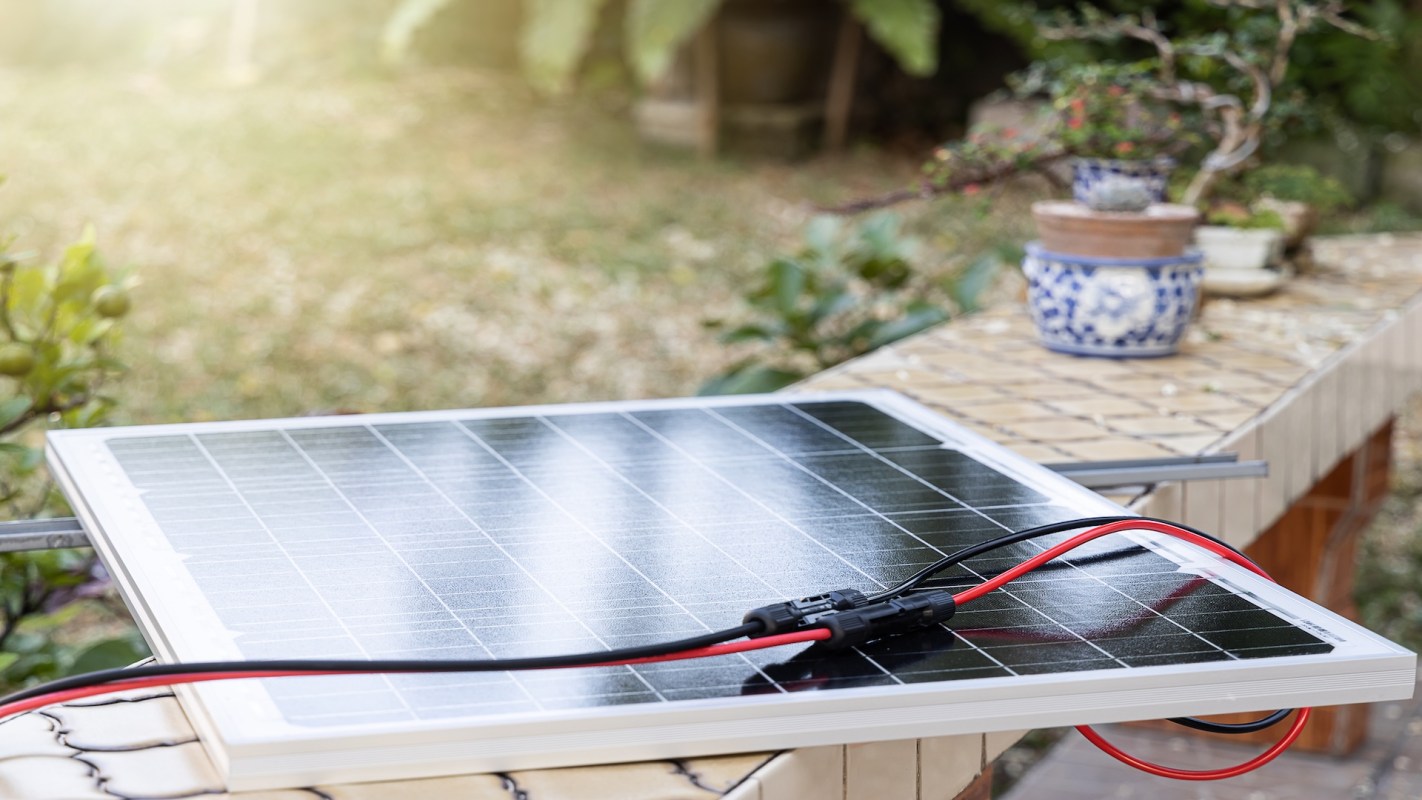
For homeowners interested in solar power but uneasy about committing to a major contract, Lifehacker writer Nick Indge's DIY project points to a different route.
Instead of signing onto a roughly $30,000 system, Indge built a battery-first setup for just over $8,000 before rebates. The payoff was not limited to lower electricity bills. It also gave him backup power during storms and more control over how his home uses energy.
Here's what to know
Indge wrote in a first-person essay for Lifehacker that he had delayed going solar for years, but rising electricity prices, improving battery technology, and the (at the time) approaching January 1, 2026, federal tax rebate deadline ultimately pushed him to act.
In the Lifehacker essay, Indge said most of the money went toward storage and energy management hardware, not the panels themselves. Indge built the system around EcoFlow equipment, using the Smart Home Panel 2 with a Delta Pro Ultra battery, then later adding 10 discounted 390-watt solar panels priced at $99 each. Altogether, he said the battery, inverter, and panel package came to just over $8,000 before rebates, per Lifehacker.
He also described how the system carried his home through two storms that cut grid power without interrupting his service indoors. In June or July, Indge reported that his setup was producing about 15 to 17 kilowatt-hours a day, while the household was using around 20 to 22 kWh with the air conditioning on.
Instead of designing the project around sending excess power back to the utility, Indge emphasized keeping more of that electricity in storage for later use at night. That battery-first strategy may become more attractive in areas where utilities provide lower compensation for exported solar power.
More background
The project also reflects a reality many homeowners are facing. Solar equipment is becoming more accessible, but safe installation remains critical. Indge said he was comfortable researching and handling the array and wiring himself, but he stopped short of connecting the system to his home's main electrical infrastructure, writing, "Seriously, call a pro for this part; it's dangerous," per Lifehacker.
Going solar is one of the best ways to save money on home energy, especially when you can compare options before committing.
Save $10,000 on solar panels without even sharing your phone number Want to go solar but not sure who to trust? EnergySage has your back with free and transparent quotes from fully vetted providers that can help you save as much as $10k on installation. To get started, just answer a few questions about your home — no phone number required. Within a day or two, EnergySage will email you the best local options for your needs, and their expert advisers can help you compare quotes and pick a winner. |

If you want to see what a professionally installed system might cost, EnergySage offers free solar installation estimates and lets homeowners compare quotes. With EnergySage's help, the average person can save up to $10,000 on solar purchases and installations.
Adding a smaller battery to a solar setup can help support electronics, a home office, or an extra room, while a larger solar-and-storage system can lower utility bills, keep the lights on during outages, and reduce dependence on polluting energy sources that worsen air pollution and heat-trapping emissions.
If you want to learn more about battery backups, explore EnergySage for information about home battery storage options, including competitive installation estimates.
Where can I learn more?
These stories look at the same questions homeowners run into when weighing solar costs, backup power, and energy independence.
More From EnergySage
💡Go deep on the latest news and trends shaping the residential solar landscape

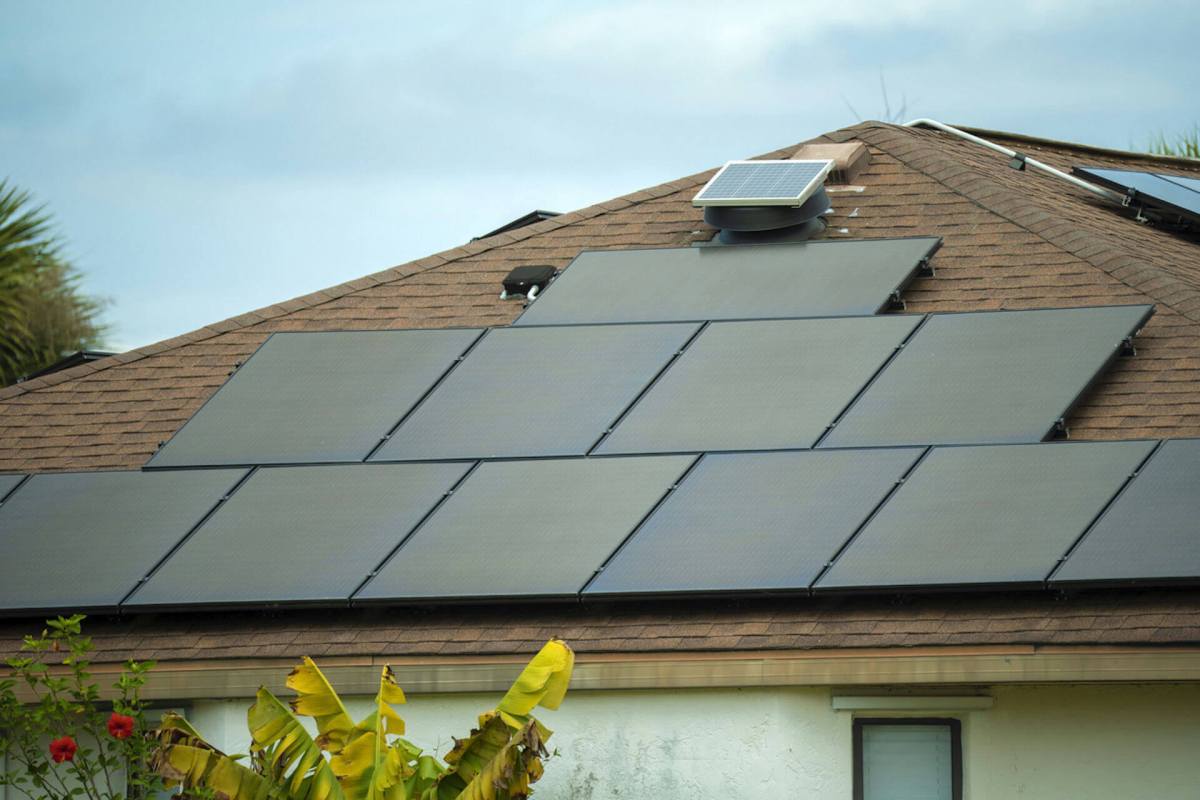


• In Australia, one homeowner said a 20kW solar setup made blackouts invisible while delivering a $545 monthly credit.
• Homeowners on Reddit said the math makes sense when investing in solar panels.
• Experts said households with rooftop solar panels can ease grid costs while lowering bills.

Get TCD's free newsletters for easy tips, smart advice, and a chance to earn $5,000 toward home upgrades. To see more stories like this one, change your Google preferences here.






