


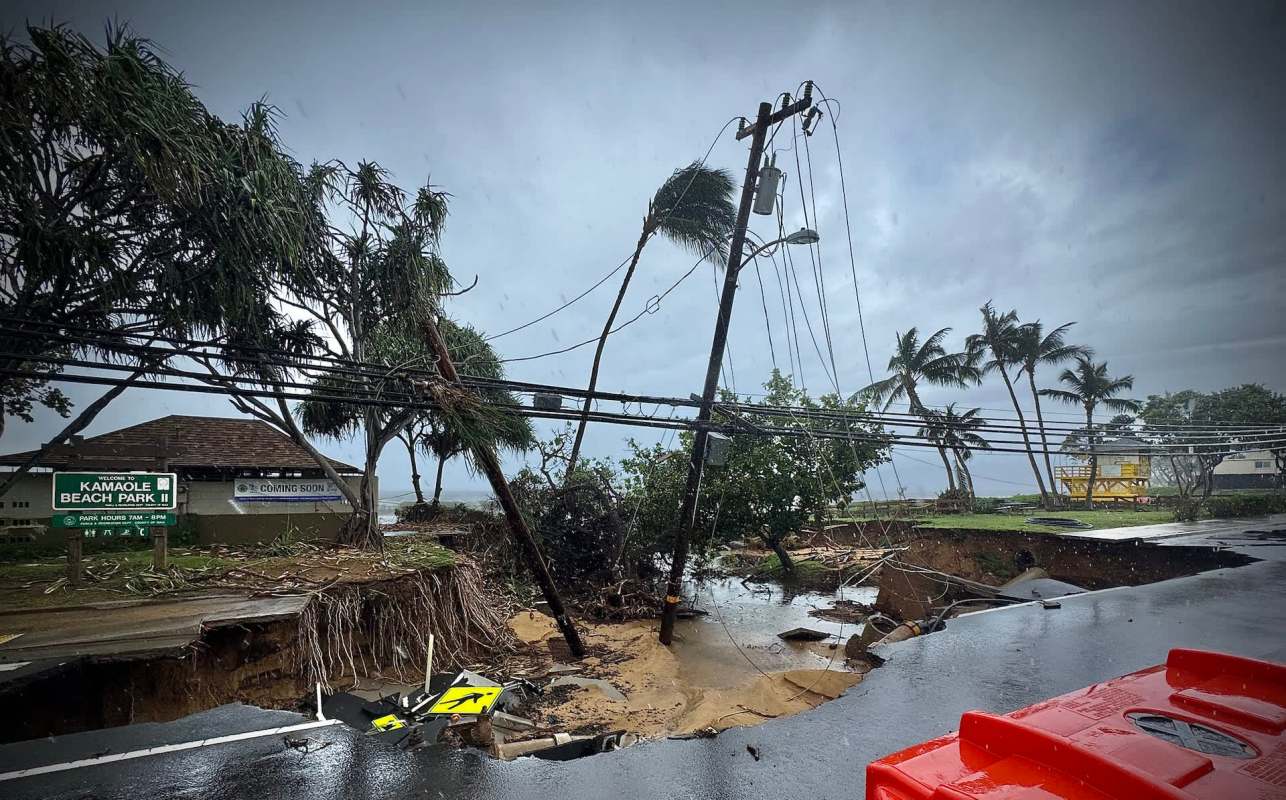
A storm organizing south of Hawaiʻi is prompting renewed concern across the state, with forecasters saying Tropical Storm Nolo could strengthen to become a hurricane.
But regardless of how the storm ranks in terms of hurricane intensity, experts at the Central Pacific Hurricane Center and AccuWeather say the biggest concern may be the torrential rain it brings, threatening another round of dangerous flooding for the region.
Here's what to know
At 11 a.m. Hawaiʻi Time on Sept. 23, the system was about 310 miles south-southeast of South Point, with sustained winds of 40 mph, according to USA Today.
Projections had the storm turning north to north-northeast on Sept. 24, with a path that could bring it near the Big Island as a hurricane on Sept. 25.
Rain could last through Sept. 26, with the Central Pacific Hurricane Center warning that "life-threatening, catastrophic flooding, and mudslides are possible from rainfall totals in excess of a foot, especially in areas of steep terrain."
Widespread downpours are expected across Big Island and eastern Maui, while higher elevations could receive 24 to 36 inches of rain over three days.
TCD Picks » Quince Spotlight
💡These best-sellers from Quince deliver affordable, sustainable luxury for all




A flood watch has been issued for the Big Island, Maui, Lanai, Molokai, and Kahoolawe, set to remain in effect through the afternoon of Sept. 26.
With parts of the state still recovering from the back-to-back Hurricane Lala and Hurricane Lowell, which brought damaging floods and winds, forecasters have also said that Nolo could bring "life-threatening surf and rip current conditions," per USA Today.
More background
The Oahu Hawaiian Canoe Racing Association canceled the annual Na Wahine O Ke Kai women's canoe race scheduled for Sept. 27 because rough offshore conditions were expected, marking a rare cancellation in the event's history.
This is Hawaiʻi's third tropical cyclone threat in recent weeks. AccuWeather meteorologist Nicholas Arman told USA Today in an email, "El Niño is a major reason Hawai'i has faced so many tropical threats this season."
According to CNN, the effects of this year's Super El Niño come "on top of already warmer-than-normal oceans as the planet heats up from fossil fuel pollution."
What can be done?
The Central Pacific Hurricane Center is also telling people across Hawaiʻi to make sure their emergency plans are ready before conditions worsen.
The hurricane center said, "Although it is too soon to specify the exact location and magnitude of impacts, interests in Hawai'i should closely monitor the latest forecast updates and ensure that they have their preparedness plan in place."
Earlier this week, as experts tracked potential weather threats, Darryl Oliveira of the Hawaiʻi County Civil Defense Agency told Maui Now that residents should take steps such as making plans to shelter safely at home or to move to another safe shelter and gather emergency food, water, and medicines while preparing for power outages.
"The greatest danger could be the amount of rain it unloads and how long that rain continues," Arman told USA Today. "If the storm slows or stalls close enough to the Big Island, we could be looking at catastrophic flooding and mudslides."

Get TCD's free newsletters for easy tips, smart advice, and a chance to earn $5,000 toward home upgrades. To see more stories like this one, change your Google preferences here.







