


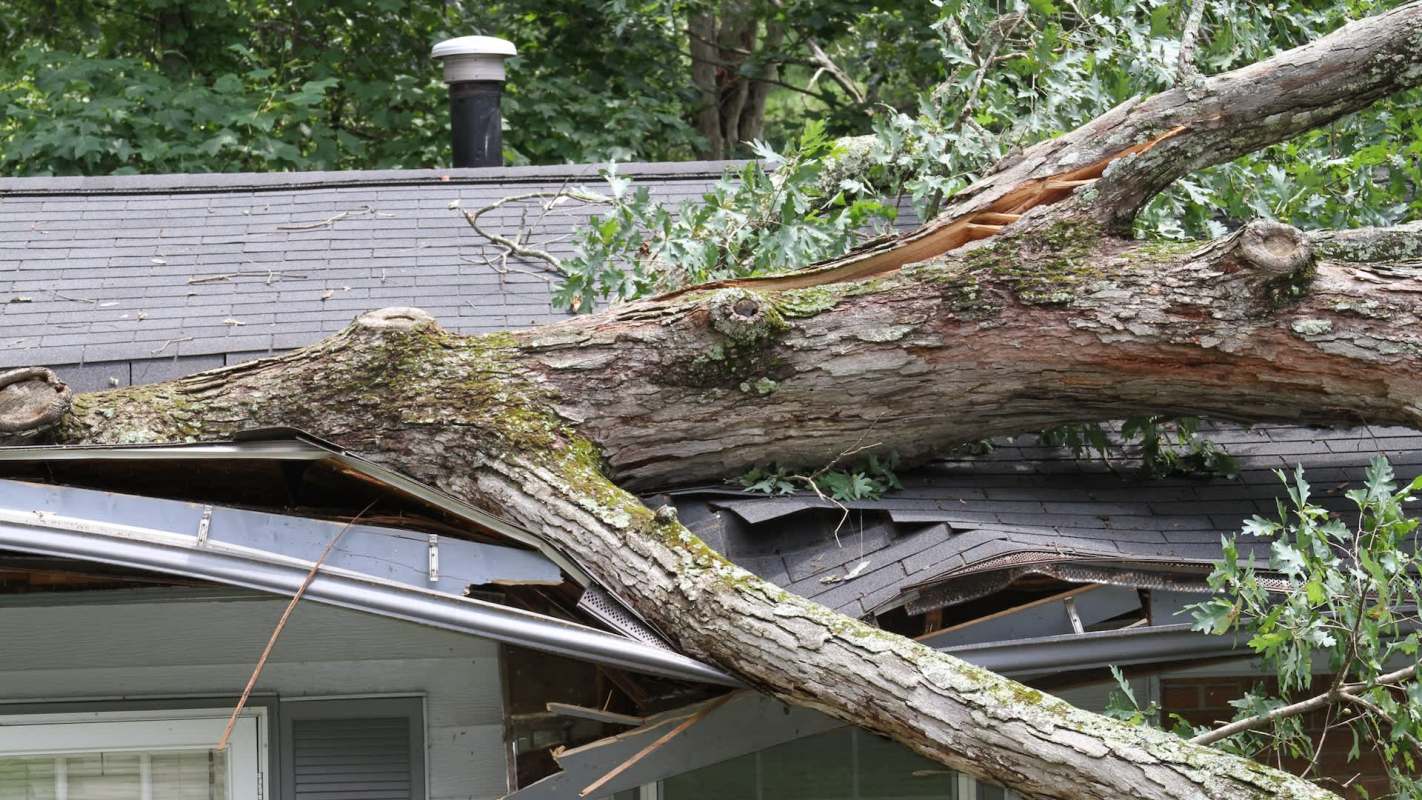
Nearly a month after a severe storm tore through San Antonio's West Side, homeowner Maria Salazar said the damage was still taking a major financial toll — and that the response she received when asking the city for help only made things worse.
Here's what to know
According to KSAT, CPS Energy identified the area near Merida Street and South Zarzamora Street, where Salazar lives, as one of the places hit hardest by the Aug. 28 storm. Salazar said the repairs have already topped $10,000 and forced her to use retirement savings.
"We had to take out of our 401(K) because we don't have $10,000 just sitting in our account, right?" Salazar told the publication. "I'm going to tell you, it's been more than $10,000."
She noted that the city's free brush pickup did not remove everything, and a large tree trunk was left at the curb. Her repeated requests for more help got no response, except from a gentleman from the City of San Antonio who later told her, "Life's not fair."
"I was upset because why give me that comment?" she said. "I'm here, like, it's kind of kicking me while I'm down."
At an Aug. 30 press conference, City of San Antonio officials said they received thousands of calls during the Aug. 28 storm weekend and that crews worked nonstop to clear debris while checking on the residents hit hardest.
TCD Picks » Quince Spotlight
💡These best-sellers from Quince deliver affordable, sustainable luxury for all




What can be done?
For residents facing storm-related repair bills, federal disaster assistance is available in the form of low-interest loans. The U.S. Small Business Administration said people seeking financial help can apply for a disaster loan online at sba.gov/disaster.
Applicants can contact the SBA's Customer Service Center at 800-659-2955 or email disastercustomerservice@sba.gov for more information.
"Luckily the community came together," Salazar said. "People that we didn't even know, you know, 'Hey, are y'all OK? Yes, we're good, thank you,' but it was just the community that we had to look out for each other."
Where can I learn more?
Salazar's experience reflects challenges many homeowners run into after severe weather, from insurance gaps to shrinking disaster support.
• In Texas, insurance companies dropped coverage as severe storms pushed homeowners deeper into risk.
• In Maryland, an $83 million mitigation program was canceled after national funding was withdrawn, leaving vulnerable communities exposed.
• In New Mexico, homeowners face widening insurance gaps while rebuilding costs keep climbing.

Get TCD's free newsletters for easy tips, smart advice, and a chance to earn $5,000 toward home upgrades. To see more stories like this one, change your Google preferences here.






