


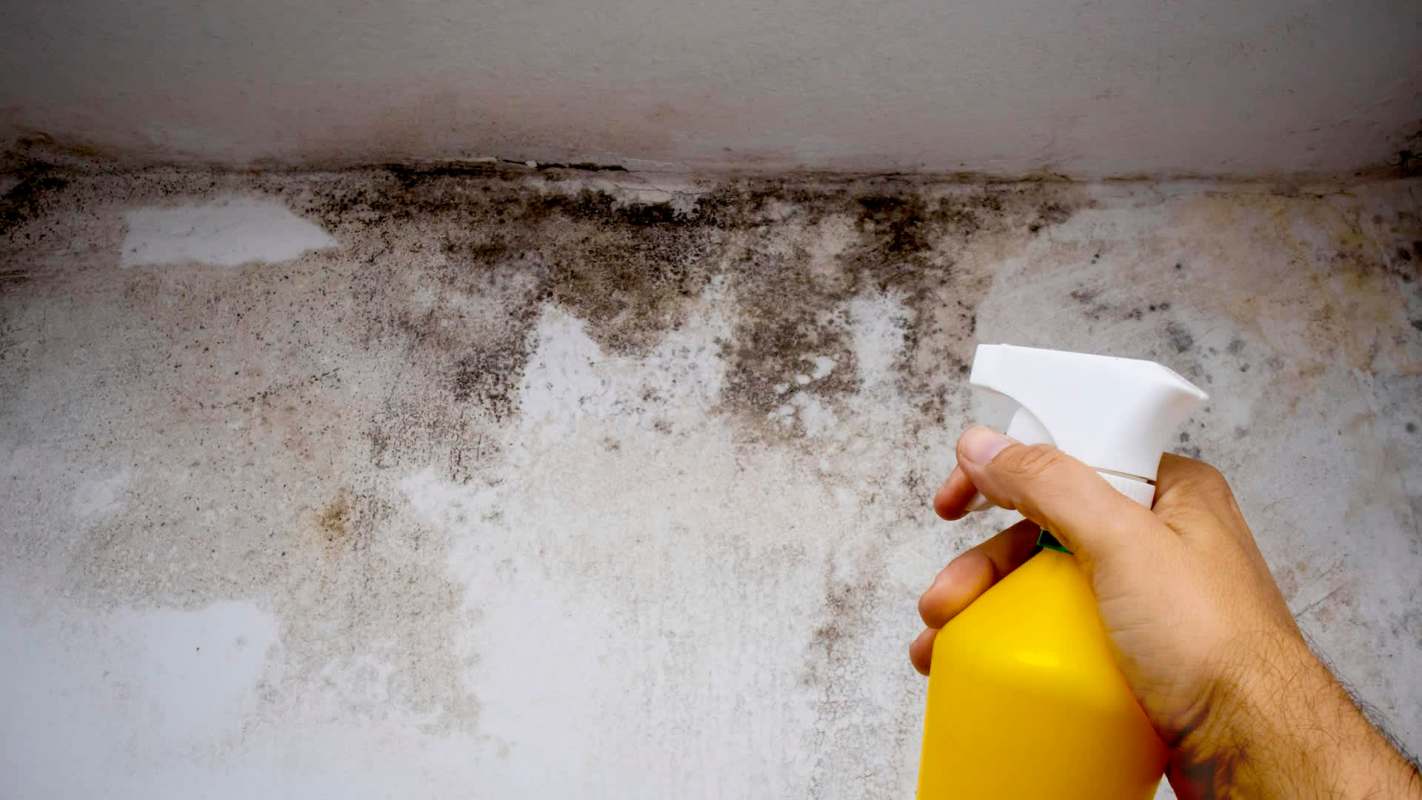
A law meant to protect tenants in England's social housing from dangerous damp and mold is drawing renewed criticism after residents said it hasn't meaningfully improved conditions in their homes.
One resident said her housing provider responded by cleaning visible mold while the underlying defects that were causing it remained unresolved, according to The Guardian.
Here's what to know
Awaab's law has been in force since October 2025, and it set deadlines for social landlords in England to inspect and repair serious hazards, The Guardian noted.
However, social housing resident Sarah Killick told the outlet that damp and mold in her home has continued to cause prolonged stress.
She said Clarion Housing Association addressed the visible mold with a wash, even though surveys had pointed to possible causes outside the home, including cracks and problems with drainage and guttering.
"We have to leave the mold on the walls, because if they turn up and we've wiped it, they say there's no mold, so you have to start the process again. You have to leave the mold growing until it's really furry and it's awful," Killick explained.
TCD Picks » Quince Spotlight
💡These best-sellers from Quince deliver affordable, sustainable luxury for all




The housing ombudsman ruled that Clarion "did not recognise that it failed in its duty to fully comply with Awaab's law." Clarion disagreed with the ruling and has said it intends to appeal.
The law is named after Awaab Ishak, who died at age 2 in December 2020 after prolonged exposure to black mold in his family's social housing flat caused a severe respiratory condition.
More background
Campaigners maintained that Killick's experience was far from unique.
Suzanne Muna, co-founder of the Social Housing Action Campaign, told The Guardian that enforcement remained the central problem.
"We haven't really seen any improvement, because it's no easier now for people to enforce their legal rights than it was prior to Awaab's law," Muna began.
"The law says landlords have to make things fit for human habitation within these timescales, but it did nothing to address the enforcement gap," she continued.
As of July 15, the housing ombudsman had logged more than 400 cases in which Awaab's law came into play, and 97% of completed cases resulted in a maladministration finding.
Damp, mold, and fungal growth made up the biggest category of complaints, while frequent failings included not recognizing when Awaab's law applied, missing the deadline to investigate emergency hazards, and inadequate record-keeping.
Another unnamed tenant — a single mother of five in Sheffield — said damp and mold in her council home contributed to respiratory illness, hygiene issues, and her children being bullied at school after her shower and toilet stopped working.
What's being done?
In Killick's case, Clarion was told to pay 1,175 British pounds ($1,567), send a written apology, and complete all repairs by Nov. 9 — or to tell the ombudsman why it hadn't happened.
The government warned social landlords that neglecting required safety and quality standards can lead to major penalties, up to and including unlimited fines.
Interim ombudsman head Andrea Keenoy said the organization is trying to cut a backlog of cases by bringing on 77 new caseworkers. Complaints take an average of nine to 12 months to resolve.
"Awaab's law doesn't feel like it's made any difference yet," the single mother from Sheffield said. "[Landlords] have still got the money, the power, the responsibility, but there's not enough accountability. Tenants still need more protection."
Muna said many residents struggle to take on large housing associations that are backed by legal teams — even outside of social housing in the U.K., many renters face rules that limit money-saving lifestyle changes, from gardening to hanging clotheslines to dry laundry.
Working with landlords and homeowners associations to update restrictive rules, including rules that block practical home-saving changes, can be the best approach.
Where can I learn more?
Renters have reported similar battles over hazardous homes and weak landlord responses. They include alleged black mold cover-ups, long-running dangerous conditions, and new efforts to force safer rentals.
• A tenant's viral video showed an alleged black mold repair that left the leak unresolved.
• In Brooklyn's Bedford-Stuyvesant neighborhood, tenants endured hazardous conditions for years inside their building.
• In Arizona, lawmakers pushed indoor temperature protections after renters faced dangerous heat indoors.

Get TCD's free newsletters for easy tips, smart advice, and a chance to earn $5,000 toward home upgrades. To see more stories like this one, change your Google preferences here.






