


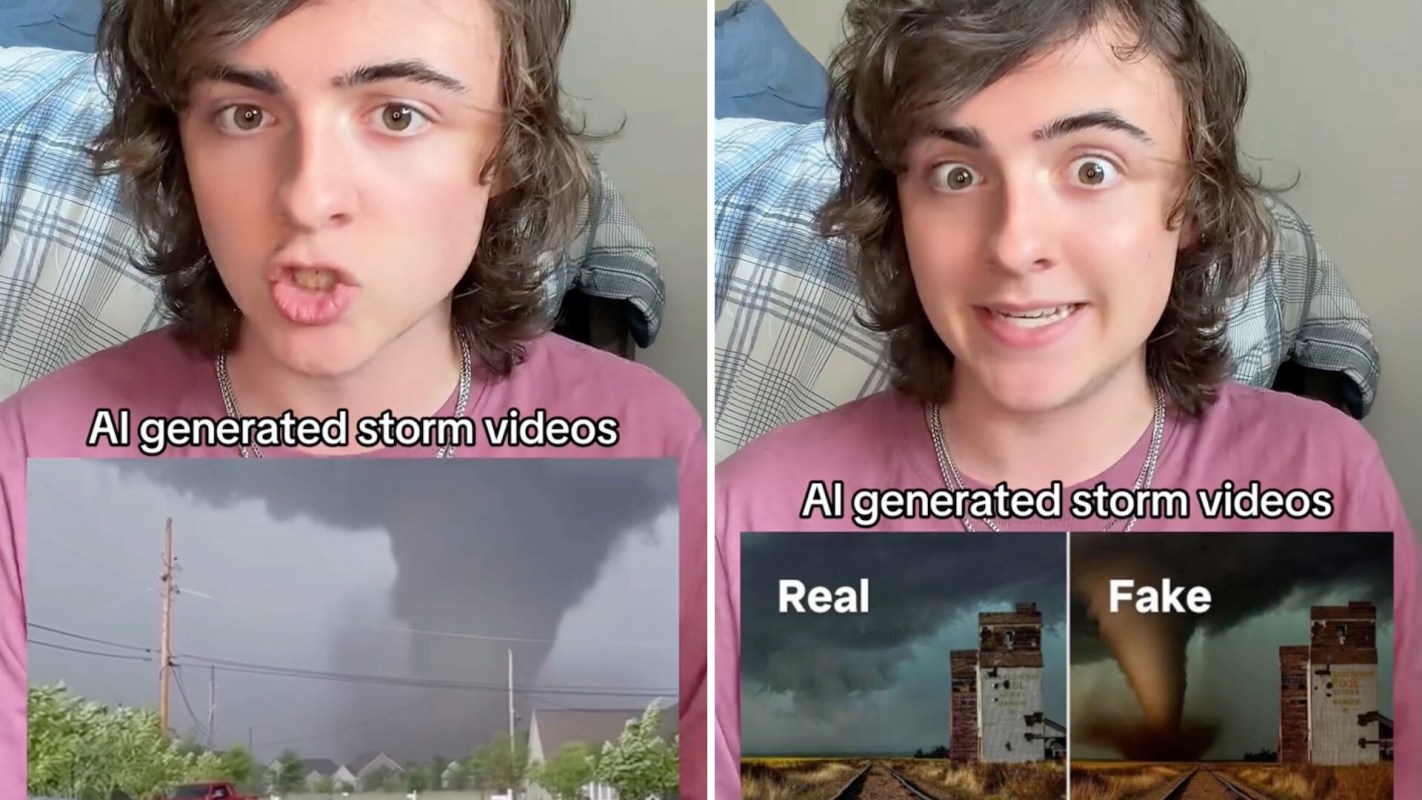
Tornado season already floods social media platforms with dramatic weather clips.
Now, one storm chaser is warning that AI-generated storm footage may become too realistic to discern as fake, creating panic and mayhem when storms don't exist and desensitizing people to emergency warnings when they are real.
Here's what to know
On Sept. 17, storm chaser Liam Watkins (@LiamWatkinsWx) used a TikTok video to argue that fabricated weather videos are becoming a serious problem for the field of meteorology.
In the clip, Watkins stated, "Now don't get me wrong, there are good ways to implement AI into meteorology that can be incredibly helpful, but mainly things like generative AI are going to bring some big issues to the meteorology and weather communities."
Watkins explained that fake tornado and storm clips have been shared "to try and deceive people into thinking that there were actual tornadoes or storms ongoing that really never happened."
He added that, "I think as we see this kind of generative AI get more improved, more accurate, it's going to get to the point where it's incredibly difficult to discern between real and fake," warning that advances in the technology could make the problem even harder to spot.
TCD Picks » Quince Spotlight
💡These best-sellers from Quince deliver affordable, sustainable luxury for all




One commenter wrote, "We need regulations on this. Cause it's going to be a bigger problem in the future and I hate it."
Another added, "I can't even tell what's real and what's not with some of them. AI has its place in research, especially in the field of meteorology. [But] I wish it was more controlled than it is."
This is part of a broader concern about misinformation. When severe weather hits, many people go on social media for updates, especially about the danger that they might be facing nearby. If fake tornado videos fill social media, they can waste users' time, cause panic, and damage trust in real alerts.
Everyday people can help by slowing down before sharing dramatic weather footage. Before you share a post, take a moment and check for inconsistencies, like unusual motion, warped backgrounds, unrealistic lighting, or a lack of other evidence. That way, you're less likely to share something fake.
During high-risk weather events, people are generally better served by relying on official forecasts, radar, and warning sources rather than viral clips alone. Social media can still be useful, but it works best as a supplement rather than a substitute for verified alerts.

Get TCD's free newsletters for easy tips, smart advice, and a chance to earn $5,000 toward home upgrades. To see more stories like this one, change your Google preferences here.






