


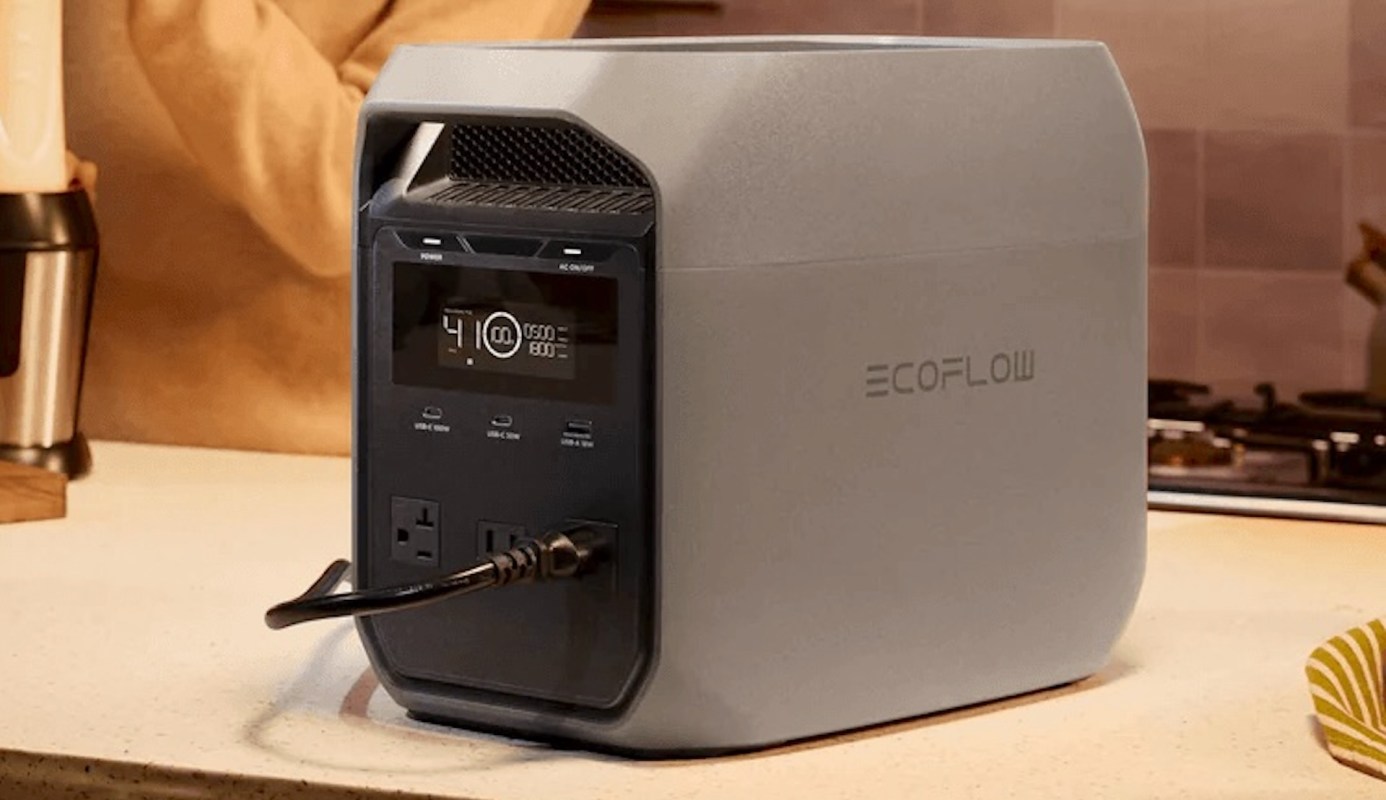
A Reddit user powering a garage chest freezer with a Delta 3 Classic ran into an annoying limitation of portable battery systems: A big chunk of overnight power loss was coming from the unit itself, not just the appliance it was supporting.
Here's what to know
In the Reddit post, the setup sounded solid during the day, with solar typically bringing the battery back up by evening. The problem showed up overnight, when the remaining charge was falling much faster than the freezer's expected use would suggest.
To check whether the freezer was really to blame, the user set it to stay off from midnight to 7 a.m. with a smart switch. Even with a smart switch keeping the freezer off between midnight and 7 a.m., the original poster still saw the unit drop from 60% to 30% charge.
They said that it lost around 300 watt-hours overnight, which suggested the inverter's idle demand was the real source of the drain, since AC output was still left on.
Three hundred watt-hours per night adds up to about 9 kilowatt-hours per month, or roughly 110 kilowatt-hours per year. For a small off-grid system, that can also mean losing a significant share of valuable overnight storage.
Adding battery storage is one of the best ways to protect your home during outages, save money on energy, and go off-grid. If you're comparing systems, EnergySage can help you find information about home battery storage options, including competitive installation estimates.
EnergySage has teamed up with the electrification brand Qmerit to guarantee you get the best price on home battery storage solutions. For a lower-cost alternative, Pila also offers excellent battery backup options, and its plug-and-play batteries cost a fraction of a whole-home backup system.
More background
A portable power station's listed capacity doesn't tell the whole story if the inverter keeps consuming power just by staying on. In that situation, actual runtime can be much shorter than the battery size alone would imply.
Save $10,000 on solar panels without even sharing your phone number Want to go solar but not sure who to trust? EnergySage has your back with free and transparent quotes from fully vetted providers in your area. To get started, just answer a few questions about your home — no phone number required. Within a day or two, EnergySage will email you the best options for your needs, and their expert advisers can help you compare quotes and pick a winner. Solar panels can save you more than $50k over their 25-year lifespan, and EnergySage can help you save as much as $10k on installation. Which begs the question — isn't that worth an email or two? |

That is why shutting off only the freezer wouldn't fully address the problem if the EcoFlow's AC output was still active.
One user explained, "If you turn off only the freezer using a smart plug while leaving the Delta's AC output on, you will not eliminate the parasitic power draw. Turn off the freezer using the Delta station itself."
Another user said, "In addition to saving electricity and being able to keep your AC turned off on the EcoFlow unit, another bonus I did not expect is that the eero router got slightly faster speeds."
What can be done?
The main fix suggested in the discussion was to schedule the EcoFlow's AC output through the app so the inverter turns off completely during hours when the freezer can coast safely.
One user said, "During the 4-hour shutdown period, the station's parasitic power draw will be exactly 0 W."
The thread also pointed to X-Boost as something worth disabling.
One user said it "merely increases the standby power consumption of the station's internal processors."
While that will not solve every efficiency issue, it may reduce some unnecessary overhead.
Choosing the right output for each device can also help extend runtime and avoid the need for a larger, more expensive battery pack. Electronics such as routers, laptops, and some smaller appliances may be better matched to DC or USB-C than to AC.
Several replies steered the OP toward the same setting.
One user said, "There is a menu called scheduled tasks. That's what you're looking for."
The OP ultimately appeared to reach the same conclusion: "yes, looks like the inverter does draw significant power even when not under any load. Best is to disable it when not in use."
Where can I learn more?
These articles look at a few common ways freezers and refrigerators lose efficiency, along with simple maintenance and usage changes that can help cut power use.
• On Reddit, a homeowner learned a common freezer trick can actually hurt outage performance.
• On TikTok, a woman showed how freezer ice buildup can drive up energy bills.
• A zero-waste expert reminded homeowners that removing ice from freezers can lower utility use.
• One homeowner found a dollar-bill door test could stop a fridge from wasting power.

Get TCD's free newsletters for easy tips, smart advice, and a chance to earn $5,000 toward home upgrades. To see more stories like this one, change your Google preferences here.






