


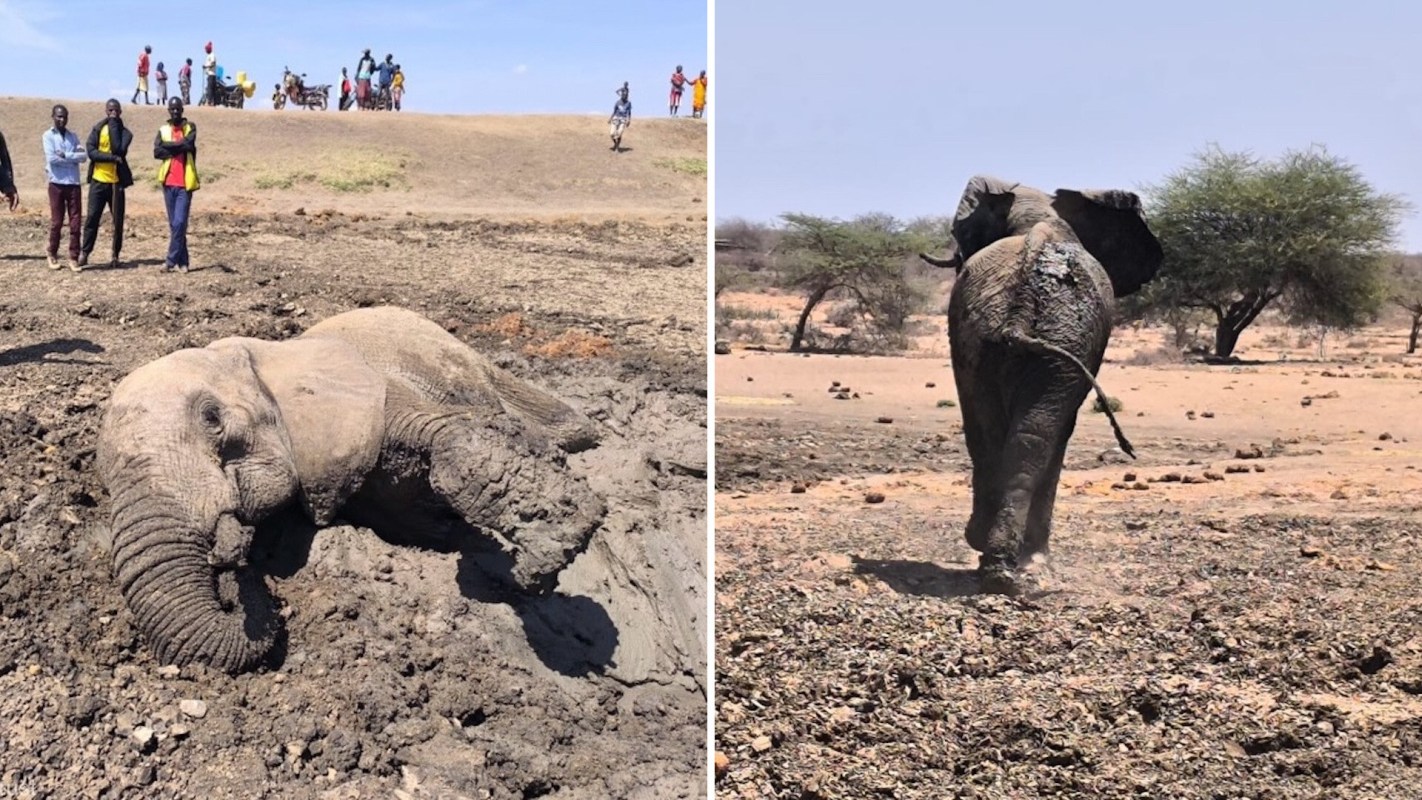
A young female elephant in Kenya that became stuck in a shrinking waterpan was freed and able to go back to her herd. Rescuers found her after she spent the night trying to get out on her own, with little strength left.
Here's what to know
Near Mount Kenya, the Sheldrick Wildlife Trust-Kenya Wildlife Service Mount Kenya Mobile Vet Unit responded to a report of the elephant's situation. On Instagram, the Sheldrick Wildlife Trust (@sheldricktrust) said she had tried to free herself and was exhausted when the team arrived.
Because the elephant was so depleted, Dr. Poghon did not need to sedate her. The team instead worked quickly, roped her, and used a vehicle to pull her onto firm ground.
Shrinking water sources can become traps for wildlife that drink from or enter them. After the rescue, the elephant was "muddy but otherwise unharmed" and returned to her herd, the trust stated.
"Every mission looks a bit different," the organization wrote, noting that teams in Tsavo had moved two fence-breaking bulls.
More background
Elephants play a major role in their ecosystems. As they move across landscapes, disperse seeds, and shape vegetation, they maintain habitats that support countless other species.
TCD Picks » Quince Spotlight
💡These best-sellers from Quince deliver affordable, sustainable luxury for all




In Kenya, wildlife supports tourism and local livelihoods, and protecting iconic animals sustains jobs tied to parks, guides, hospitality, and conservation work. When rescue teams keep animals alive and mobile, they also preserve the natural systems nearby communities rely on.
What's being done?
Mobile veterinary units can respond when an animal is injured, trapped, or in distress. Intervention can mean the difference between life and death, particularly in remote areas where wildlife may not survive without help.
The Sheldrick Wildlife Trust said its teams operate throughout the country, balancing major operations with small emergencies. That kind of flexibility is essential in places where human-wildlife conflict, drought pressure, and habitat strain can overlap.
Support for trained responders, equipment, and protected landscapes can help make more rescues possible. Wildlife agencies and conservation groups work to protect both animals and nearby communities by reducing dangerous encounters and preserving shared natural resources.
Where can I learn more?
These stories look at the same challenges facing elephants in Kenya, from dry conditions and water shortages to the risks of wandering into farms.
• In Kenya's dry season, wildlife teams guided a farm-raiding bull back toward safe habitat.
• In Tsavo, a desalination plant became a lifeline as 150 wild elephants crowded in for water.
• An orphaned elephant took her herd swimming and refused to leave the water.
• In Samburu Reserve, two elephants shared a cooling mud bath and deepened their bond.
• At Ithumba, a once-rescued elephant became a new herd leader as others gladly followed.

Get TCD's free newsletters for easy tips, smart advice, and a chance to earn $5,000 toward home upgrades. To see more stories like this one, change your Google preferences here.







