


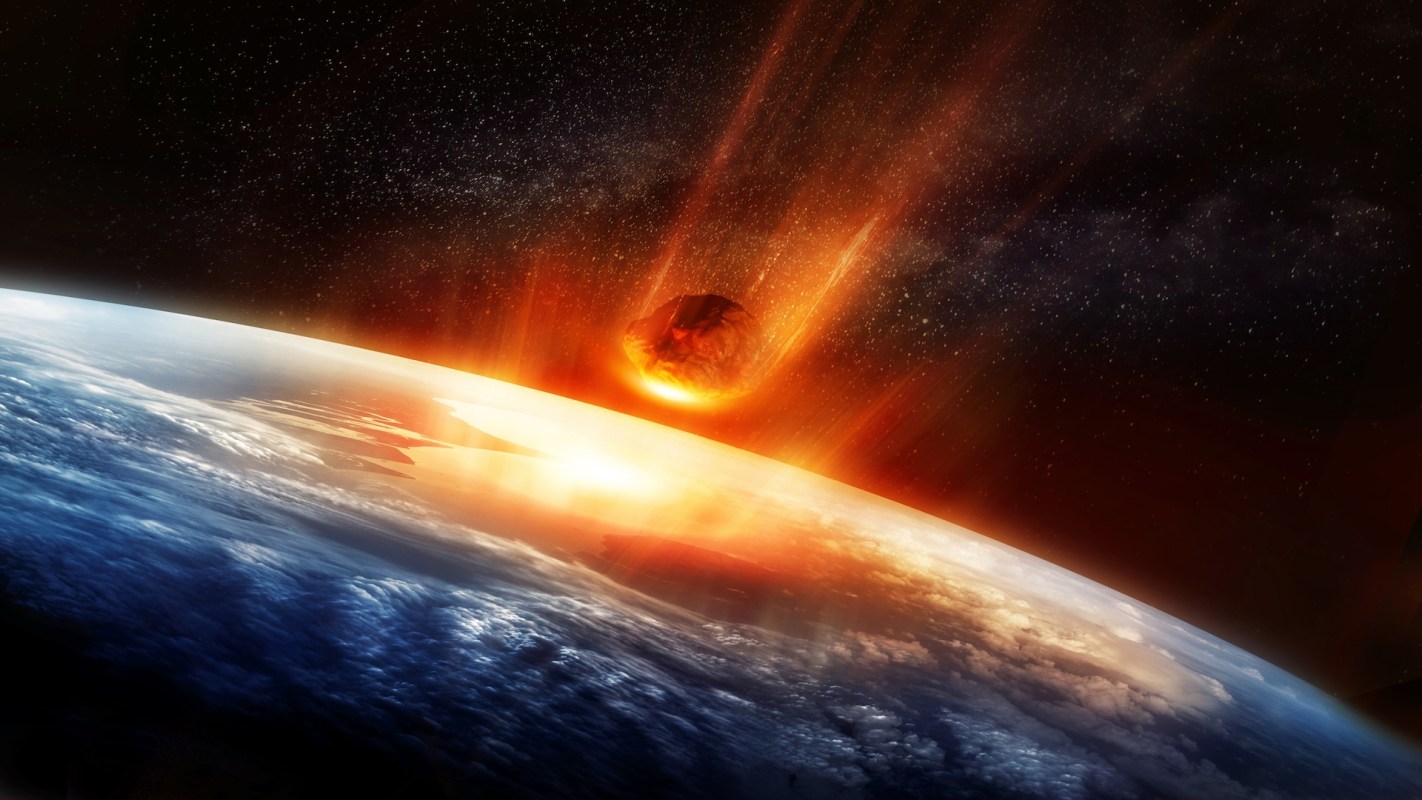
A new study is sharpening the picture of the asteroid behind the dinosaur-killing extinction, and it points to an unusually uncommon kind of space rock.
Researchers say the Chicxulub impactor was likely a rare CO chondrite and that dust-driven global cooling may have mattered more than sulfur in the catastrophe that followed.
Here's what to know
By analyzing nickel isotopes in the thin clay layer left worldwide by the Chicxulub impact, researchers from Institut de Physique du Globe de Paris and Université de Paris traced the object to a carbonaceous chondrite of the Ornans class. Their findings were published in Science Advances.
About 66 million years ago, the object struck near what is now Mexico at roughly 40,000 mph. It measured an estimated 6 to 9 miles wide, SciTechDaily reported.
That impact carved the Chicxulub crater and triggered the extinction event that wiped out about 75% of Earth's species, including non-avian dinosaurs.
Because the impact destroyed the object itself, scientists had to infer its identity from microscopic remnants preserved in the KT clay layer.
TCD Picks » Quince Spotlight
💡These best-sellers from Quince deliver affordable, sustainable luxury for all




"This is challenging work," Philippe Claeys, a professor at Vrije Universiteit Brussel, said, according to SciTechDaily. "Only a minute fraction of the projectile is preserved in the planet's KT clay layer because the entire meteorite vaporized upon impact."
More background
CO chondrites are among the most primitive materials in the solar system, yet they contain fewer volatile elements than many other meteorite types. That includes sulfur, which makes sulfur carried by the incoming object a less likely cause of the extinction.
Claeys said the broader explanation for the extinction event still stands but that the results put more weight on the immense cloud of fine material blasted into the atmosphere by the collision.
"A CO contains much less volatile elements — like carbon, zinc, water, and particularly sulfur — than other classes of meteorites we've discovered so far on Earth. It doesn't alter our theory of what caused the extinction event — but it makes it less likely that sulfur contained in the impactor was the smoking gun. The fine debris thrown into the atmosphere would have been the primary factor," Claeys told SciTechDaily.
What's being done?
Because the impactor essentially disintegrated at the instant of collision, scientists are still reconstructing the event from tiny chemical traces.
In this study, high-precision isotope work helped separate one rare meteoritic class from other similar candidates while also narrowing ideas about where the object may have come from.
The study suggests the object may have come from dusty regions in the outer solar system or from the asteroid belt's outer reaches near Jupiter.
While that kind of detective work cannot change what happened 66 million years ago, it can help scientists build better models of how different space rocks affect climate and ecosystems after impact.
"Being impacted by such a rare, distant projectile really underscores how unlucky the dinosaurs were," Claeys told SciTechDaily.
Where can I learn more?
For more on asteroid impacts, extinction pressures, and dinosaur discoveries, start with these articles.
• Ancient rock evidence suggests dinosaurs endured a hidden ecological crisis before a fungal aftermath spread worldwide.
• In South Korea, geologists say an ancient crater may illuminate how Earth's oxygen rose.
• In Spain, paleontologists uncovered Europe's best-preserved stegosaur skull, reshaping ideas about dinosaur dispersal.

Get TCD's free newsletters for easy tips, smart advice, and a chance to earn $5,000 toward home upgrades. To see more stories like this one, change your Google preferences here.






