


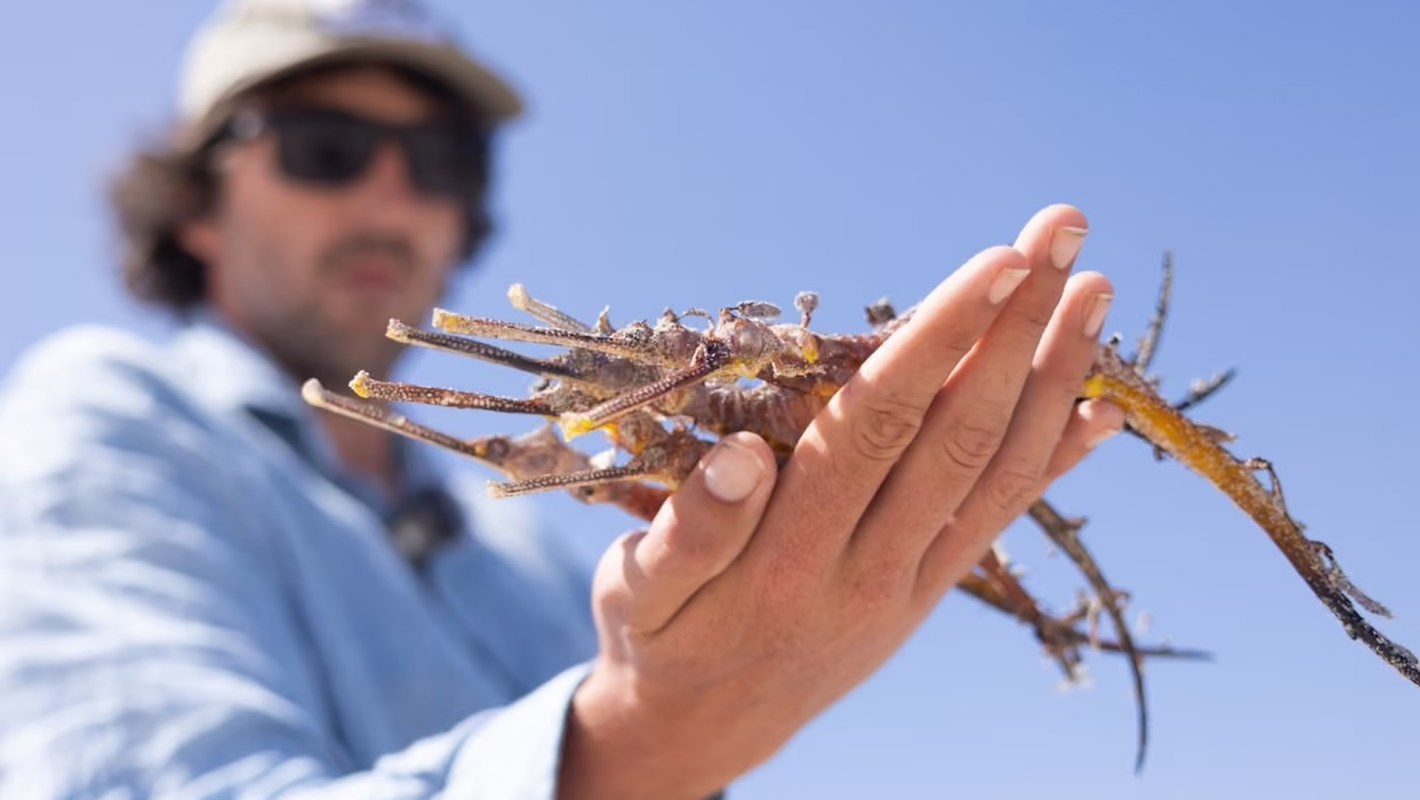
A toxic algal bloom in South Australia has left thousands of sea dragons, seahorses, and pipefishes dead along the coast.
The unprecedented die-off is raising alarm not only among conservationists but also among coastal communities that rely on healthy oceans for recreation, tourism, and ecological stability.
Here's what to know
Citizen-science records analyzed by Dragon Search SA suggested the bloom took a major toll. More than 1,600 leafy and weedy sea dragons, about 1,400 pipefishes, and 160 seahorses were found washed up on South Australia's coastline, according to The Guardian.
The losses appear to represent the worst mass mortality event ever documented anywhere for Syngnathidae.
Sea dragons, seahorses, and pipefishes are all part of that family. South Australia has more than 30 Syngnathidae species, and at least 13 have been affected since the bloom began in March 2025 and spread along the coast.
Professor David Booth, a University of Technology Sydney marine ecologist who specializes in sea dragons, is among those warning about the scale of the damage.
TCD Picks » Quince Spotlight
💡These best-sellers from Quince deliver affordable, sustainable luxury for all




Booth told The Guardian that scientists, governments, and citizens were worried about the future of the state's marine emblem, known as "leafies." "South Australian populations have probably been very much decimated, which is really sad, that's the center of their world distribution," he said.
Recorded deaths were especially concentrated among weedy sea dragons, which made up 1,524 of the total. The International Union for Conservation of Nature has upgraded the species to vulnerable.
More background
Because sea dragons are found only in Australia, South Australia is especially important to the species' future. If numbers collapse there, recovery may be difficult.
The bloom has not only killed animals but also damaged the kelp, seagrasses, sponges, and other habitats they depend on for food and protection. That broader ecological harm could drag out recovery for years while putting additional stress on an already pressured marine system.
Biodiverse underwater habitats help support fishing, diving, tourism, and the cultural identity of seaside communities.
Stefan Andrews, co-founder of the Great Southern Reef Foundation and a marine biologist, told the publication the losses were "mind blowing," especially for animals that are naturally rare and found only in a limited number of coastal areas.
What's being done?
Scientists and conservation groups are pursuing both immediate monitoring efforts and longer-term recovery strategies.
Many of the records underlying this assessment came from citizen scientists and divers, whose reports helped capture deaths that might otherwise have gone undocumented.
The bloom, identified as Australia's first involving Karenia cristata, a rare toxic algae species, has affected more than 800 species. Community reporting is helping researchers understand where the damage is occurring and which species may need the most urgent support.
Booth said habitat restoration is underway, and scientists are considering additional interventions, including raising sea dragon young in aquariums and building artificial habitats such as "seahorse hotels," which could also help pipefishes.
Dr. Yolanda Waters, chief executive of Divers for Climate and a dive instructor, said divers were often among the first to witness the changes underwater.
"It's been a really up and down journey for the last 18 months, watching the ocean change, and we've all honestly still got our fingers crossed because we don't know what's going to happen long-term," she told The Guardian.
Where can I learn more?
These articles look at toxic blooms, coral decline, industrial pressures, ship collisions, and other threats to marine ecosystems.
• The IUCN warned nearly half of assessed coral species are facing decline.
• Across the Coral Triangle, oil and gas projects have threatened one of Earth's richest seas.

Get TCD's free newsletters for easy tips, smart advice, and a chance to earn $5,000 toward home upgrades. To see more stories like this one, change your Google preferences here.






