


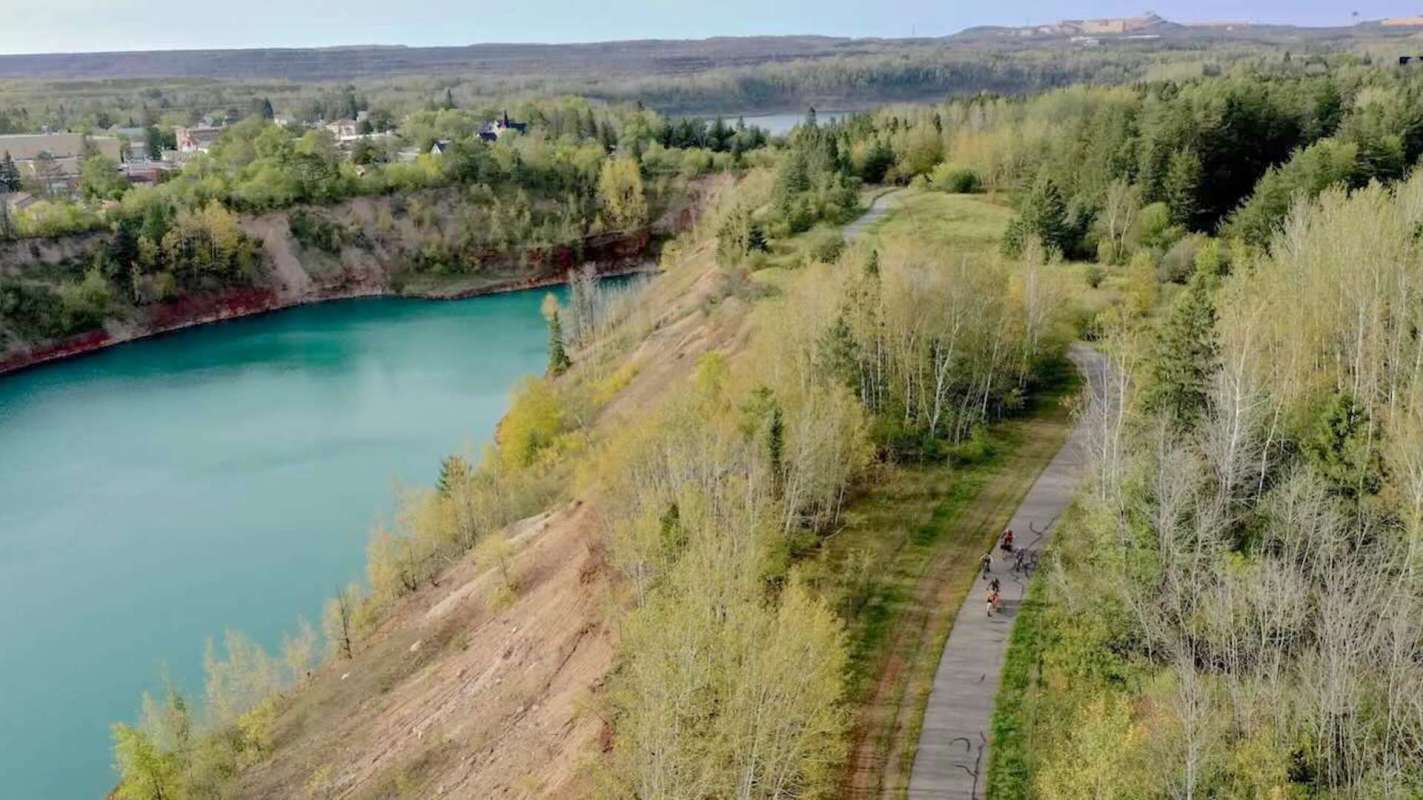
Minnesota's Mesabi Trail has reached the finish line after more than three decades of planning, construction, and fundraising, opening a fully paved 165-mile corridor for cyclists, walkers, and skaters across the Iron Range's forests, mining landscapes, and towns.
With the final segment in place, the route stands as one of the longest paved biking trails in the United States and marks the completion of a long-envisioned regional recreation project.
Here's what to know
According to the Good News Network, the Mesabi Trail runs between Grand Rapids and Ely, tying together 28 communities in northeastern Minnesota. Its path carries travelers from the Mississippi River area toward the Boundary Waters through scenery defined by both the natural setting and the Iron Range's mining past.
Users encounter a mix of terrain along the route, with both gentle stretches and steeper sections. Some of the trail's hills trace back to older mining activity, when piles of earth became artificial peaks that later filled back in with forest along the corridor.
The route also offers access to sites connected to the area's past, including historic buildings, mining relics, and places reflecting the Iron Range's ethnic and industrial heritage. That broader history includes the region's role in providing iron ore for the U.S. steel industry and during World War II.
Speaking at the ribbon-cutting ceremony, Iron Range Resources & Rehabilitation Board commissioner Ida Rukavina highlighted how many people and organizations were needed to finish the work: "No single organization, funding source, or individual could have built what we see here today."
TCD Picks » Quince Spotlight
💡These best-sellers from Quince deliver affordable, sustainable luxury for all




More background
Trails like this can also make it easier for people to get around without needing a car for every outing.
Along the Mesabi Trail, access points connect people to campgrounds, parks, and nearby services, making the route practical for a variety of outings. That accessibility can appeal to experienced cyclists as well as families, walkers, and visitors exploring the area.
The route is also meant to stay active outside the height of biking season. Summer use includes hiking and inline skating, while winter brings opportunities for cross-country skiing, snowshoeing, and, in some sections, snowmobile access.
Use already reaches tens of thousands annually.
What's being done?
One of the main contributors was the Department of Iron Range Resources & Rehabilitation, a state agency that reinvests mining profits in local communities, according to GNN.
That approach provided important support for the trail, but completing it still required sustained cooperation from a wide range of partners over many years.
People can use the trail's official website to map out a visit. Supporters can also sign up as volunteer caretakers.
In Rukavina's words, "This trail is the product of three decades of partnership and persistence."
Where can I learn more?
For more on e-bike trail access, rail-based park programs, and long-distance cycling, check out these stories.
• In Maryland, officials may open multi-use trails to e-bikes as sales surge.
• Amtrak and the National Park Service have revived the Trails and Rails program on routes nationwide.
• Across the United States, Sushil Reddy completed a 6,500-mile ride on a solar-powered e-bike.

Get TCD's free newsletters for easy tips, smart advice, and a chance to earn $5,000 toward home upgrades. To see more stories like this one, change your Google preferences here.







