


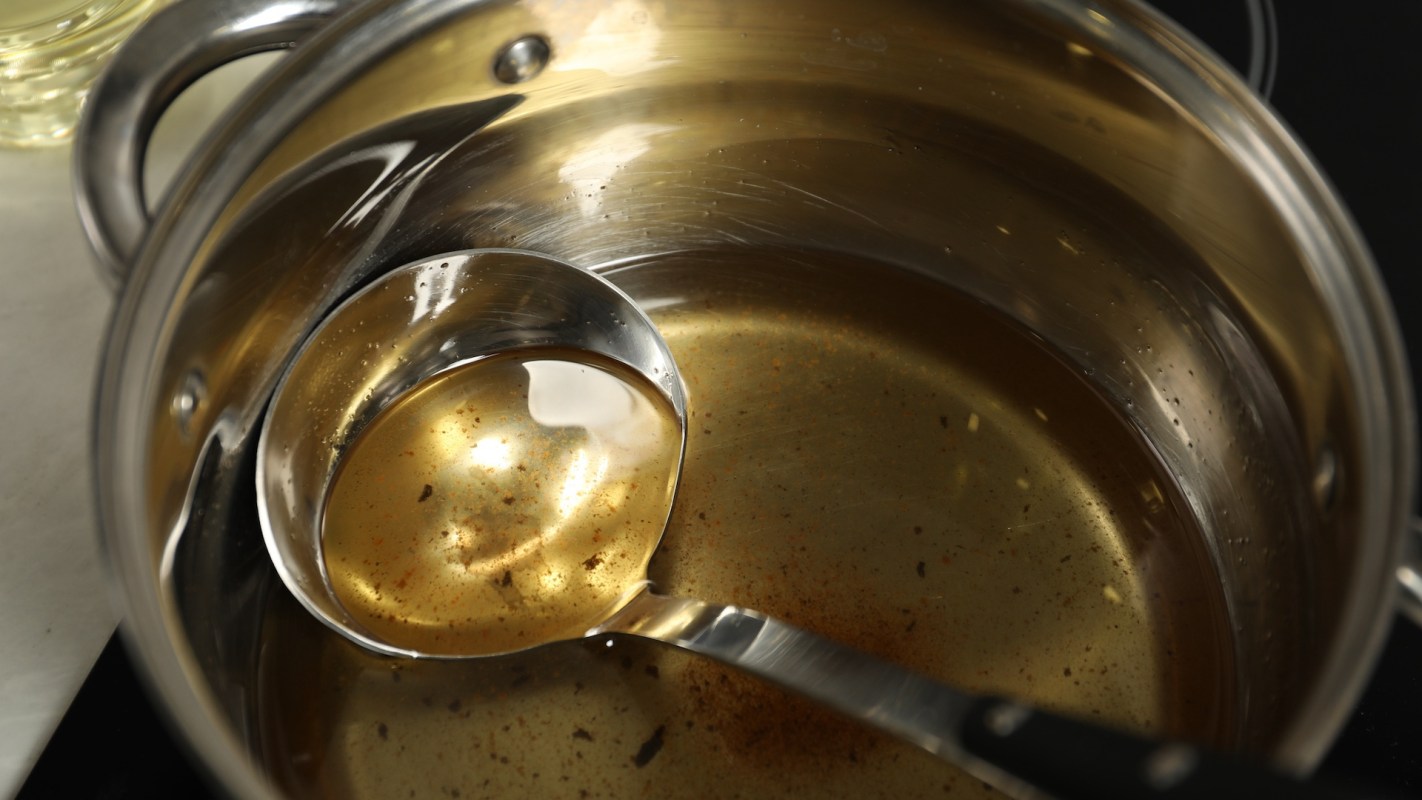
The cleanup can be the part of home frying that makes people hesitate, especially when a pot of leftover oil is still sitting on the stove.
For plenty of home cooks, that grease feels like a costly mess and not much else — but according to one culinary expert, oil often doesn't need to be discarded after a single batch.
Saving it for later use can cut down on waste, help prevent plumbing troubles, and stretch a grocery budget a little further, CNET reported.
Here's what to know
Melanie Underwood, a cookbook author and culinary instructor who founded Nourish and Gather, said many batches of frying oil can be used again.
"Oil used for frying is not one and done, unless the oil has been overheated, or if you're frying things that are particularly strong in flavor," she said, per CNET. "With something like seafood, you want to be careful, but it's perfectly reusable as long as it wasn't smoking."
Since frying usually uses a substantial amount of oil, keeping it in rotation makes a difference.
TCD Picks » Quince Spotlight
💡These best-sellers from Quince deliver affordable, sustainable luxury for all




Underwood said it often holds up for at least two or three uses, and sometimes longer if it was used for milder foods, collected very few particles, and was never overheated — which can help reduce grocery costs.
Temperature control is key to making that possible.
Underwood indicated that a thermometer is essential and that "the correct range for frying is usually between 350 to 400." She recommended neutral oils with high smoke points, including canola, peanut, or sunflower oil.
Staying within that range helps prevent smoking and can preserve oil for future use.
She also observed that removing crumbs and other loose bits helps the oil last longer, because those burned particles can cause it to break down faster.
More background
Some households let frying oil cool, pour it into a container, and toss the container once it is full.
That keeps the grease out of the drain, but it still means a cooking ingredient gets used only once before being thrown away.
Meanwhile, pouring oil down the sink can lead to clogs and other plumbing problems.
Reusing it instead can help households sidestep that issue while getting more from something they already bought.
Before storing it, Underwood recommended letting the oil cool to room temperature, then straining it through a fine mesh strainer, cheesecloth, or a coffee filter and pouring it into a clean, dry container.
"It's very important that it doesn't have any residual water in it, and then just put a lid on it, tightly sealed, and keep it away from heat and light," she said.
Kept in a tightly sealed container and stored away from heat and light, frying oil can remain usable for multiple rounds.
What can be done?
One practical shift is to think of used frying oil as something that may still have a place in the kitchen, rather than as waste that has to be discarded immediately.
Marking the container with the date, the number of times the oil has been used, and what was cooked in it can make reuse easier and safer.
That record matters even more where allergens are a concern.
Underwood noted that reused oil can carry traces of earlier foods, so anyone cooking for relatives or guests should know exactly what has already been fried in it.
Taste is another consideration. Oil that was used for seafood or onion rings may not be the right fit for a dessert later, as Underwood told the outlet.
"I don't typically like to fry a savory thing and then fry a sweet thing. Like I wouldn't make schnitzel and then use that oil for a donut."
When used oil seems questionable, scent can help guide the decision.
One way to judge it is to compare the used oil with fresh oil of the same kind and see whether it still smells clean or seems to be turning.
Underwood said the payoff can extend beyond a single kitchen.
"When you're reusing any product, then you're lowering the demand for things like production, packaging and transport," she said. "I don't think that we think about that big picture very much, but if we were all reusing it, it would reduce those demands on the environment."
Where can I learn more?
For more on cooking oil and other kitchen fats, these articles are a good place to start.
• A home cook shared a simple cornstarch trick that helps clean used oil for reuse.
• Home cooks are saving all their bacon fat in jars for later cooking.
• Lamb Weston rolled out retail bags made from used cooking oil to lower emissions.

Get TCD's free newsletters for easy tips, smart advice, and a chance to earn $5,000 toward home upgrades. To see more stories like this one, change your Google preferences here.







