


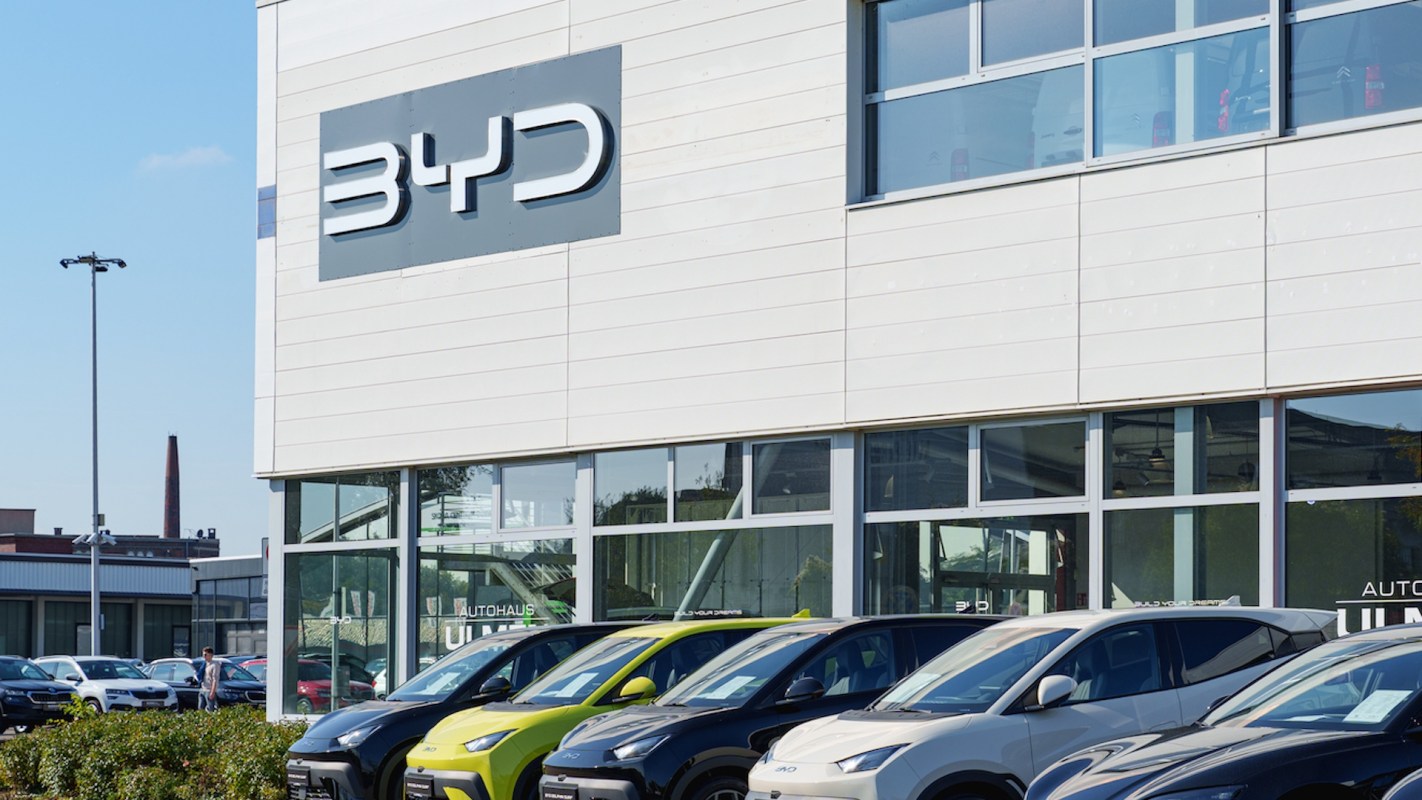
Chinese EV giant BYD is responding to Europe's tougher trade rules with a straightforward strategy of making its vehicles where it intends to sell them.
That expansion could have effects well beyond the company's internal planning. If BYD can build both cars and batteries inside Europe, it may be better positioned to avoid tariff-driven price pressure and put more electric models in front of consumers.
Here's what to know
The company is bringing its initial European plant into production in Hungary while preparing for a broader regional buildout, as Reuters reported.
Production is beginning at BYD's Hungary facility, the first element of a larger European plan that currently calls for three vehicle assembly plants and one battery factory as the company broadens its manufacturing base beyond China.
The outlet added that BYD expects to select a second manufacturing location by the end of 2026.
At least one of those future sites may come from upgrading an existing factory instead of constructing a brand-new one. BYD is weighing that option as a way to move faster and cut some of the time and expense involved in getting more EVs to market, per Reuters.
TCD Picks » Quince Spotlight
💡These best-sellers from Quince deliver affordable, sustainable luxury for all




With the European Union imposing steep tariffs on EVs made in China, producing vehicles locally is increasingly essential for BYD if it wants to stay competitive in one of the world's biggest auto markets.
More background
CleanTechnica reported that EVs in European markets generally remain below the 50% share mark, leaving substantial room for growth. Combined with Europe's huge vehicle market, that helps explain why the region is such an important target for BYD.
Beyond Europe, the outlet noted BYD has been expanding in parts of Asia and across South America, North America, and Africa. The company is trying to gain a foothold before those EV markets become more saturated and harder to enter.
More European manufacturing could bring several practical advantages. Building vehicles closer to buyers can reduce shipping complexity, support faster delivery, and make it easier for companies to expand local dealer and service networks. It could also increase competition for legacy automakers, potentially putting downward pressure on prices.
EVs can save drivers money over time through lower fueling and maintenance costs. Broader access to affordable models can also help reduce tailpipe pollution in cities and cut planet-warming emissions from transportation.
What's being done?
BYD's broader response is to move more of its supply chain into Europe. Assembly plants are a key part of that effort, and the planned battery factory could be just as important because batteries remain among the most expensive and strategically important components in any EV.
If the company succeeds, shoppers could see more model choices across a wider range of price points instead of simply absorbing tariff costs at the dealership. Reusing an existing factory could also speed up that process while giving an older industrial site a new role.
BYD now sees the buildout as a must for its long-term aspirations in the continent.
"Obviously, this is not something that will happen overnight," Alfredo Altavilla said, per Reuters. "However, it is clear that, to achieve the volume targets we have in mind, while at the same time complying with European regulations, that is what we will need."
Where can I learn more?
BYD's moves into new markets are far from limited to just China. Much of its desire to expand overseas can also be explained by the fierce competition in its domestic market.
• BYD wants 5-minute EV charging in Canada if lower tariffs open the market.
• In China, an EV price war left most car sales unprofitable by crushing weaker rivals.

Get TCD's free newsletters for easy tips, smart advice, and a chance to earn $5,000 toward home upgrades. To see more stories like this one, change your Google preferences here.






