


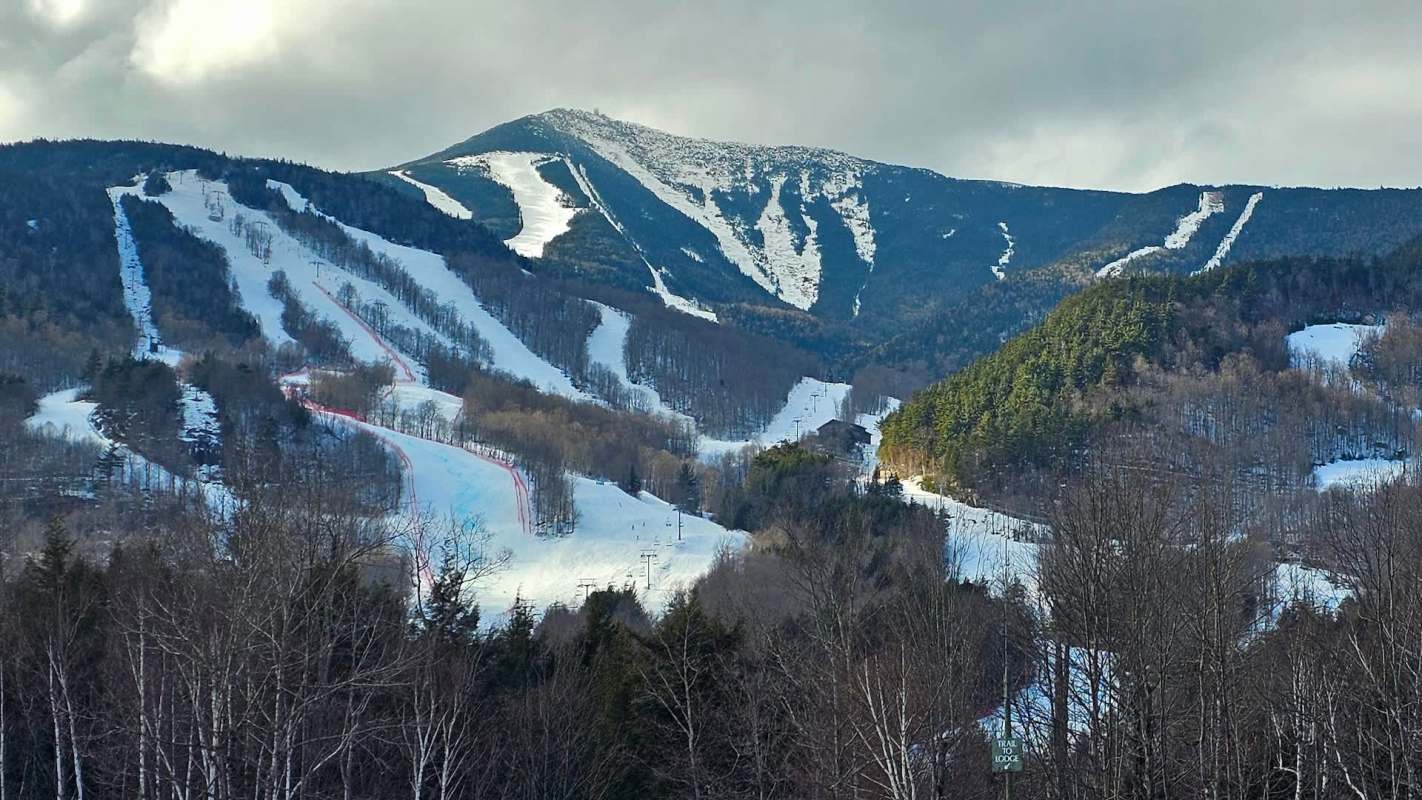
Winter is shifting in New England, with regional temperatures rising faster in that season than during the rest of the year.
The change is contributing to problems including drought, flash flooding, and weaker ski-season revenue.
Scientists in Vermont, New Hampshire, and Maine are trying to better understand the shift through a project focused on measuring snowpack in real time.
Here's what to know
Backed by a $5.9 million National Science Foundation grant, researchers at universities across the three states are building what Vermont Public reported will be the region's first full snowpack monitoring network.
The project aims to provide faster, more detailed readings on snow totals, the amount of water stored in that snow, and how quickly it may melt using sensors placed at varying elevations.
"Typically, snow measurements are taken by hand," Elizabeth Burakowski, a snow scientist leading the group's work in New Hampshire, said in a University of New Hampshire news release. "These new automated monitors will allow for more comprehensive and continuous measurements to gain a better understanding of change, provide data and a dashboard, and help forecast a wide variety of activity with our rivers, forests, and overall flooding."
TCD Picks » Quince Spotlight
💡These best-sellers from Quince deliver affordable, sustainable luxury for all




Winter storms in New England are increasingly concentrated into intense events, and rain is falling on top of snow more often than before. That mix can increase flooding risks and also deepen drought worries later in the year.
Without reliable snowpack readings, hydrologists have a harder time determining how and where flash flooding could unfold during a rain-on-snow event.
More background
The economic stakes are substantial as well. Winter outdoor recreation — from skiing to snowboarding and more — helps anchor the economies of northern New England states.
"It's a really significant part of the way our economy runs, and when we have disruptions to our regularly scheduled winter weather in the form of warmer temperatures, snowmelt, rain and snow events, or pure lack of snow, that puts a big dent in our economy," Burakowski told Vermont Public.
Models cited by the news outlet suggest smaller ski areas could stop being viable by 2080 if fossil fuel use stays on its current course, and ski seasons could shrink by roughly a month, with employees in the region fearing for the future of their jobs.
Keith Jennings, who is leading the work for the University of Vermont, told Vermont Public that one tool the team plans to use is a "snow pillow" — essentially a scale that measures snow density and estimates how much water will be released when the snow melts.
That type of equipment is already widely used in the western United States, and researchers say New England now needs similar capabilities as winter weather grows less predictable.
Where can I learn more?
These stories look at declining snowpack, flood risks from snowmelt, and worsening drought in colder regions:
• Dartmouth scientists found an alarming long-term snowpack decline across the Northern Hemisphere over 40 years.
• In California, flood danger is rising as atmospheric-river snowpack begins melting into Lake Tulare.
• In California's Sierra Nevada, a concerning snowpack shift is deepening drought fears statewide.
• In Colorado, experts warn winter storms are not enough to erase growing snow-drought concerns.

Get TCD's free newsletters for easy tips, smart advice, and a chance to earn $5,000 toward home upgrades. To see more stories like this one, change your Google preferences here.






