


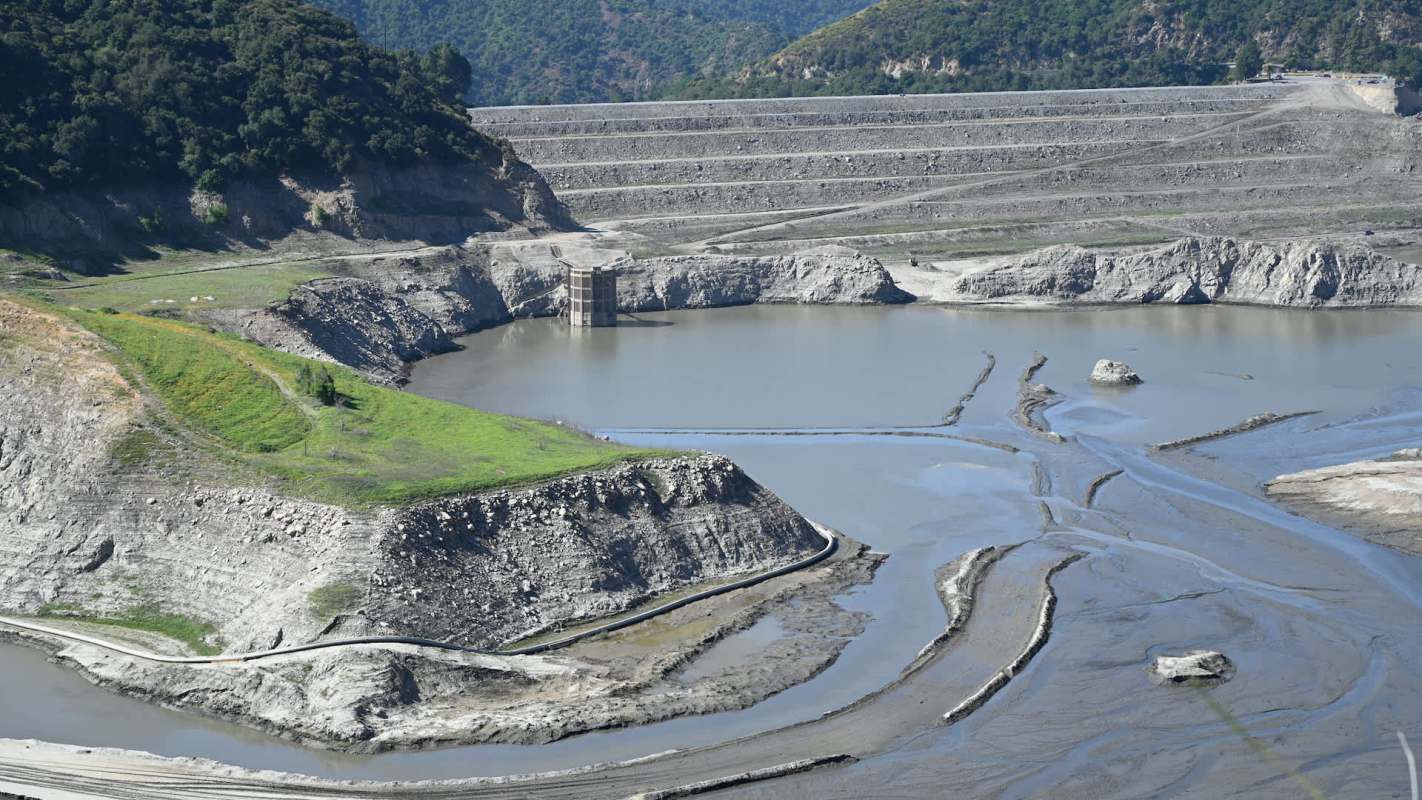
As a strong El Niño raises the odds of heavy rain across Southern California, Los Angeles County crews are racing to move mountains of mud from reservoirs and debris basins designed to shield nearby neighborhoods from flooding and landslides before the next major storms arrive.
Here's what to know
Crews are expected to remove as much as 1.3 million cubic yards of sediment from flood-control sites including the San Gabriel, Eaton Wash, and Devil's Gate reservoirs — roughly enough to fill the Rose Bowl three times, the Los Angeles Times reported.
During the county's annual dry-season maintenance window, which runs from April 15 to Oct. 15, excavators pull out mud, sand, and debris from those sites. The material is then moved in thousands of truckloads to old gravel pits, while one reservoir uses a conveyor to send sediment into a nearby canyon.
Sterling Klippel, assistant deputy director of Los Angeles County Public Works, told the Times that the effort increases how much floodwater and debris the system can hold before powerful storms arrive. That added capacity is even more important during El Niño years, when warm Pacific Ocean waters can raise the odds of wet winters in Southern California.
The county's flood-control system includes 14 dams, about 180 debris basins, nearly 500 miles of channels, and 3,330 miles of underground storm drains.
More background
The network was built after devastating floods in the 1930s and remains one of the nation's largest urban flood-control systems. It also includes 27 spreading grounds, where runoff can seep into gravelly soil and replenish groundwater supplies.
TCD Picks » Quince Spotlight
💡These best-sellers from Quince deliver affordable, sustainable luxury for all




Still, Brett Sanders, a professor of civil and environmental engineering at the University of California, Irvine, said clearing sediment from basins is critical because "the more storage you can create in the system, the more capacity you will have to reduce flooding," per the Times.
Hazardous flooding can develop when storms bring heavy rain over several days, soaking mountain soils and filling reservoirs. The danger can worsen near wildfire burn scars, where burned hillsides may be vulnerable to flooding and landslides.
Sanders and other researchers estimated in a 2022 study that a severe flood on the scale of a once-in-a-century event could put residences across the Los Angeles region at risk, the newspaper noted.
What's being done?
Officials want to begin the wet season with as much capacity as possible in reservoirs and catchment basins so runoff can be held there instead of surging downstream into streets and homes.
Los Angeles County is set to hold a virtual meeting Monday to explain how agencies are preparing for possible floods and debris flows and to answer residents' questions.
As the Times reported, L.A. County Supervisor Lindsay Horvath said major storms pose particular concern for communities near wildfire burn scars in Altadena and the Santa Monica Mountains, where the 2025 firestorms left charred slopes susceptible to flooding and landslides.
In an email, Horvath described this El Niño as "a test of how seriously L.A. County has prepared for a more extreme, changing climate."
Where can I learn more?
These articles look at mudslide warnings in Los Angeles, atmospheric river flooding, and a Los Angeles County rainwater storage project.
• In Los Angeles, officials warned post-fire mudslide threats remained high as storms approached.
• Across California, life-threatening atmospheric river flooding prompted emergency action as saturated ground gave way.
• At Descanso Gardens, a 250-acre rainwater storage project looks to strengthen wildfire resilience.

Get TCD's free newsletters for easy tips, smart advice, and a chance to earn $5,000 toward home upgrades. To see more stories like this one, change your Google preferences here.






