


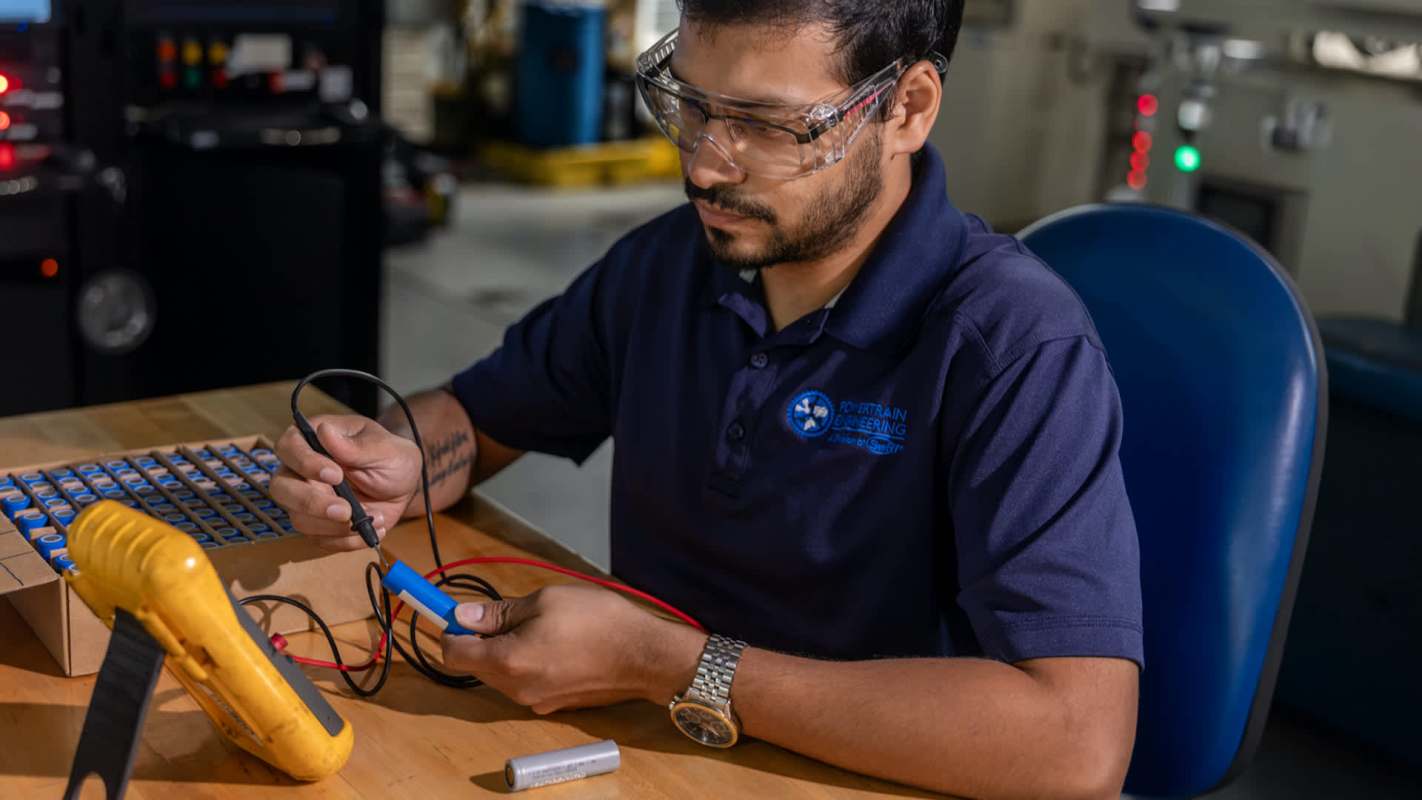
Lithium-ion batteries power much of modern life, from phones to electric vehicles, but they remain expensive and in high demand.
Now, scientists at Southwest Research Institute have developed a tool that could make it easier to use lower-cost sodium-ion batteries in some of those same roles without forcing companies to fully redesign the products that rely on them.
Here's what to know
The researchers created the Electrical Interchangeability Index to judge whether sodium-ion and lithium-ion batteries can handle the same task under the same operating conditions. As Interesting Engineering reported, the framework was designed to identify practical overlap between the two chemistries, not to argue that sodium-ion can replace lithium-ion across the board.
Part of the appeal is material cost. Sodium-ion batteries can use more abundant, often cheaper components, including sodium-based salts and lower-cost current collectors. In theory, that could help companies bring down battery costs.
The difficulty is determining whether a swap would actually work. Sodium-ion batteries generally store less energy and can add weight, so measurements such as voltage or capacity alone do not necessarily show how well they will perform inside a real device.
"Our application-aware Electrical Interchangeability Index provides equipment manufacturers and designers with a quantitative measure of whether two batteries can execute the same duty cycle or whether a substitution could compromise performance or require changes to the battery system," Shuvodeep Bhattacharjya, an engineer at SRI, explained, per IE.
TCD Picks » Quince Spotlight
💡These best-sellers from Quince deliver affordable, sustainable luxury for all




More background
For an initial test, the team looked at whether sodium-ion cells could stand in for 18650-format lithium-ion batteries used in products such as laptops, power tools, and electric vehicles. Instead of relying on a single benchmark, the researchers compared the two battery types across many operating scenarios.
Their analysis included charging and discharging behavior, power delivery and absorption, voltage boundaries, and power tracking. That approach focuses on how batteries function inside products, rather than limiting the comparison to spec-sheet figures.
"We identified 'high-EII' operating regions, where the two cell types demonstrated strong functional equivalence with negligible differences in surface temperature rise, available capacity and power capability, and 'low-EII' regions, where substitution would be unacceptable," Bhattacharjya said, according to IE.
What's being done?
SRI said the index could give manufacturers a way to determine when sodium-ion can act as an alternative or secondary source in lithium-ion-based systems and when redesign would still be required.
The framework remains in an early phase. It does not claim that sodium-ion is suitable for every application or that it can substitute across a battery's lifetime, and the researchers plan to expand the index to additional chemistries, cell types, and use cases.
The team also plans to examine how wear over time, degradation, and heat management influence interchangeability.
"This initial work provides a structured, verifiable method to evaluate where new chemistries like sodium-ion can plug into existing designs and where redesign is recommended or even mandatory," said Scott Sjovall, manager of SRI's Battery System Research and Innovation Section, as IE reported.
Where can I learn more?
These stories look at sodium-ion battery manufacturing, vehicle rollouts, and performance advances.
• In China, Hina says Tesla-like quality and cheaper EVs could help sodium-ion scale.
• BYD and Huaihai formed a top sodium-ion supplier as EV production ramps up.
• In Germany, researchers developed a highly promising material for future sodium-ion storage solutions.
• In China, JAC Group showcased an EV powered by a sodium-ion battery.
• Scientists developed a promising new cathode from organic materials to improve lithium-ion batteries.

Get TCD's free newsletters for easy tips, smart advice, and a chance to earn $5,000 toward home upgrades. To see more stories like this one, change your Google preferences here.






