


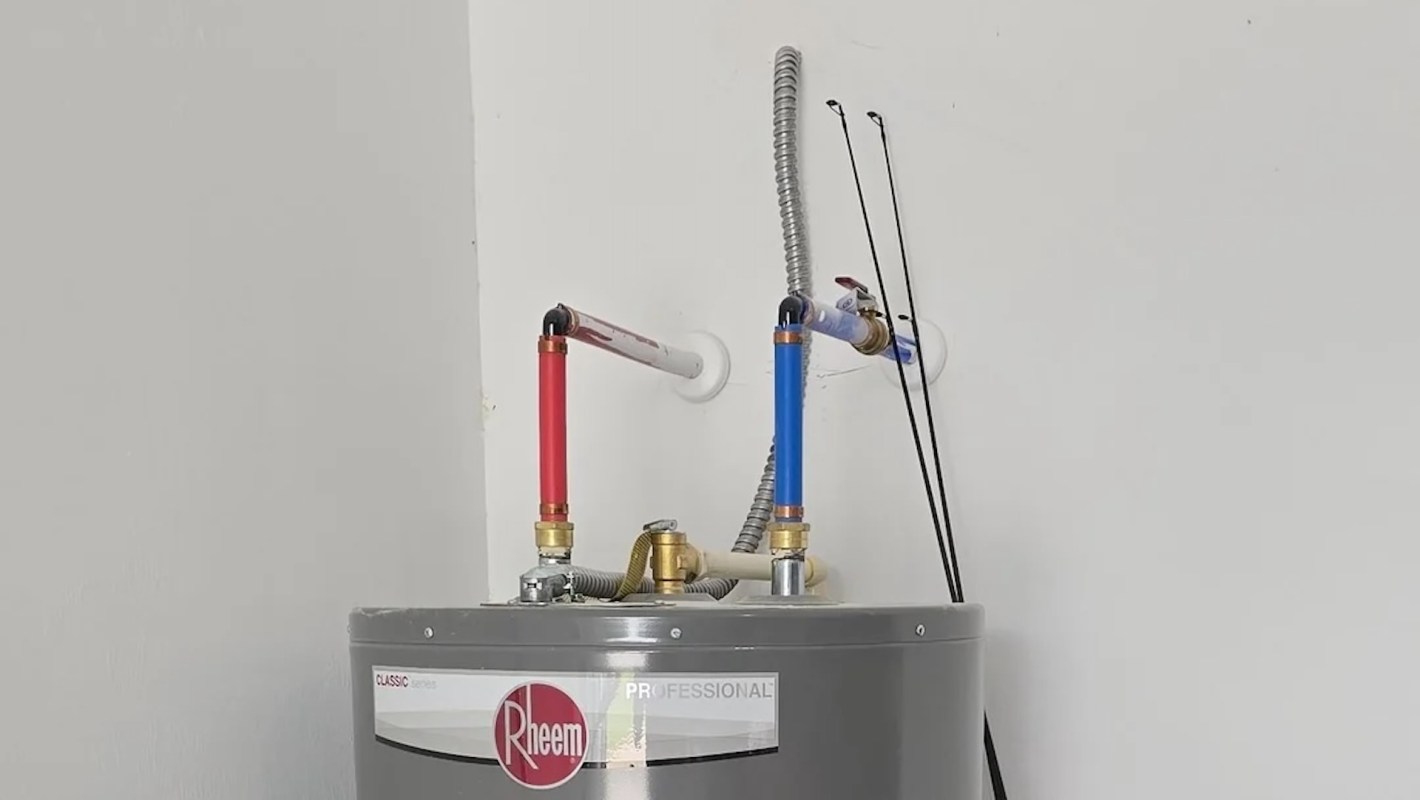
At a Florida home built in 2025 that sits empty for months at a time, the homeowner weighed whether to add a thermal expansion tank before pressure problems arose. The discussion surfaced a risk that may help others avoid expensive plumbing trouble.
Here's what to know
"Most of my neighbors have [a thermal expansion tank]," the original poster wrote. "My house did not come so equipped."
They added, "This property gets shut down for months at a time, and I think that putting in a thermal tank makes sense."
The homeowner also asked about using galvanized, brass, or stainless steel hardware; whether the tank could be installed upside down; and whether it needed to be bled.
Because heated water expands, an expansion tank manages pressure swings inside a plumbing system. That can lessen stress on valves, joints, and fixtures, which is especially relevant in a house that may remain unused for extended periods.
Users converged on one recommendation for the fittings: brass.
"Please only use brass. Don't use anything else," one replied.
Another user said: "You'll have to check local code. Technically you can use galvanized, but just don't. Just use brass; it won't corrode."
Save $10,000 on solar panels without even sharing your phone number Want to go solar but not sure who to trust? EnergySage has your back with free and transparent quotes from fully vetted providers in your area. To get started, just answer a few questions about your home — no phone number required. Within a day or two, EnergySage will email you the best options for your needs, and their expert advisers can help you compare quotes and pick a winner. Solar panels can save you more than $50k over their 25-year lifespan, and EnergySage can help you save as much as $10k on installation. Which begs the question — isn't that worth an email or two? |

More background
Another point raised in the thread was that an expansion tank is not always needed. A user said local code and whether the home has a pressure-reducing valve on the main water line can affect that decision.
As for the mounting position, users said the answer depends on the product.
"The orientation that you show is good if the maker allows it. It is the maker's literature that defines what orientation is OK," one person wrote, emphasizing that the manufacturer's instructions — not guesswork — should determine whether upside-down mounting is acceptable for a specific model.
There was also a recommendation: If someone is not comfortable with this kind of work, calling a plumber may be the best way to make sure it is done correctly.
What can be done?
For homeowners thinking about a similar installation, the thread pointed to a few steps: Review local code, determine whether the plumbing system is closed, and read both the water heater and expansion tank manuals. Users also highlighted the importance of setting the tank's pre-charge to match household water pressure.
Where can I learn more?
It can be difficult to decide about water heater maintenance or upgrades, so it's good to seek advice.
• One home expert shared critical tips to keep a water heater running efficiently for years.
• A homeowner said cagey plumbers' perplexing advice pushed the family to rethink tankless plans.
• Across many homes, tankless water heater benefits can mean lower bills and endless hot water.

Get TCD's free newsletters for easy tips, smart advice, and a chance to earn $5,000 toward home upgrades. To see more stories like this one, change your Google preferences here.






