


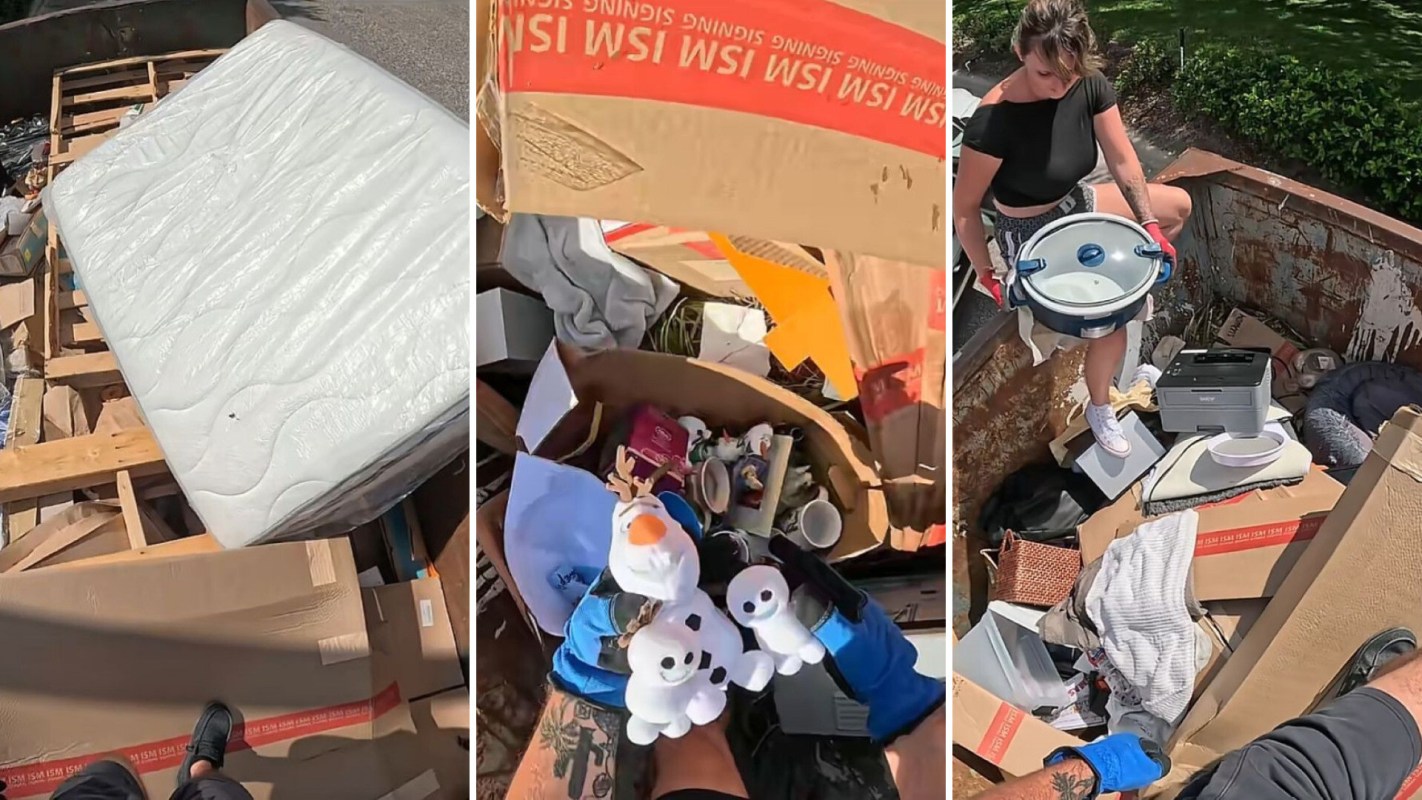
A TikTok video billed as a "Massive Target Dumpster Dive Find" is turning heads after showing what appeared to be a pile of usable household goods tossed behind a store.
Featured finds included a box of stuffed toys, crockpots, large dog beds, and mattresses that still appeared to be wrapped in plastic.
Here's what to know
A creator who goes by the nickname Dumpster Dive Legend (@dumpsterlegend) posted a TikTok video. In the clip, the creator and a companion pull a sizable haul from a dumpster during what the caption identified as a Target dive. Their reactions play out on camera as they remove bulky items that appear mostly intact.
@dumpsterlegend MASSIVE Target Dumpster Dive Find! Brand-New Mattresses, Dog Beds & Crockpots 😱 This dumpster diving trip turned into a huge jackpot. We found brand-new mattresses still wrapped in plastic, giant fluffy gray dog beds, blue crockpots, and even more stuff packed around the dumpster. We could not believe how much good merchandise was being thrown away. This was easily one of our biggest retail dumpster diving finds yet. Watch until the end to see the full haul and everything we managed to save! #dumpsterdiver #dumpsterdiving #dumpsterdive #DumpsterDivingHaul #dumpsterdivingpaysmybills ♬ original sound - DUMPSTER DIVE LEGEND
While looking at a mattress, the creator says, "We're gonna get it, it's still in the plastic and all that." A crockpot that also appeared usable prompted another reaction: "Wow a crock pot that still has the lid and everything." The caption described the haul as "one of our biggest retail dumpster diving finds yet," a claim reflected by the number of items shown.
The video does not explain why the products were thrown away. In retail, items can end up in dumpsters for several reasons, including damaged packaging, returns, discontinued inventory, sanitation concerns, or store policies that make donation or restocking more difficult than disposal.
One commenter wrote, "It is sad the amount of stuff America wastes...perfectly good stuff too. I want to dumpster dive so bad but too scared too."
TCD Picks » Quince Spotlight
💡These best-sellers from Quince deliver affordable, sustainable luxury for all




More background
Perfectly usable or repairable products can be discarded long before the end of their useful life. That means the materials, energy, labor, and transportation that went into making them are wasted, too.
It also adds to the growing trash burden facing communities. Large discarded goods such as mattresses, pet beds, and small appliances take up landfill space and can contribute to pollution when products containing foam, metal, plastic, and electronic components are not reused or properly recycled.
A crockpot, mattress, or pet bed diverted from the trash could save someone meaningful money if it is safe and clean enough to use.
The video also shows how much plastic often wraps retail goods, especially bulky products such as bedding. For people hoping to cut down on waste at home, exploring plastic-free alternatives for everyday products can reduce demand for throwaway packaging.
What can be done?
The biggest opportunities lie with retailers. When goods are unsold, returned, or cosmetically damaged, stores can work with donation networks, liquidation channels, repair programs, and recycling partners to keep more products out of dumpsters.
That is especially important for bulky goods that may still be functional but difficult to restock. Even when an item cannot be sold as new, it may still be suitable for nonprofit donation, employee purchase, parts recovery, or materials recycling, depending on its condition and applicable safety rules.
Consumers also have a role to play, though individual action alone cannot fix company-wide waste systems. People can buy secondhand, support resale and repair businesses, and ask local stores about donation practices. Anyone considering dumpster diving should also keep safety in mind, as local laws, store policies, and sanitation risks can vary widely.
As the caption says, "We could not believe how much good merchandise was being thrown away."
Where can I learn more?
Retail waste shows up in many forms, from usable home goods left in dumpsters to unsold food and heaps of plastic wrap. These articles explore the same issue raised by the Target video: valuable products and materials still get tossed when stores lack better systems for reuse, donation, or recycling.
• At HomeGoods, usable household items turned up in a dumpster despite appearing salvageable.
• In the UK, Sainsbury's now uses unsold food as biofuel for delivery trucks.
• ShopRite and TerraCycle launched plastic-film packaging recycling to keep store wrap out of landfills.

Get TCD's free newsletters for easy tips, smart advice, and a chance to earn $5,000 toward home upgrades. To see more stories like this one, change your Google preferences here.






