


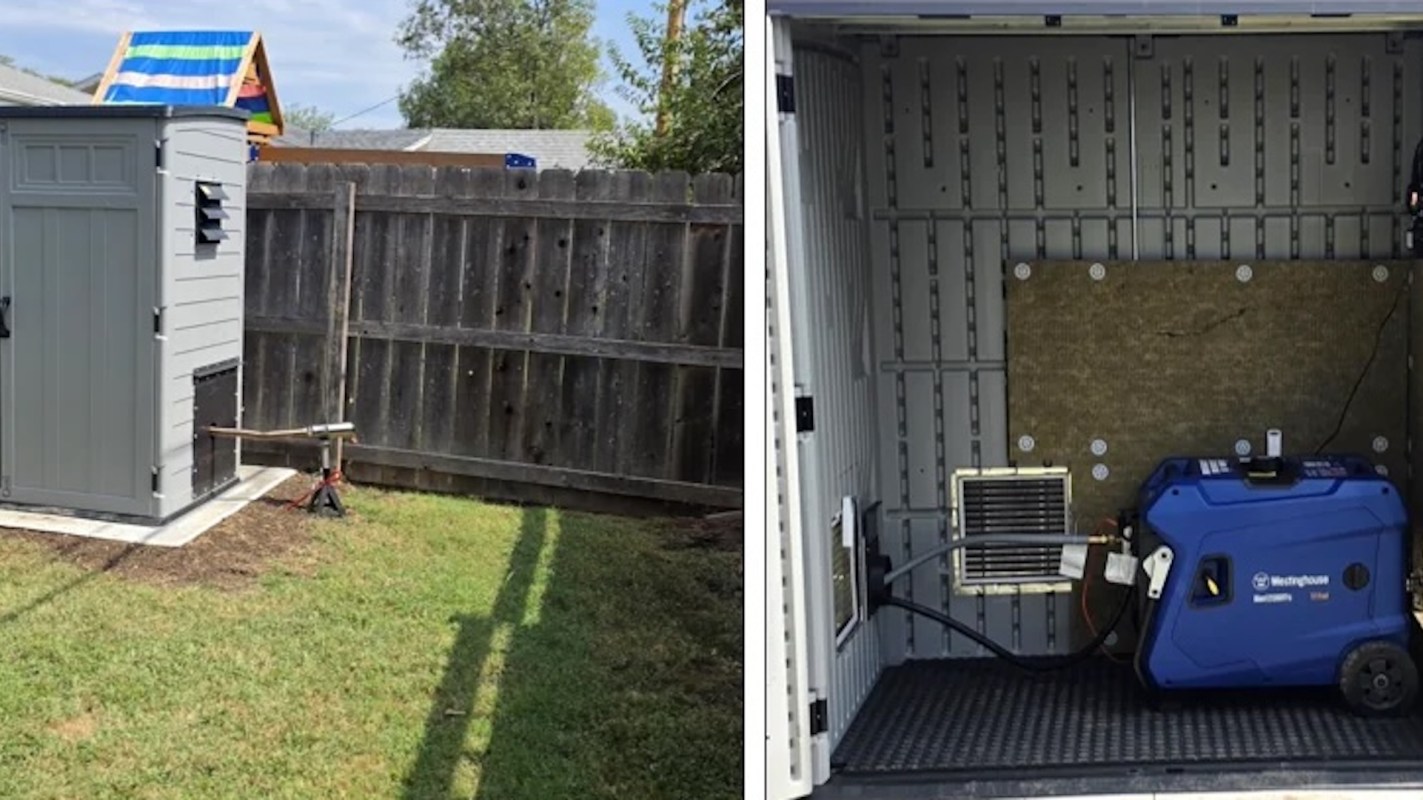
A homeowner's DIY backup-power shed just cleared a test that matters far more than appearance: heat control.
After running a gas inverter generator for more than two hours under load, the enclosure stopped getting hotter and settled into a stable temperature range — a promising sign for homeowners looking to make backup power quieter, cleaner, and easier to manage during outages.
Here's what to know
In a Reddit post in r/Generator, the homeowner said the sensor closest to the generator settled at roughly 125 degrees.
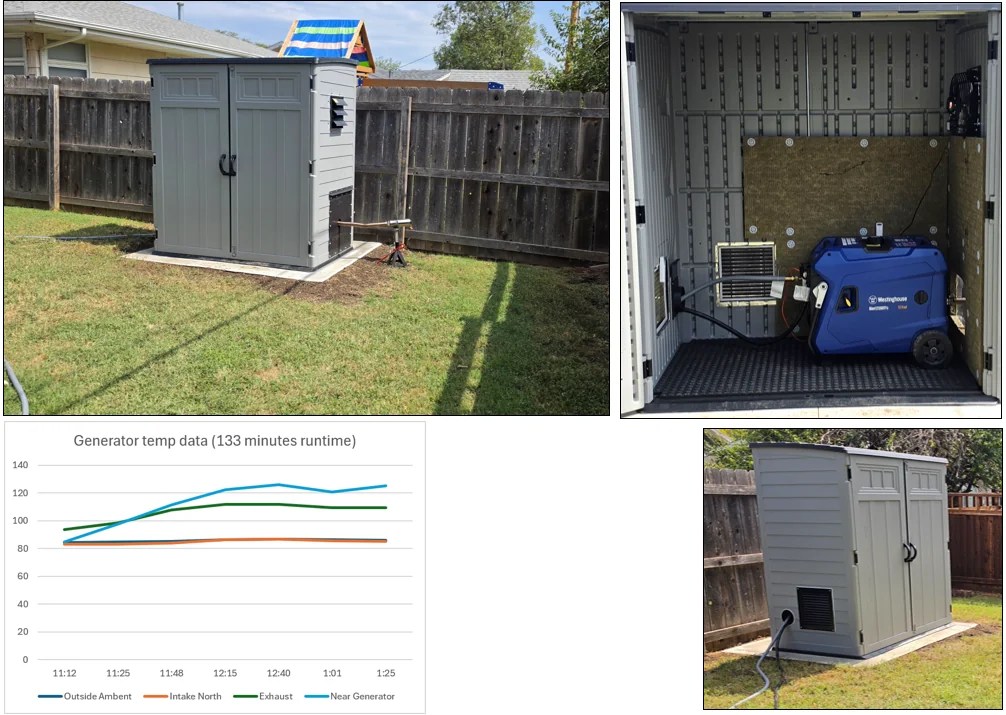
To track the test, the homeowner used four temperature sensors: three inside the shed and one outside in the shade for ambient conditions. After 133 minutes with the generator under load, the key interior reading had stabilized rather than continuing to climb.
The enclosure was built around moving heat away from the generator as efficiently as possible. A large wall opening was placed in front of the unit's cooling-air discharge, the engine exhaust was directed outdoors through a perforated steel panel, and ventilation also included two 16-by-16-inch passive intake vents and a 14-inch powered exhaust fan rated at 1,876 cubic feet per minute.
The test did reveal one concentrated trouble spot. Near the lower edge of the main cooling-air opening, temperatures hit about 187 degrees, and the homeowner said a slight repositioning of the generator could likely correct it.
TCD Picks » Quince Spotlight
💡These best-sellers from Quince deliver affordable, sustainable luxury for all




Fellow Redditors also pointed to other possible airflow changes. One commenter wrote: "The vent blowing out on top might be pulling some of the exhaust heat back in."
More background
The test aimed to see whether the generator could run in a more permanent, weather-protected enclosure without overheating.
A setup like that can make backup power less intrusive for neighbors by reducing noise, and it can also leave a homeowner better prepared when an outage begins. It may also help limit some of the costs of losing power for several days.
The homeowner said the project was inspired by firsthand experience: "I went without power for 5 days in June although I did have a generator with extension cords ran everywhere so I decided I wanted to try to improve upon that."
The homeowner also said the enclosure delivered another benefit in lower noise: "While in the shed it is even quieter, when standing near my AC unit, and 15 feet from the shed, I cannot hear the generator over the AC unit."
What else?
By checking temperatures at several points, including intake and exhaust air, the homeowner captured both the overall heat trend and the localized hot spot.
They also said they installed an interlock.
Even with some refinements still on the table, the homeowner described the outcome positively: "Overall, I'm extremely pleased with how the system performed."
"Nice setup," a commenter agreed. "Thanks for sharing!"
Where can I learn more?
You can read more about freezer prep during outages, room dividers, and homemade biodiesel fuel in these articles.
• A homeowner found a common freezer trick can actually hurt outage preparation.
• One frugal homeowner used budget-friendly room dividers to help keep rooms warmer.
• An off-gridder turned grease into fuel for home heating and machinery.

Get TCD's free newsletters for easy tips, smart advice, and a chance to earn $5,000 toward home upgrades. To see more stories like this one, change your Google preferences here.






