


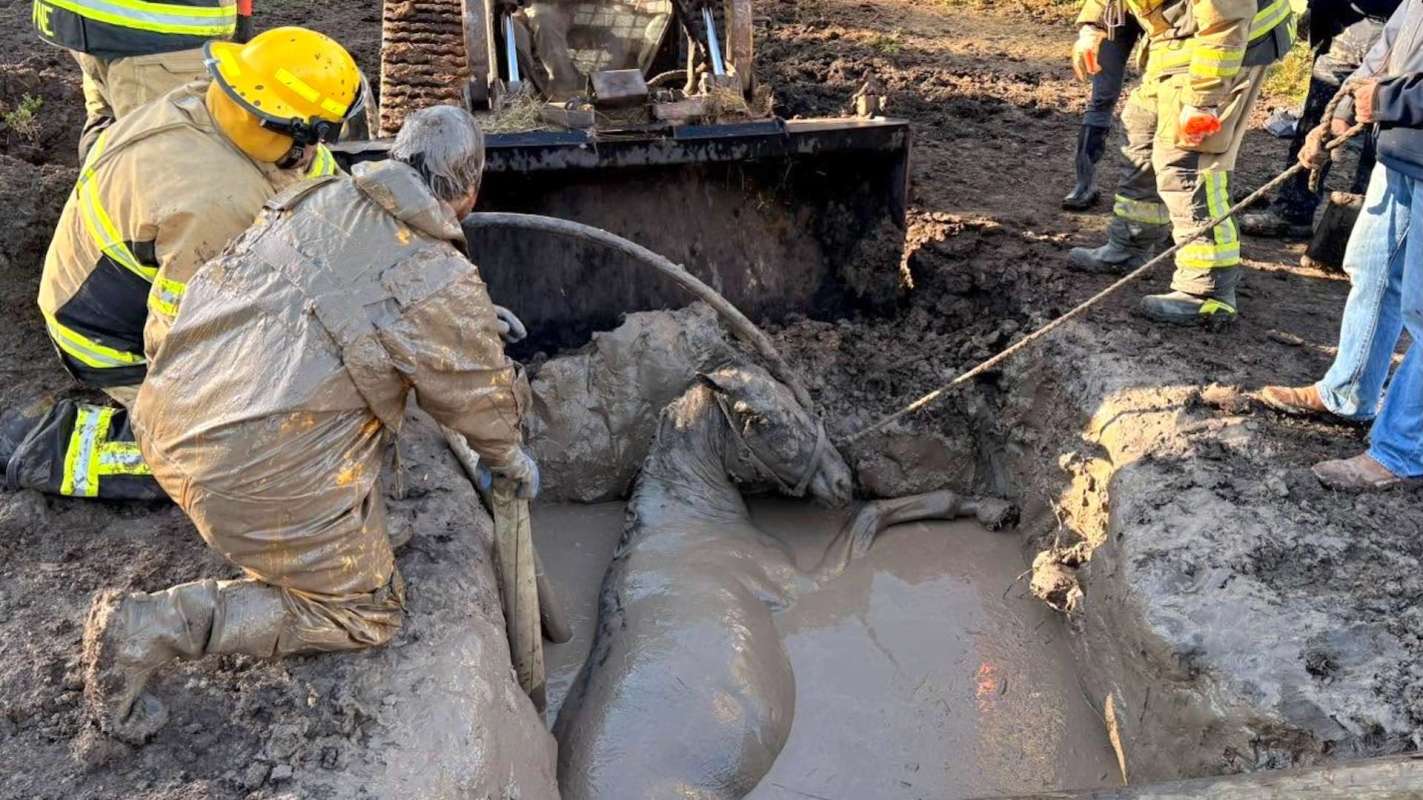
A horse trapped in a mud pit in Melfort, Saskatchewan, survived a dramatic rescue after firefighters used heavy equipment, digging, and a great deal of patience to bring the animal back to safety.
Here's what to know
As Northeast Now reported, the Melfort Fire Department was dispatched shortly after 7:30 a.m. to deal with a horse stuck in a pit.
Officials shared the ordeal on MFD's Facebook page (@MelfortFireDepartment).
By the time firefighters reached the scene, they believed the animal had already been trapped for hours and was badly worn out.
The first plan did not hold up in the mud. Crews used a sling and loader in an effort to raise the horse, but the panicked animal slipped out during the attempt.
Rather than try another straight lift, firefighters reworked the area around the horse. They dug a more gradual way into the pit so the animal could be guided and pulled out.
TCD Picks » Quince Spotlight
💡These best-sellers from Quince deliver affordable, sustainable luxury for all




That change worked, and the horse was eventually freed, per the post.
More background
Large-animal rescues are especially difficult because every move requires a balance between urgency and safety.
A trapped horse can become increasingly distressed as crews work around it, while muddy ground makes both lifting and footing more dangerous for rescuers and the animal alike.
A horse stuck for hours can become exhausted quickly, and a failed rescue attempt can make the situation worse if the animal becomes frightened or keeps slipping in deep mud.
In this case, the story ended happily for the horse.
"After getting some rest, we are pleased to report that the horse is expected to make a full recovery," MFD concluded in the post.
What can be done?
Horse and livestock owners should keep an eye on muddy low spots, excavated areas, and pits where animals can become trapped after wet weather or erosion. Barriers, fencing, and routine checks of vulnerable ground can help reduce the risk.
If an animal does become stuck, calling trained responders early is critical. Large animals can injure themselves or the people trying to help if they panic, and heavy mud can make an at-home rescue attempt far more dangerous.
The Melfort rescue showed why responders sometimes need to abandon an initial plan. After the sling-and-loader attempt failed, firefighters focused on creating a safer route out of the pit.
That patience can be just as important as equipment. In many animal emergencies, reducing stress and opening a workable route to safety may be the most effective rescue tool available.
Where can I learn more?
Rescues often involve tricky conditions and multiple plans of action that test the skills and resolve of trained responders.
• On Long Island, rescuers waded into 4-foot-deep marsh mud to save a coyote.
• In Maine, police and residents rescued a young moose trapped beside a garage overnight.
• In England, firefighters staged a delicate rescue after a pony wedged inside a tractor tire.
• At a wildlife hospital, staff used trial and error to free a fox cub from bitumen.

Get TCD's free newsletters for easy tips, smart advice, and a chance to earn $5,000 toward home upgrades. To see more stories like this one, change your Google preferences here.







