


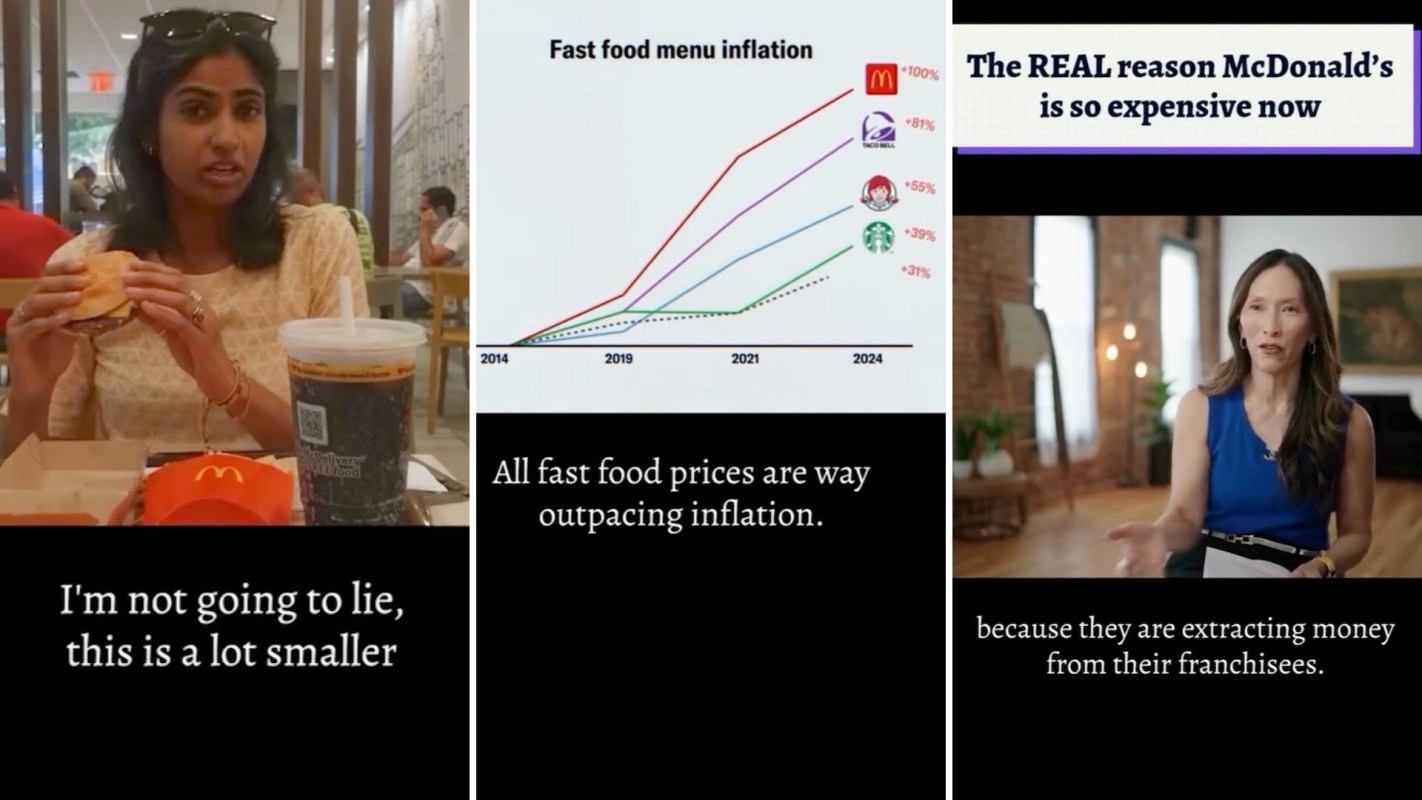
Fast food has long marketed itself as the affordable fallback for busy families, commuters, and workers in need of a quick meal. But an Instagram post by More Perfect Union (@perfectunion) is fueling fresh frustration over what happens when "cheap" food no longer feels cheap.
For many customers, the problem is not just sticker shock — it is also where the money seems to be going.
Here's what to know
In the Instagram post, More Perfect Union called fast food "the latest victim" of businesses prioritizing the bottom line and shareholders over customers, using McDonald's to make the case. The post says the chain's prices are about twice as high as a decade ago and that shareholders received nearly $40 billion in dividends.
Typically, the term refers to a product or service getting worse for ordinary users as maximizing profit takes priority. Here, the argument is that customers are being charged more without workers seeing meaningful gains, while investors capture most of the benefit.
When prices rise that sharply, the burden can fall hardest on people who rely on fast food because it is convenient, familiar, or one of the few affordable options in their area.
The criticism also reflects a broader concern about large corporations prioritizing shareholder returns over the workers who keep the business running and the customers who make it profitable in the first place.
TCD Picks » Quince Spotlight
💡These best-sellers from Quince deliver affordable, sustainable luxury for all




More background
Food prices remain a major pressure point for many households. Even relatively small increases can add up quickly for parents feeding children, workers buying lunch during a shift, or travelers looking for a predictable low-cost meal.
When a company raises prices while directing enormous sums to shareholders, it can deepen skepticism about whether those increases are unavoidable. Consumers may reasonably wonder why a meal costs so much more if workers are still struggling and service or portion sizes do not feel noticeably better.
Affordability is closely tied to quality of life. When everyday food options become more expensive, people have fewer choices within already stretched budgets, and that can contribute to stress, debt, and less flexibility elsewhere.
What can be done?
At the company level, one clear step would be directing more of that value toward workers and customers instead of overwhelmingly prioritizing dividends. That could mean fairer wages, more transparent pricing, or a stronger focus on real value rather than testing how much consumers will tolerate.
Public pressure also matters. Viral posts like this can push companies to respond when pricing strategies start to damage trust. Consumer backlash has become one of the few ways everyday people can challenge corporate decisions that feel disconnected from reality.
More Perfect Union said: "The profits have gone mostly to shareholders, who got nearly $40 billion in dividends over the past decade while customers suffer and workers are underpaid."

Get TCD's free newsletters for easy tips, smart advice, and a chance to earn $5,000 toward home upgrades. To see more stories like this one, change your Google preferences here.






