


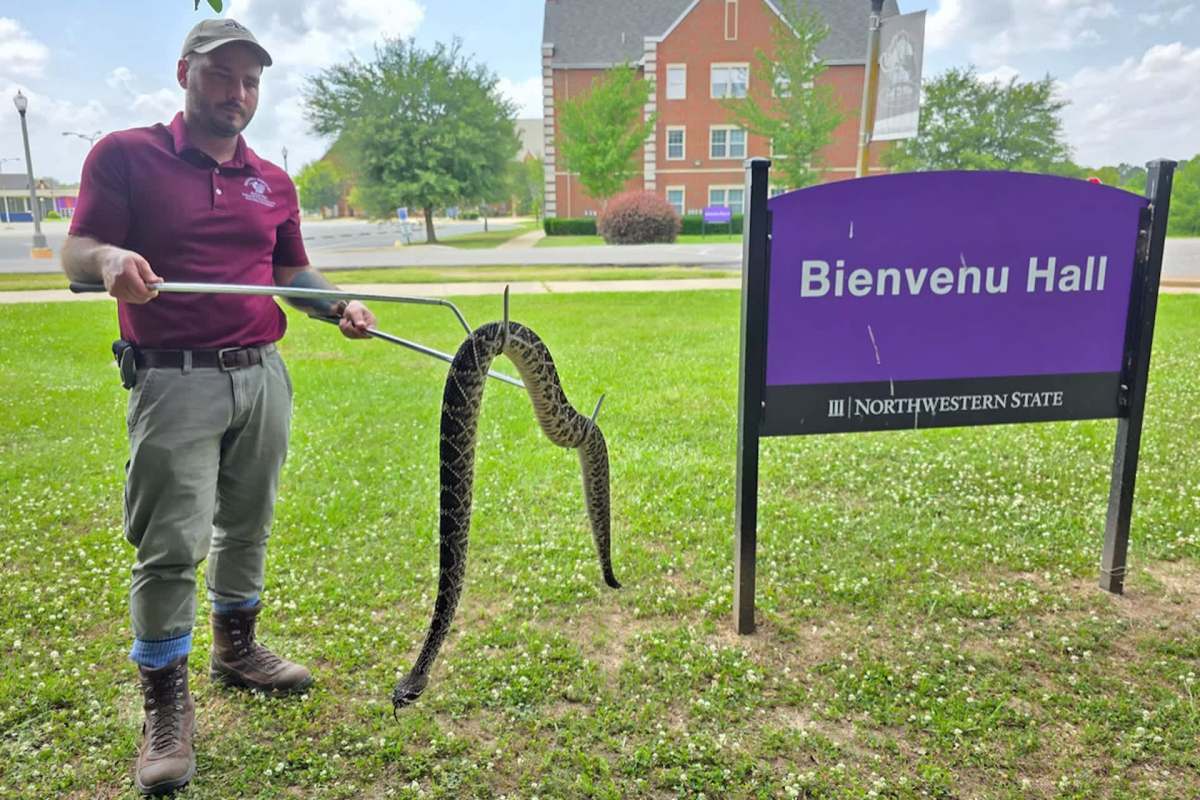
Handling a venomous snake is not a skill most people expect to learn on a college campus, but Northwestern State University in Louisiana is offering exactly that through a certification course.
It's aimed not only at specialists, but also at homeowners, first responders, and others who may unexpectedly find themselves face-to-face with dangerous reptiles, according to KALB.
Here's what to know
The class was part of a Rattlesnake Conservancy workshop that Northwestern State's Department of Biology and Microbiology planned to host on campus for people pursuing certification in venomous snake handling, per KALB.
Dr. Jerry Brunson, the department head, explained that the class was intended for a broad range of participants, from professionals to hobbyists.
It included hands-on instruction in single hooking, double hooking, bagging, and containment.
It will also cover native species, ecology, snake anatomy and physiology, reproductive behaviors, venom toxicology, emergency snakebite management, and captive husbandry.
TCD Picks » Quince Spotlight
💡These best-sellers from Quince deliver affordable, sustainable luxury for all




More background
Enrollment came with several conditions: Participants were required to be at least 18, sign a liability waiver, meet physical and mental participation requirements, and complete a written exam.
NSU said the course was designed for a broad range of attendees.
Homeowners and first responders, along with land managers, environmental consultants, zookeepers, veterinary professionals, biologists, herpetology enthusiasts, and photographers, were all among those for whom the course was created.
Rather than relying on internet myths or risky trial and error, participants in the NSU course will receive structured instruction on species knowledge, handling techniques, and snakebite response.
What can be done?
The safest outcome in many wildlife encounters begins with understanding what not to do.
Knowing how to identify risk, keep a safe distance, and use proper containment methods can help prevent injuries to both people and animals.
Brunson said the idea came about after a colleague completed the training himself.
"One of our faculty, assistant professor of biology, JD Cox, is a snake enthusiast and took the training," Brunson began.
"He loved the experience and met with me to tell me about it and ask if we could bring them here. So, after a series of emails with the Conservancy, and receiving approval — which was interesting — to bring them, here we are."
Where can I learn more?
These stories offer more information on what happens when snakebites, rattlesnake attacks, and venomous snakes are closer to populated areas and become part of daily life.
• In Arizona, authorities issued a warning after a fifth rattlesnake attack occurred.
• In Florida's Big Cypress, a person was hospitalized after a snakebite in the preserve.
• Experts warn venomous snakes will increasingly travel toward heavily populated coastlines as habitats shift.

Get TCD's free newsletters for easy tips, smart advice, and a chance to earn $5,000 toward home upgrades. To see more stories like this one, change your Google preferences here.







