


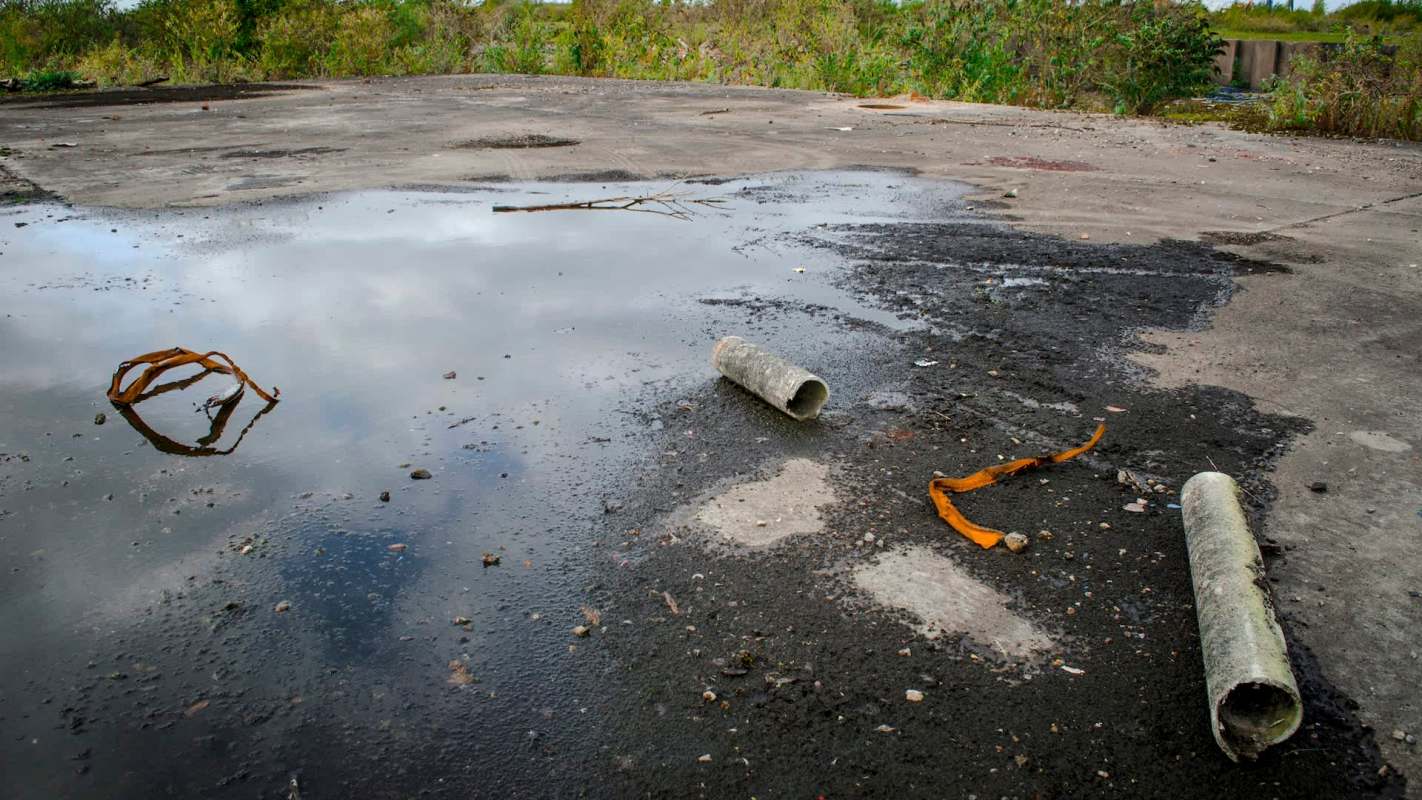
Under some of Pittsburgh's most ambitious redevelopment projects, researchers studying a former steel site say bacteria that adapted to decades of pollution could one day help scientists clean up contaminated land more effectively.
Here's what to know
Scientists are focusing on Hazelwood Green, a 178-acre former industrial tract on the Monongahela River, to see how subsurface microbes handled contamination left by more than a century of steel production.
According to The Conversation, the site's legacy pollutants included petroleum hydrocarbons, heavy metals, and BTEX chemicals — benzene, toluene, ethylbenzene, and xylene — with some known to be carcinogenic.
Sites like this are hardly unusual in Pittsburgh, Appalachia, or the Rust Belt, where brownfields — former industrial or commercial sites — often remain marked by contamination that can be costly and difficult to manage even after cleanup and redevelopment.
At Carnegie Mellon University, one lab is analyzing soil cores with metagenomic sequencing to identify the microorganisms still present deep below the surface and the functions they may perform.
Researchers want to know whether these microbes did more than endure industrial chemicals — whether they also developed the ability to break them down. If so, they could become a useful asset in future cleanup efforts.
TCD Picks » Quince Spotlight
💡These best-sellers from Quince deliver affordable, sustainable luxury for all




More background
Because BTEX compounds can harm people and other organisms in places like Hazelwood Green, microbes that naturally degrade them could eventually help lower exposure risks. Conventional remediation methods, including removing contaminated soil or covering it with clean fill, can make a property usable again without fully eliminating the pollutants underneath. As a result, those sites may still require ongoing monitoring.
If bioremediation can be strengthened with microbes already adapted to local conditions, cleanup work at contaminated properties could become more effective.
What's being done?
The team collects bacterial samples from Hazelwood Green and other Pittsburgh locations, then grows them in lab conditions where a pollutant is the only available carbon source. Growth in those conditions can suggest the microbes are using the contaminant as food.
To move faster, the researchers are working with Carnegie Mellon's AI Science Foundry at Bakery Square, itself a remediated brownfield. Robotic systems there can test thousands of individual bacterial species at once and measure how well they break down BTEX compounds.
The scientists are also building open-source tools, including BTEXgenie, to scan bacterial genomes for genes associated with breaking down pollution. Together, that mix of biology, automation, and data analysis could help researchers find promising cleanup microbes much more quickly than older methods that study one organism at a time.
As redevelopment spreads across former industrial land in the region, this research points to an unexpected source of future cleanup advances below ground. Microbes that have been adapting to pollution for decades could help shape the next generation of remediation technology.
Where can I learn more?
These articles explore how scientists and companies are detecting toxic contamination and breaking down plastic waste.
• Scientists have developed a practical tool to detect cadmium in wheat grains.
• Microbes in sewage sludge revealed an astonishing enzyme that could reduce plastic pollution.
• A startup has launched transformative fungi-powered technology that breaks down plastic in products.

Get TCD's free newsletters for easy tips, smart advice, and a chance to earn $5,000 toward home upgrades. To see more stories like this one, change your Google preferences here.






