


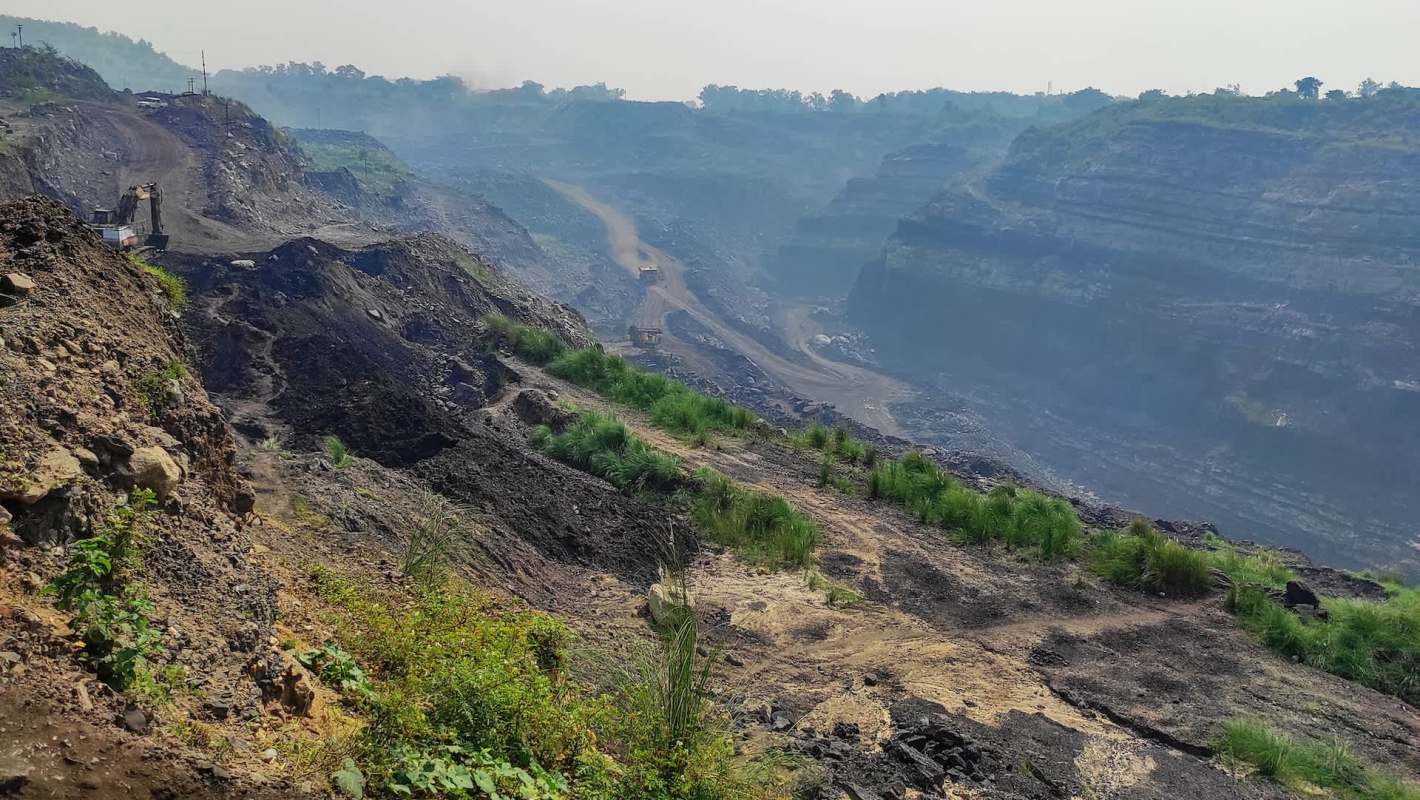
A surprising milestone has emerged in India's power sector: Coal-fired electricity in the first half of 2026 matched its level from the first half of 2024.
Even as electricity use continued to climb and India's total pollution rose 3.7% from the first half of 2025, the country went two years without any growth in coal power — something that had not happened in more than 50 years.
Here's what to know
In a fresh six-month review, Carbon Brief concluded that clean energy met the full 7% rise in electricity demand over those two years.
India consumed 63 terawatt-hours more electricity, while clean sources supplied an extra 70 terawatt-hours, enough to keep power-sector carbon pollution at 2024 levels.
Most of the shift came from solar. Over those two years, India added 77 gigawatts of solar capacity, enough to cover roughly 60% of the increase in power demand.
Growth in wind, hydropower, and nuclear energy added to that momentum, allowing the grid to serve more households, businesses, and industry without raising non-renewable power generation.
TCD Picks » Quince Spotlight
💡These best-sellers from Quince deliver affordable, sustainable luxury for all




Industrial pollution moved the other way. Carbon Brief said pollution from steel and cement in the first half of 2026 was up 8% from the first half of 2025 and made up 23% of India's total carbon pollution. Pollution from oil and gas fell 7%, extending a decline that began in 2025 and easing some of the pressure from the Strait of Hormuz crisis, but higher industrial pollution offset those reductions.
More background
The nonrenewable energy industry plays a major role in worsening extreme weather disasters that destroy homes, livelihoods, and local economies. Its extraction, production, and burning also drive air and water pollution linked to asthma, heart disease, cancer, and premature death.
The shift has not looked the same across the country. Carbon Brief found that Gujarat saw both the largest drop in nonrenewable generation and the biggest increase in clean power, while Rajasthan and Tamil Nadu also recorded major gains.
The analysis also noted that some states cut nonrenewable generation partly by importing more electricity from elsewhere, rather than mainly by building their own clean capacity.
What's being done?
As of May 2026, the government had issued tenders for about 272 gigawatt-hours of storage, including pumped hydro and battery systems, according to Carbon Brief. The National Electricity Plan put storage needs at 82 gigawatt-hours for 2026-27 and 411 gigawatt-hours for 2031-32.
Changes beyond the power sector are also affecting fuel use. India reached its 20% ethanol blending target in 2025-26, which slowed petrol demand growth, and electric vehicle adoption is spreading into more parts of the transportation market.
Delhi has also rolled out an EV policy centered on two-wheelers, three-wheelers, commercial vehicles, and charging infrastructure.
Even so, India still had 43 gigawatts of coal power under construction at the end of June 2026, along with plans for coal gasification, domestic coking coal expansion, and new coal mining.
According to the analysis, clean electricity will not reduce total pollution unless industrial electrification speeds up as well, especially in steel and cement, rather than only cutting pollution from the power sector.
Where can I learn more?
Explore these stories on India's clean-tech push, renewable energy costs in Asia, and coal's decline elsewhere.
• Across India, electrification, solar, and batteries are emerging as a faster path to growth.
• Across Asia, renewable energy is now cheaper than coal.
• In the United States, wind and solar outpaced coal.

Get TCD's free newsletters for easy tips, smart advice, and a chance to earn $5,000 toward home upgrades. To see more stories like this one, change your Google preferences here.






