


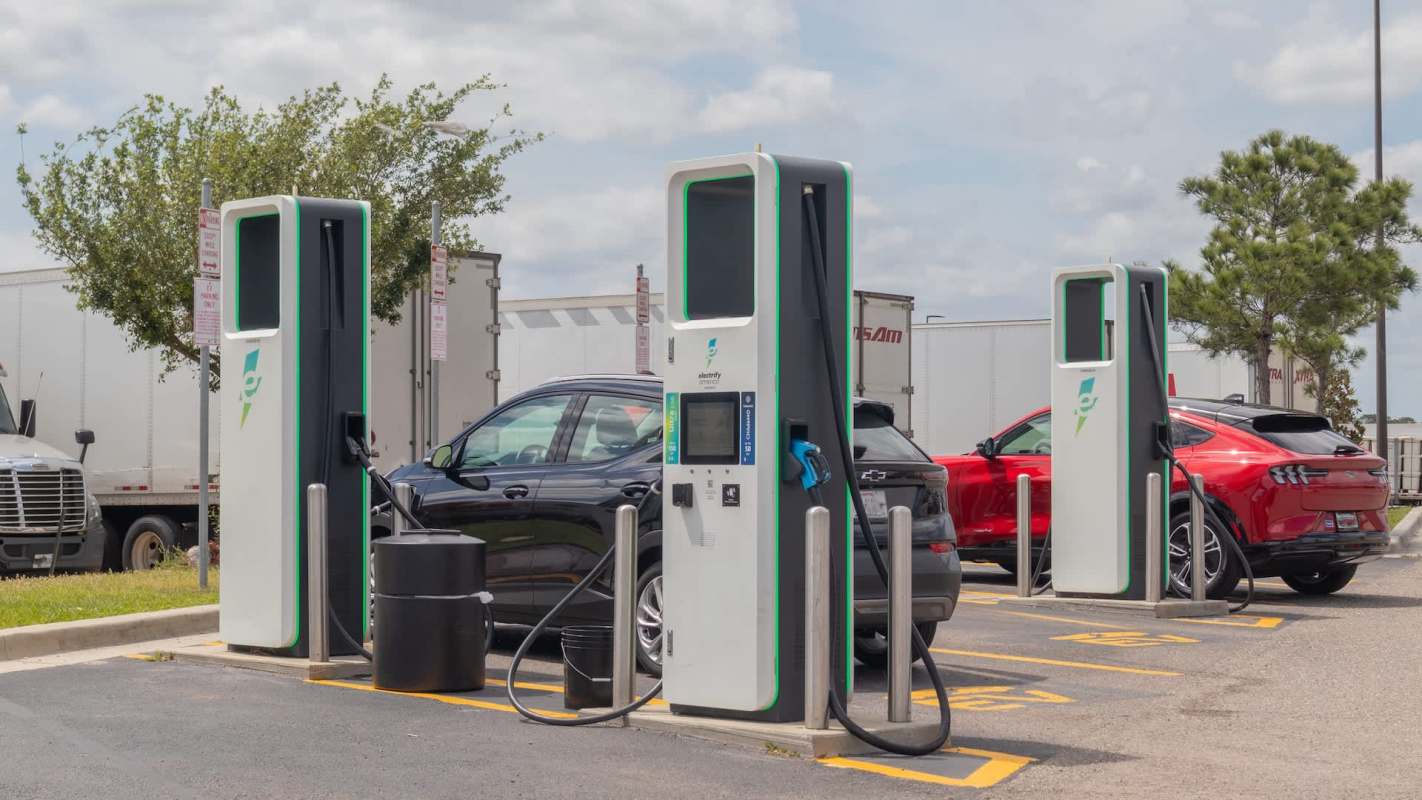
President Donald Trump's attempt to freeze the $5 billion National Electric Vehicle Infrastructure program did not stop every project. In Pennsylvania, three more publicly funded charging stations opened even as a coalition of states challenged the move in court.
Here's what to know
According to CleanTechnica, the fight centers on the National Electric Vehicle Infrastructure program, or NEVI, created in the 2021 Bipartisan Infrastructure Law to help states install fast chargers along highways and other major travel corridors.
NEVI was meant to make longer EV trips easier by supporting a coordinated nationwide buildout of public fast-charging stations.
Trump directed the U.S. Department of Transportation to suspend the program in January 2025, after NEVI had already reached 61 operating charging ports by July 2024 and had another 2,500 in development.
That decision quickly created uncertainty for states that had already built plans around the funding.
Even after the attempted freeze, Pennsylvania opened three more NEVI-funded stations on Feb. 26, 2025, bringing the state's total to eight.
TCD Picks » Quince Spotlight
💡These best-sellers from Quince deliver affordable, sustainable luxury for all




Several states answered with a lawsuit on Aug. 1, 2025, naming Transportation Secretary Sean P. Duffy and Federal Highway Administration administrator Gloria M. Shepherd in a bid to restore the funding.
The lawsuit argued, "President Trump has unleashed an attack on an increasingly popular consumer choice — the electric vehicle."
Public charging can be essential for people who cannot install a charger where they live. It also supports longer trips while giving communities along major travel corridors a chance to attract travelers and new business.
More background
Progress under the program did not look the same everywhere.
Despite slower planning in some places, staffing shortages in others, and ongoing difficulty finding suitable sites, all 50 states had submitted NEVI plans within three years of the law's passage, and eight states were already installing stations.
Halting a congressionally funded buildout can delay construction jobs, disrupt local planning, and slow the shift to transportation options that can help families spend less on fuel over time.
CleanTechnica also cited reporting from legal news organization Leg1 indicating that staffing cuts at the Transportation Department and Energy Department slowed program administration.
Under the Consolidated Appropriations Act, 2026, Duffy transferred nearly $1 billion in undisbursed NEVI and related funds to other highway programs.
It can also deepen inequities, since dependable public charging is particularly important for renters, apartment dwellers, and rural drivers who may not have easy access to private chargers.
What's being done?
Even with that uncertainty, some states are still pressing ahead.
On Sept. 14, North Carolina's Department of Transportation announced a new round of NEVI awards, adding seven locations to five stations funded in 2024, according to CleanTechnica.
North Carolina's total NEVI allocation is $109 million, and the Sept. 14 awards covered $14.4 million of that amount.
The state expects the funding to support a three-year buildout and eventually expand charging access beyond major highways into rural areas and other communities.
New York City plans to add 600 curbside chargers beyond the 88 it already has, backing a phased-in local rule that requires Taxi and Limousine Commission-licensed drivers to use zero-emission or wheelchair-accessible vehicles.
North Carolina Department of Transportation State Initiatives Manager Heather Hildebrandt emphasized the broader opportunity, saying, "By expanding our electric vehicle charging network, we're making it easier for everyone to travel confidently across the state, while supporting a cleaner, more modern transportation economy."
Where can I learn more?
These articles look at delayed charging projects, Tesla-related policy and business setbacks, and EV incentive disputes.
• In Texas, officials deferred a statewide vote on chargers as range anxiety lingered.
• After Tesla layoffs, America's charging expansion faced fresh uncertainty over site maintenance.
• In Canada, Tesla was frozen out of incentives worth $43 million amid tariffs.

Get TCD's free newsletters for easy tips, smart advice, and a chance to earn $5,000 toward home upgrades. To see more stories like this one, change your Google preferences here.






