


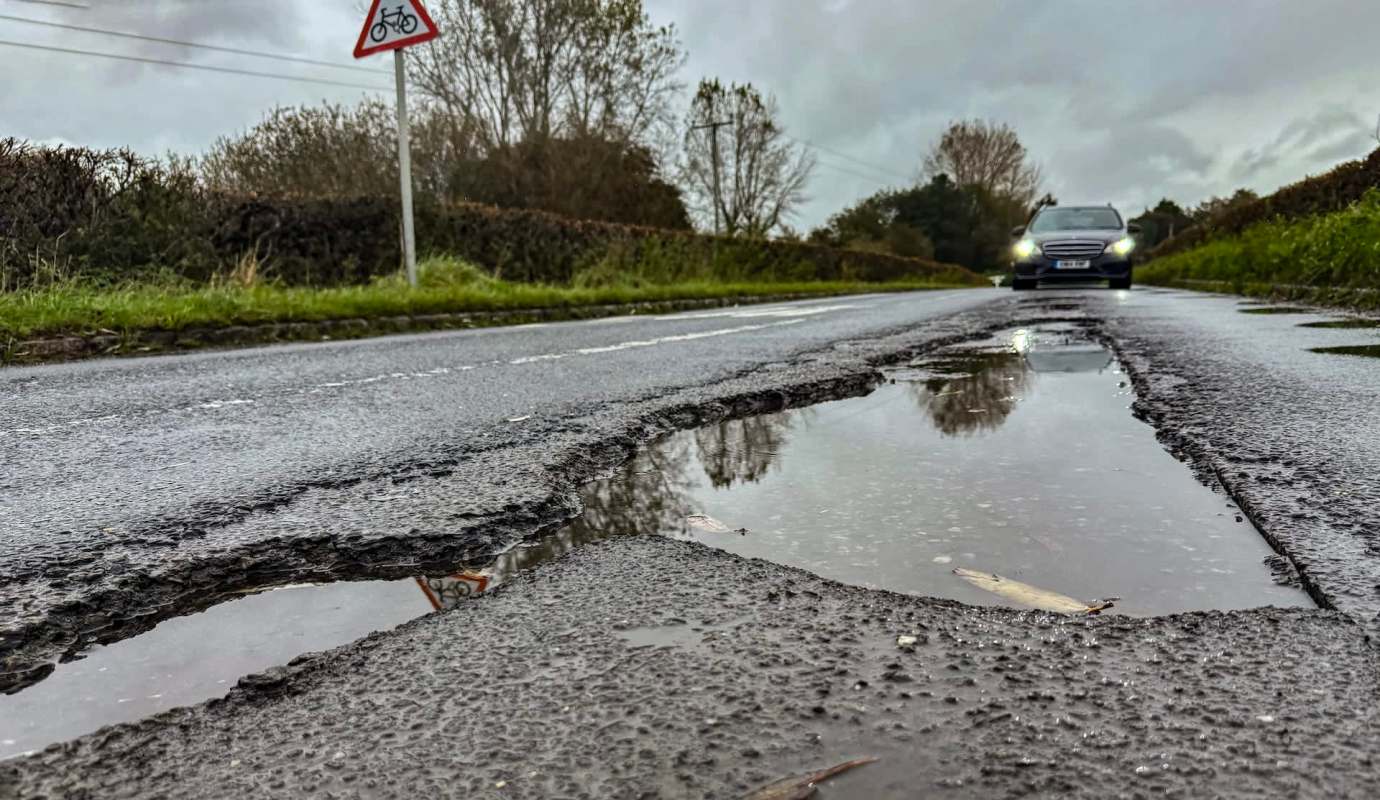
A summer of punishing heat in Britain comes with warnings of extra potholes to come.
Here's what to know
After five heatwaves and a temperature of 100.6 degrees Fahrenheit (38.1 degrees Celsius) at Kew Gardens in south-west London, the RAC says Britain's roads may be heading for an increase in potholes, as the Daily Mail reported.
Pothole season is often associated with winter, but RAC head of policy Simon Williams said, "Intense UV exposure and heat gradually oxidise the bitumen that binds asphalt together, making surfaces more brittle and prone to cracking. Once cracks develop, traffic and later rainfall can quickly turn them into serious defects."
According to a 2026 report, 51% of motorists' biggest worry while driving is road conditions. Meanwhile, 83% of drivers come across potholes on the majority of their travels, and 54% encounter them on every trip.
There are an estimated 1 million potholes in the U.K. and new figures suggest motorists pay around £3.3 billion — or $4.42 billion — in repair damages annually. Damage from potholes can affect tires, suspension systems, wheels, and alignment, turning stressed infrastructure into a direct household expense.
More background
For 2025-26, council highway budgets in England have been increased to a record £1.6 billion — $2.14 billion.
TCD Picks » Quince Spotlight
💡These best-sellers from Quince deliver affordable, sustainable luxury for all




Mike Hansford, chief executive of the Road Surface Treatments Association, said, "Extremes in the U.K.'s weather, including increased summer UV radiation, combined with colder, wetter winter conditions, can accelerate deterioration. So, it's more important than ever to ensure our roads are made more resilient for the future through application of early life, preventative treatments."
The Department for Transport has now issued requirements for English councils to prove they are doing more to fix potholes and future-proof roads. If not, they risk losing up to a third of their funding for road maintenance.
What can be done?
The most practical step is to stay alert for newly formed road damage, especially after stretches of intense heat followed by rain. Slowing down on rough roads and leaving more braking distance can help reduce the risk of hitting hidden defects at speed.
It also helps to check tires regularly and watch for changes in steering, vibration, or suspension feel, since these can be early signs that pothole damage has already occurred. Reporting serious potholes to local authorities may also help speed repairs before small cracks turn into bigger hazards.
Where can I learn more?
For more on severe weather in the U.K. and Australia, disaster-related health risks, and drought in Arizona, read these articles.
• In the U.K., Storm Ashley brought flooding and 80 mph winds, battering coasts and roads.
• In southeastern Australia, the most significant heatwave in years strained communities and daily routines.
• Across Australia, the entire electricity grid faced pressure as extreme heat heightened bushfire danger.
• After major weather disasters, death rates stayed elevated for weeks as healthcare systems struggled.
• In Arizona, one of the driest winters on record deepened worries over water supplies.

Get TCD's free newsletters for easy tips, smart advice, and a chance to earn $5,000 toward home upgrades. To see more stories like this one, change your Google preferences here.






