


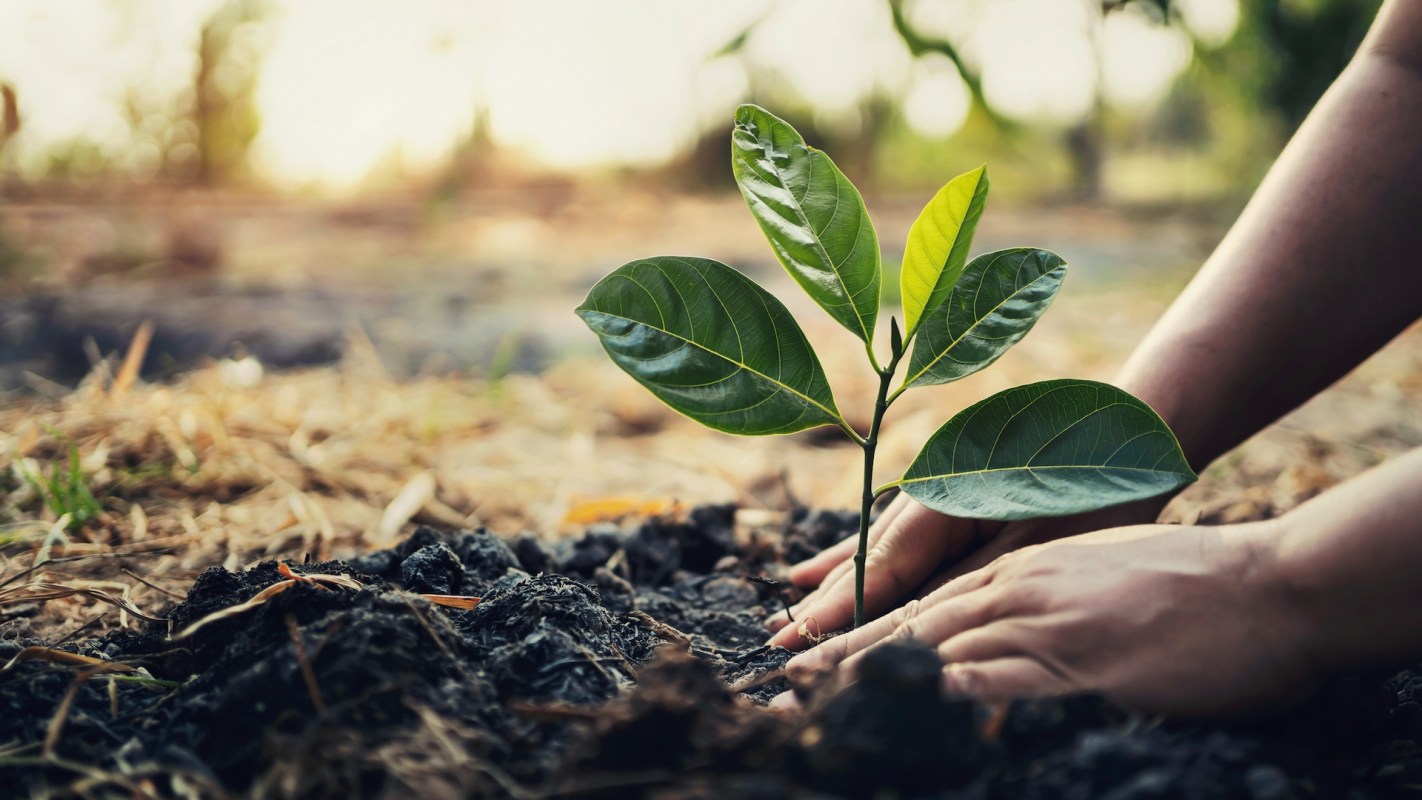
When Halima Kedir began planting trees in Ethiopia's Oromia region, her neighbors mocked her.
After transforming her own garden and inspiring others to follow her lead, that skepticism has turned into admiration and helped spark a growing movement in her community.
Here's what to know
Ethiopia has continued to lose tree cover — about 560,000 hectares (roughly 2,160 square miles) between 2000 and 2025 because of expanding farmland, logging, and charcoal use, according to The Guardian. Against that backdrop, Kedir of the Berbere district has planted thousands of banana, olive, and grevillea trees.
She said the reaction was intensely discouraging.
"My neighbours discouraged me," she said. "They thought I was striving for nothing, but with time, many are realising that trees can be part of the solution to our problems as a way to fight climate change and food insecurity."
Nationally, officials credit the Green Legacy Initiative, launched in 2019, with progress on tree cover. Annual deforestation fell from 92,000 hectares (over 355 square miles) in 2013 to 27,703 in 2023 while forest cover rose from 15.5% to 23.6%. Authorities also say the campaign has planted 48 billion trees since 2019 and aims to plant 50 billion by 2030.
TCD Picks » Quince Spotlight
💡These best-sellers from Quince deliver affordable, sustainable luxury for all




Kedir's neighbor Fate Abdulahi said the visible results helped change minds in the community.
"She proved us wrong, and she has become a role model and someone willing to find local solutions to our issues," Abdulahi said.
More background
Because Ethiopia is seen as especially exposed to climate shocks, expanding tree cover matters for several reasons. It can bolster soil, hold in moisture, sustain biodiversity, and reduce damage from drought and erosion.
Keeping the seedlings alive has required major effort. Because water is scarce, she sometimes spends an hour traveling to fetch it for them, and she linked that devotion to the Oromo tradition of guddifachaa, saying: "Just like we adopt a child in our tradition, I see them like my own children."
A 2022 estimate from the government-backed GLI technical committee placed average seedling survival at 83.4% for 2019 and 79% for 2020, although those numbers have been disputed.
Yitebitu Moges, who coordinates the REDD+ deforestation scheme for the U.N.'s Environment Programme in Ethiopia, said researchers are examining survival rates.
"We are collecting data and are now committing ourselves to a systematic assessment of survival rates," he said.
What's being done?
With backing from WaterAid Ethiopia, the planting campaign has expanded into thousands of households in nearby kebeles, or neighborhoods.
Alebachew Adem, director of WaterAid Ethiopia, said: "To date, approximately 55,000 indigenous tree seedlings have been distributed to households and community institutions across the area." Adem added that 85% of the seedlings have grown successfully.
In arid areas, trees that are native or suited to local conditions can help secure food, create shade, stabilize agricultural land, and reduce exposure to intensifying heat and water shortages.
Restoration work is also being funded at the national level. Parliament established the Green Legacy and Landscape Restoration Special Fund and assigned 0.5% to 1% of Ethiopia's 2.339tn birr annual federal budget to degraded landscapes.
"They should give the issues of water and trees, which many in such communities lack, the priority they deserve," she said.
Where can I learn more?
These articles look at tree planting, forest restoration, invasive-tree removal, and a hardy species for dry regions.
• An Andes biologist spent decades planting over 3 million trees to protect water.
• In Cameroon, activist Sevidzem Ernestine Leikeki is transforming endangered forests into community opportunity.
• A local native-plant group is removing invasive Bradford pears to restore damaged habitat.
• In dry regions, the pongamia is a miracle tree for food and climate resilience.

Get TCD's free newsletters for easy tips, smart advice, and a chance to earn $5,000 toward home upgrades. To see more stories like this one, change your Google preferences here.







