


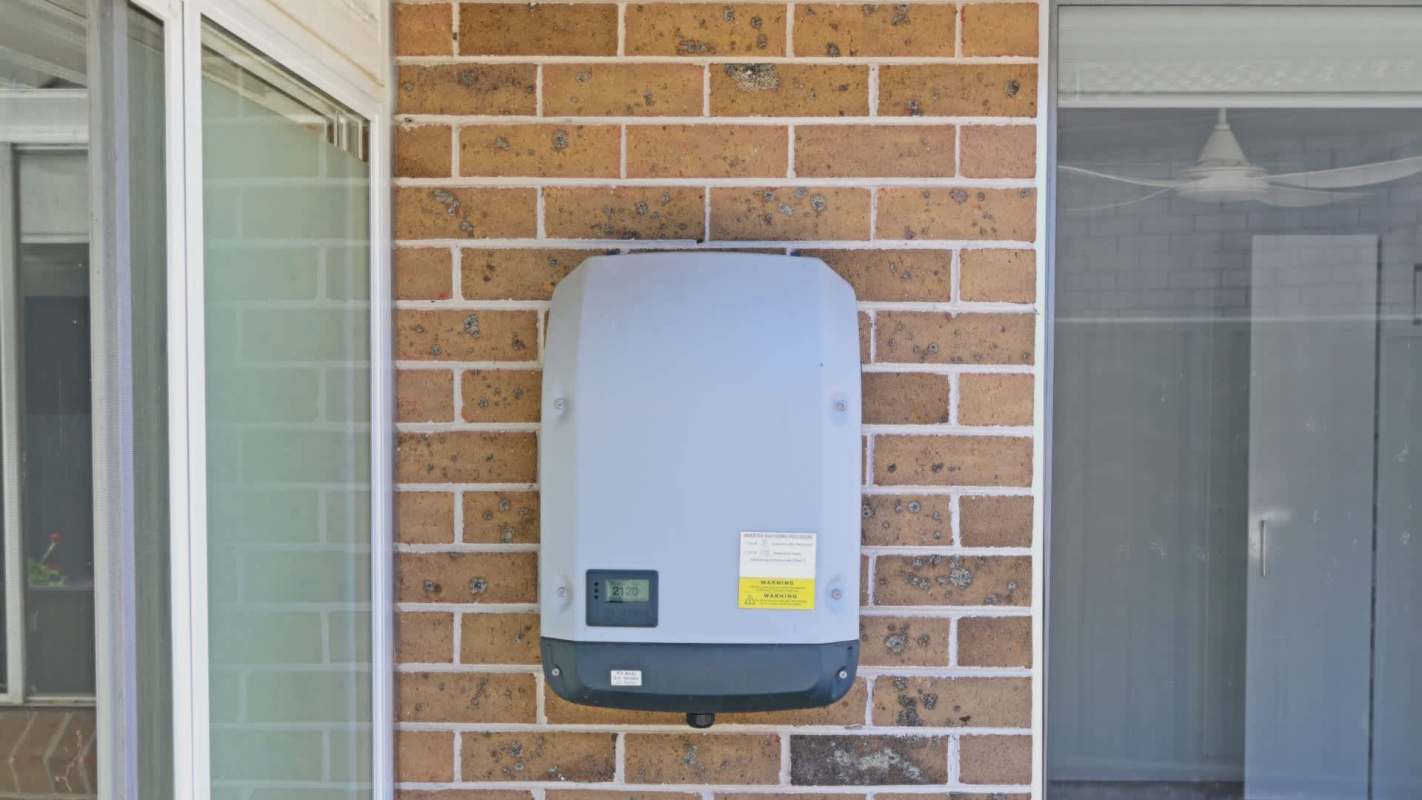
A U.K. resident comparing home solar setups dug into a very specific question: For a house with an air-source heat pump, two electric vehicles, and no gas connection, how important is home solar battery sizing?
After running the numbers on two storage sizes — 14.6 kilowatt-hours versus 17.5 kilowatt-hours — the answer was that the small capacity system might be worth buying, since the extra cost of the larger battery doesn't pay for itself financially.
Here's what to know
In a Reddit post, the homeowner ran a detailed financial and energy model using their personal smart meter data.
The homeowner said they got cheap electricity through a special EV tariff called Intelligent Octopus Go. But their goal is to install solar panels and a home battery so they can charge the battery with cheap overnight power and run the house off the battery when power gets too expensive.
Option A is the bigger battery at £13,500 ($18,080) for 17.5 units of power; Option B is a slightly smaller battery at 14.6 units of power for £12,275 ($16,439).
Their calculations found that the extra storage space with the bigger battery would only save the house £10 ($13) to £40 ($54) a year, and it would take them over 30 years to make back the extra £1,225 ($1,640) difference between the two batteries.
Plus, neither battery survives the deep winter. The only downside to going smaller is the battery would have to work harder, but that doesn't necessarily mean it will wear down faster than the big battery.
For homeowners weighing similar choices, adding battery storage is one of the best ways to protect your home during outages, save money on energy, and move closer to going off-grid. If you're comparing systems, EnergySage can help you explore home battery storage options and competitive installation estimates, and EnergySage has teamed up with the electrification brand Qmerit to guarantee you get the best price on home battery storage solutions. Another option is Pila, whose plug-and-play batteries cost a fraction of what a whole-home backup system would cost.
Save $10,000 on solar panels without even sharing your phone number Want to go solar but not sure who to trust? EnergySage has your back with free and transparent quotes from fully vetted providers in your area. To get started, just answer a few questions about your home — no phone number required. Within a day or two, EnergySage will email you the best options for your needs, and their expert advisers can help you compare quotes and pick a winner. Solar panels can save you more than $50k over their 25-year lifespan, and EnergySage can help you save as much as $10k on installation. Which begs the question — isn't that worth an email or two? |

What can be done?
Pulling smart-meter data, separating EV charging from household demand, and modeling winter usage can show whether a few extra kilowatt-hours are financially meaningful or mostly emotional insurance.
If the priority is reducing energy bills, the homeowner's analysis suggests the final few kWh may offer the least value. If the priority is resilience, comfort, or avoiding the need to constantly watch battery levels in winter, a larger system could still make sense.
Households that want backup power without committing to a full-home system may also find lower-cost options useful, especially as prices and product types continue to diversify.
Commenters also noted that tariff choice matters just as much as the hardware itself. A well-matched battery can perform differently depending on time-of-use plans, export tariffs, and EV charging deals, meaning the ideal system size may depend as much on the utility plan as the roof.
Where can I learn more?
These stories dig into home batteries, community storage, and what rooftop solar can cost — and save — homeowners.
• German battery maker sonnen is building what could be the first virtual power plant for homes.
• In England, residents funded the U.K.'s first community-owned battery to store surplus solar power.
• Former EnergySage president Charlie Hadlow broke down the mystery of solar costs for homeowners.
• An energy professional shared a home upgrade that can save homeowners up to $62,000 over 25 years.
• An energy expert said investing in solar panels can mean free electricity for decades.

Get TCD's free newsletters for easy tips, smart advice, and a chance to earn $5,000 toward home upgrades. To see more stories like this one, change your Google preferences here.






