


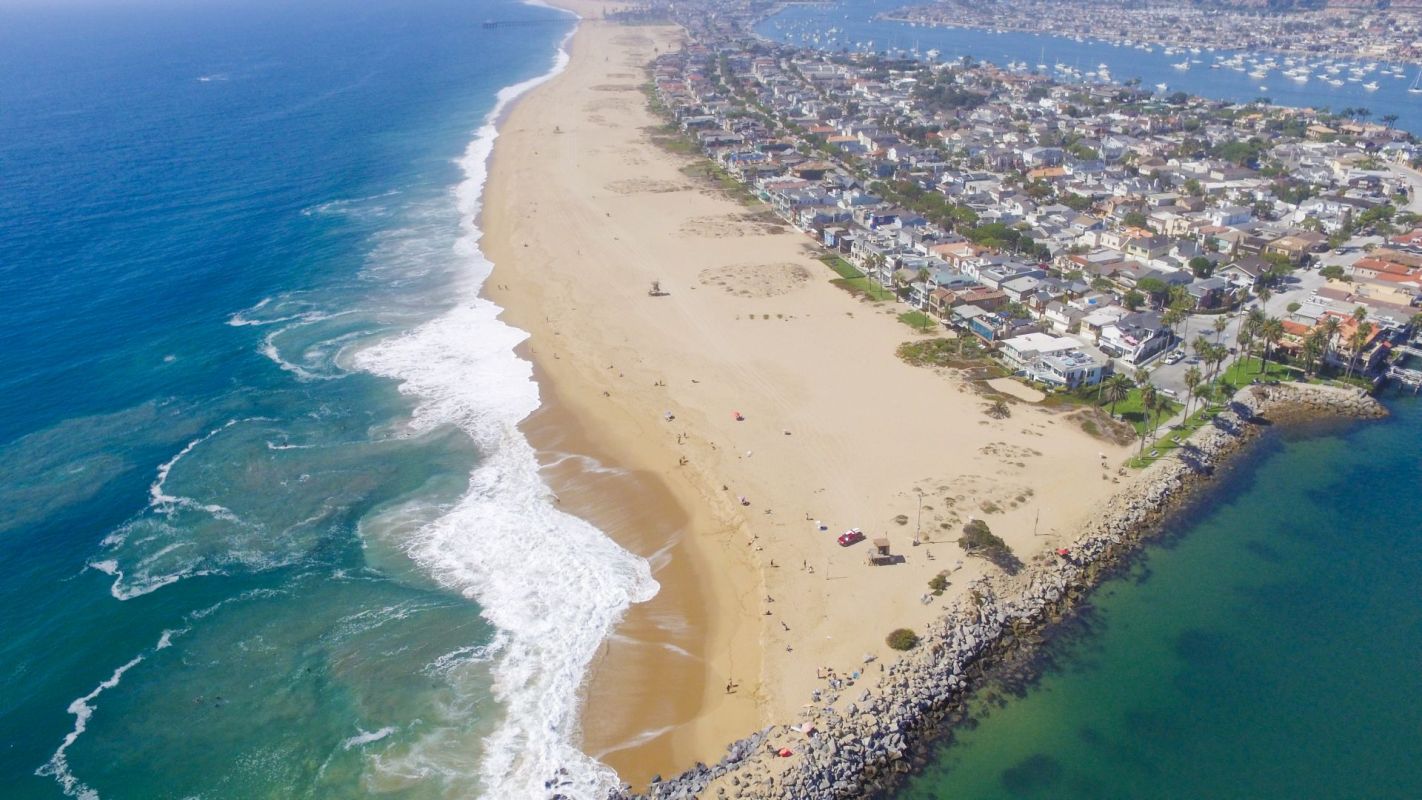
At the Wedge in Newport Beach, hurricane-driven surf did more than put on a show. The waves also scoured away sand and brought hidden features to the surface, including tall wooden pilings, steel cables, and buried rock.
Beachgoers may have first taken the find for the remains of an old pier, but it could instead be part of an old harbor construction that helped shape one of California's best-known waves.
Here's what to know
After the swells revealed the wooden pilings along the shoreline, city officials removed them to protect the public. According to Fox Weather, the structures may be linked to the engineering projects that formed the beach.
Don Webb, a former Newport Beach mayor, retired public works director, and member of the Newport Beach Historical Society, said that the timbers most likely came from a temporary wooden trestle erected in 1917. The trestle carried rail cars loaded with rock for Newport Harbor's west jetty project.
Rather than being shaped by natural forces alone, the Wedge grew out of decades of construction work. Storm damage led to jetty repairs in 1920, the structure was rebuilt and extended in 1928, and additional shoreline protection — including two groins at the jetty base — was added in 1930.
That built environment altered how waves break there and helped make the Wedge famous. Swells strike the jetty rocks, bounce back, and meet the next incoming wave in shallow water, creating the steep, explosive shore break the spot is known for.
TCD Picks » Quince Spotlight
💡These best-sellers from Quince deliver affordable, sustainable luxury for all




More background
The intense surf stripped away enough sand to expose buried wood, cables, and rock — material that could become dangerous for people on the beach if left uncovered.
Worsening extreme weather disasters can threaten lives and livelihoods by damaging infrastructure, accelerating erosion, and creating sudden hazards in public spaces. For coastal communities, that can mean public safety risks, disruptions for workers and local businesses that rely on beach tourism, and costly cleanup or repair efforts for local governments.
At the same time, the exposed timbers offer a rare glimpse into how earlier generations changed the coastline. Webb said he believes some of the material may also have come from one of the groins added in 1930, suggesting the beach still contains physical evidence of multiple phases of harbor construction.
What surfaced from the sand helps explain how a famous recreation destination was engineered — and how storms can still reveal the hidden past beneath heavily trafficked shorelines.
What's being done?
To reduce the risk to people on the sand and in the surf, Newport Beach officials sawed down the exposed pilings and removed them.
Historical records are also helping clarify what was found. Webb's review of old plans, reports, and photographs offers a likely explanation for the wood and other remnants, indicating that what first looked like random debris may instead be evidence of the 1917 jetty project and later shoreline work.
Buried infrastructure, sharp debris, and unstable shoreline features can quickly reemerge when sand shifts after major storms and swell events.
"To the best of my knowledge, based on many years of reviewing plans and reports on the area, there has never been a pier in that vicinity," Webb said.
Where can I learn more?
Storms and shifting shorelines are making coastal risks harder to ignore, in California and well beyond. Intense weather and erosion can damage communities and change the places people rely on.
• In Southern California, a disastrous landslide crisis is tearing apart homes along the coast.
• Across the West Coast, atmospheric rivers now rank like hurricanes as storms intensify.
• In Australia, severe coastal conditions are collapsing shorelines and creating persistent hazards for communities.

Get TCD's free newsletters for easy tips, smart advice, and a chance to earn $5,000 toward home upgrades. To see more stories like this one, change your Google preferences here.







