


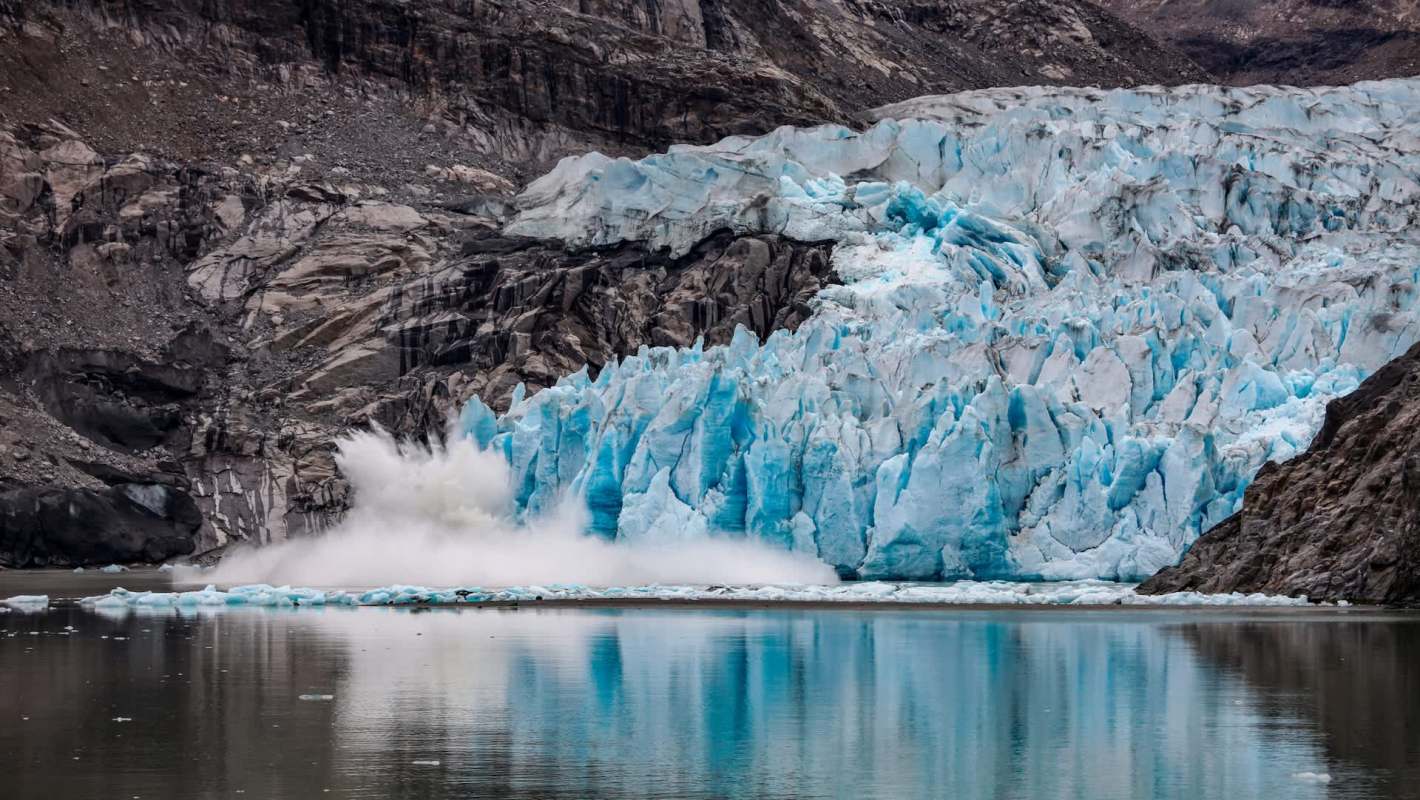
For decades, Greenland and Antarctica have been losing ice, and research puts the scale of that decline into sharper focus. The implications extend far beyond the poles because the loss is helping drive sea-level rise worldwide.
As Gizmodo reported, a study in Scientific Data calculated that the two ice sheets together lost 11.3 trillion tons of ice between 1979 and 2023.
That has made them major contributors to higher sea levels, adding to the danger facing coastal communities, homes, and infrastructure around the world.
Here's what to know
Using 42 separate satellite-based estimates of ice sheet mass balance, the researchers assembled the most extensive satellite-based record of polar ice loss yet.
Inès Otosaka — the study's lead author, an assistant professor at Northumbria University, and a researcher at the U.K. Centre for Polar Observation and Monitoring — said the effort was meant to bring many existing measurements into a single assessment.
"What we really wanted to do is to produce a very comprehensive and robust estimate," Otosaka said. "By combining all of those different independent estimates, we can then come up with one dataset and assessment of how the ice sheets have evolved over the past five decades."
TCD Picks » Quince Spotlight
💡These best-sellers from Quince deliver affordable, sustainable luxury for all




Taken together, the data indicate that ice loss from Greenland and Antarctica has lifted global average sea levels by about 1 inch (3 centimeters). Those two ice sheets are now responsible for roughly one-quarter of global average sea-level rise.
The rate of loss also increased over time. Greenland experienced especially large declines during the 2010s because of several extreme summer melt events, while Antarctica's losses were tied to outlet glaciers — especially in West Antarctica — carrying more ice into the ocean.
More background
A key takeaway from the study is that surface melting was not the main source of the losses. Instead, the researchers found that 84% of the combined ice loss came from glaciers speeding up as they flowed into the ocean, while 16% came from surface melt.
That points to ocean temperatures as a major factor destabilizing the ice sheets and suggests the losses could be hard to reverse even when annual weather conditions briefly improve.
There was some slowdown between 2020 and 2023, aided by record snowfall in East Antarctica and milder summers in Greenland, but the broader trend did not change.
Rising sea levels can worsen flooding, overwhelm drainage systems, damage roads and buildings, and make recovery more costly for coastal communities.
What's being done?
One major step is improving the science itself. By combining decades of satellite observations of ice movement, volume, and gravity-related change, researchers can give planners and policymakers a clearer view of both how fast the ice sheets are changing and what is causing those shifts.
Otosaka's team plans to estimate ice loss region by region. That could help scientists identify which parts of Greenland and Antarctica are changing differently and why.
More detailed regional data could also improve sea-level projections and help communities prepare more effectively for future impacts.
Research like this can also support practical local action, from stronger flood planning to closer attention to how sea-level rise may affect housing, insurance, and infrastructure decisions in vulnerable places.
"It is a huge number," Otosaka said. "If you put that into context, it's about enough ice to fill a cube that would be 23 kilometers (14 miles) in height."
Where can I learn more?
These stories look at shrinking ice in Greenland and Antarctica, from satellite tracking to long-term melt and coastal risks.
• Across Greenland and Antarctica, glaciers continue to shrink year after year, pushing seas higher.
• Satellite measurements over Greenland reveal the impact of disappearing ice on coastlines far away.
• In Greenland, fossil evidence shows the ice sheet's melting history stretches back much farther.
• In West Antarctica, warming seas may trigger a runaway loop of faster collapse.
• Near Antarctica, a once-in-2000-year event underscored how unusual ice losses have become.

Get TCD's free newsletters for easy tips, smart advice, and a chance to earn $5,000 toward home upgrades. To see more stories like this one, change your Google preferences here.






