


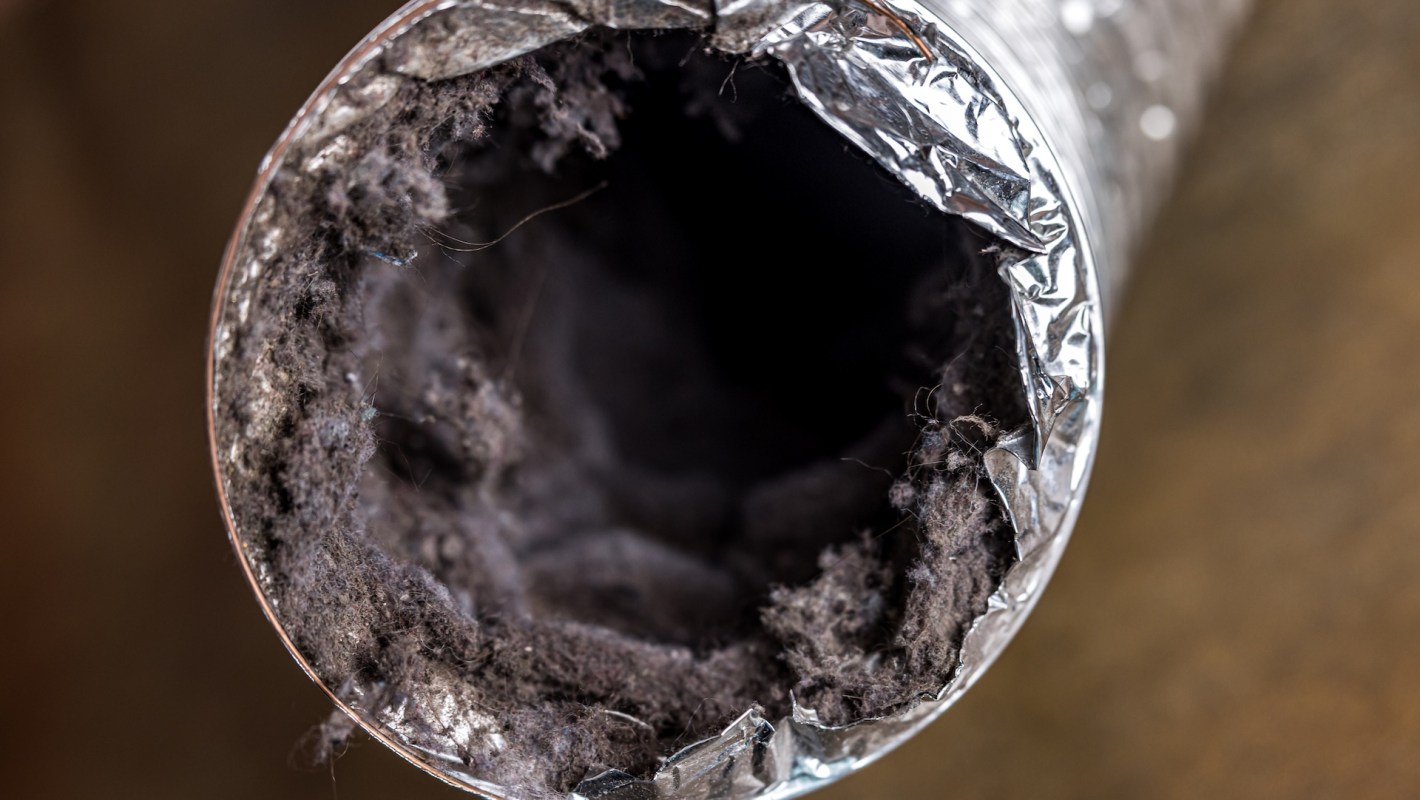
A first-time homeowner turned to Reddit after discovering a problem that would make many cringe: The townhouse's clothes dryer had been venting into the crawlspace for years.
Here's what to know
The townhouse, which the owner said was built around 1990, came with several crawlspace issues at purchase, including old insulation, debris, a worn vapor barrier, and fungus or microbial growth.
In the r/DIY post, the homeowner said that they went with a limited repair plan, writing, "They had been venting the dryer into the crawlspace since 1990!!!!"
They paid for cleanup as well as new insulation and a new vapor barrier, but the dryer problem was not fixed. The company that redid the crawlspace ran a duct from the dryer through the crawlspace and attached it to an existing vent.
Many commenters said that did not solve the underlying issue. "I have a heat pump dryer with no vent and it works well but does take longer to dry. That is an easy option to remove the dryer vent," one commenter wrote.
A second commenter described making the same change in a similar house, saying they bought an LG heat pump dryer and found the extra drying time "acceptable at about 3.5 hours per load typically."
TCD Picks » Quince Spotlight
💡These best-sellers from Quince deliver affordable, sustainable luxury for all




More background
Moisture in a crawlspace can contribute to mold growth, damage insulation, and require costly remediation if it is not addressed early.
The original poster said they had already spent $4,500 on the cleanup and did not want to "spend another $5k" on encapsulation.
Some commenters said a ventless dryer could eliminate the need for a long exhaust path, which may spare a homeowner from routing ductwork through a large crawlspace or cutting a new vent to the outside.
What can be done?
One user said a standard exterior dryer vent could be workable if the line was code-compliant, properly supported and sealed, and actually exhausted outdoors, noting that the 2021 International Residential Code allows a maximum length of 35 feet.
Others said a ventless setup may make more sense when the laundry area is far from an exterior wall. That approach can remove one source of moisture while avoiding a complicated vent run.
Several people suggested placing humidity and temperature sensors in the crawlspace to see whether conditions improved. Tracking those readings can help a homeowner decide whether full encapsulation is necessary or whether a dehumidifier and smaller fixes may be enough.
A commenter said their crawlspace dehumidifier cost about $21 per month and then $13 a month after the space dried out.
Where can I learn more?
These stories cover clogged dryer vents, ventless heat pump dryers, and simple maintenance tips.
• Across many homes, ventless heat pump dryers cut energy use while avoiding exhaust ductwork.
• On TikTok, a dad showed step-by-step tips for clearing dryer vents safely.
• A home maintenance expert shared a dryer hack that can lower bills and prevent breakdowns.

Get TCD's free newsletters for easy tips, smart advice, and a chance to earn $5,000 toward home upgrades. To see more stories like this one, change your Google preferences here.






