


A low wall at the perimeter of a roof may matter more to solar output than it seems.
A University of Nottingham study found that parapet walls can reshape the air moving across rooftop solar systems, so the panels that collect the most dust are not necessarily the ones at the front of the array.
Here's what to know
As pv magazine reported, the researchers looked at how rooftop solar soiling varied with panel tilt, particle size, wind speed, and parapet height. They concluded that parapets meaningfully change rooftop airflow, but wall height alone does not consistently predict whether dust deposition will rise or fall.
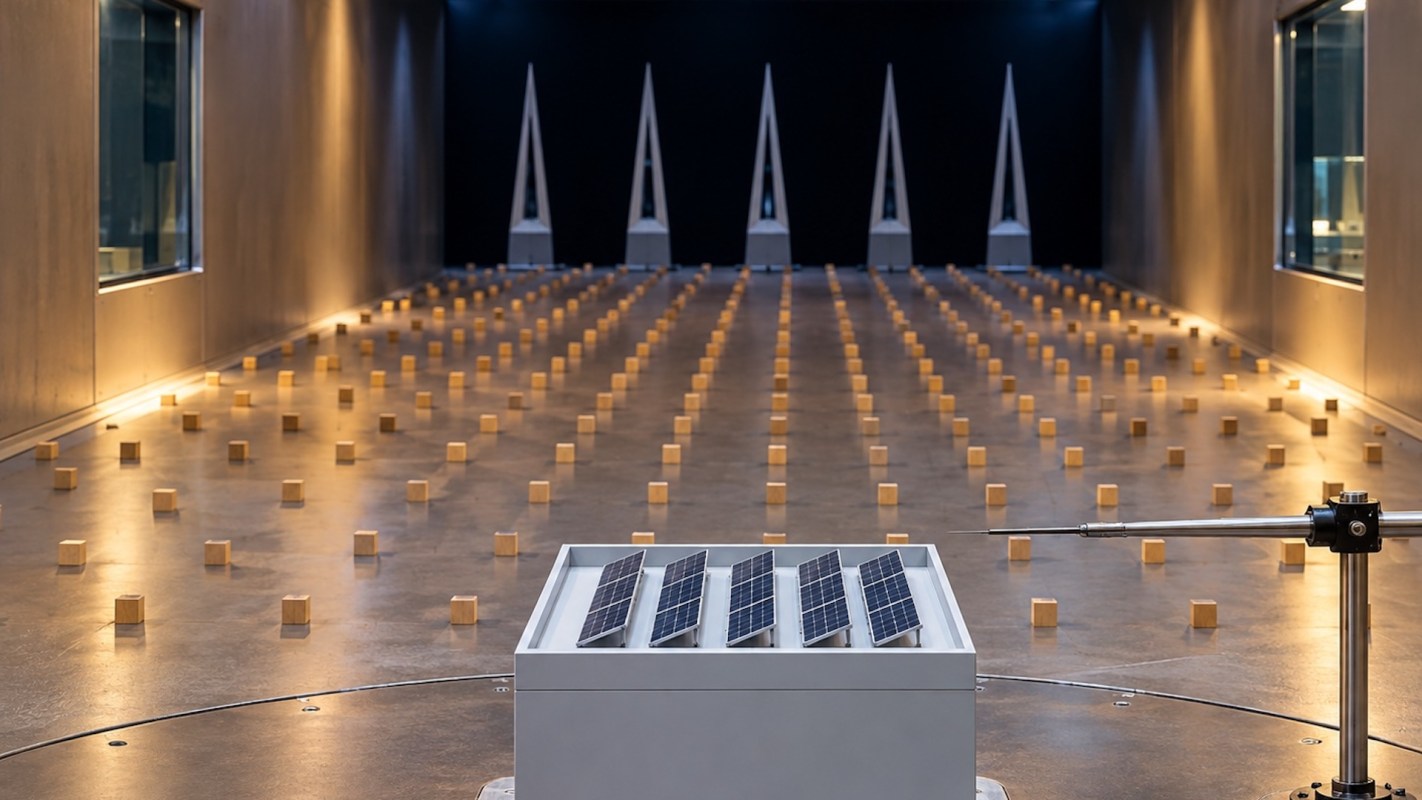
For the analysis, the researchers simulated an 18-meter-by-18-meter (59-foot-by-59-foot) flat roof with five wind-facing rows of solar panels, testing parapets of 0 meters, 0.5 meters (1.6 feet), and 1.5 meters (4.9 feet) under wind speeds of 1.3 meters per second (2.9 miles per hour), 2.6 m/s (5.8 mph), and 3.9 m/s (8.7 mph). They checked the airflow results against wind-tunnel experiments.
"We found that this effect is not straightforward," said corresponding author Yupeng Wu of the University of Nottingham. "A higher parapet does not necessarily lead to more or less particle deposition, because the outcome depends on wind speed and particle size. We also found that the most exposed part of the PV array can shift from the front rows to panels farther downstream under different conditions."
More background
Dust buildup can reduce panel performance and increase cleaning and maintenance needs, trimming some of rooftop solar's savings and pollution-reduction benefits.
TCD Picks » Quince Spotlight
💡These best-sellers from Quince deliver affordable, sustainable luxury for all




The study found that taller parapets slowed rooftop airflow and widened low-velocity recirculation zones around solar modules. Even so, those same walls could sometimes protect panels by steering particles over the array rather than allowing them to settle on the surface.
Particle size emerged as the biggest factor influencing deposition. Fine particles generally stayed with the airflow and were seldom captured, while larger particles were more heavily influenced by inertia and gravity. The researchers also found that horizontal panels collected the most dust, while panels tilted at 60 degrees sent more particles over the array.
One important limitation is that the study looked only at winds striking the roof head-on. It did not include oblique winds, which could create more uneven airflow and dust patterns in real-world conditions.
What can be done?
Parapets should not be treated as a minor design detail in rooftop solar design. Local wind conditions, panel tilt, row placement, and the kinds of airborne particles common in a given area may all help determine which modules get the dirtiest and how quickly.
More targeted cleaning schedules and solar layouts may depend on which modules accumulate dust fastest. Rather than assuming the windward row always needs the most attention, operators may be able to focus maintenance on the panels most likely to collect dust.
For homeowners considering rooftop solar, EnergySage can help by letting you compare competitive bids from local installers without sharing your contact information unless you choose to move forward with one.
Better rooftop-specific planning can help solar arrays stay productive longer, protecting both the financial return and the climate benefits of cleaner electricity.
"The response reflects competition among recirculation, near-roof ventilation, turbulent transport, inertial impaction, gravitational settling, and penetration between rows," the researchers said. "Parapet height therefore does not produce a universally increasing or decreasing deposition rate."
Where can I learn more?
Solar panels are one of the best ways to embrace cleaner energy and reduce energy bills.
• In Scandinavia, developers completed the largest rooftop solar array atop major commercial buildings.
• With EnergySage, homeowners can curate competitive solar panel bids without sharing contact information upfront.
• Solar installers have said rooftop panels stay quiet, despite persistent myths about neighborhood noise.

Get TCD's free newsletters for easy tips, smart advice, and a chance to earn $5,000 toward home upgrades. To see more stories like this one, change your Google preferences here.






