


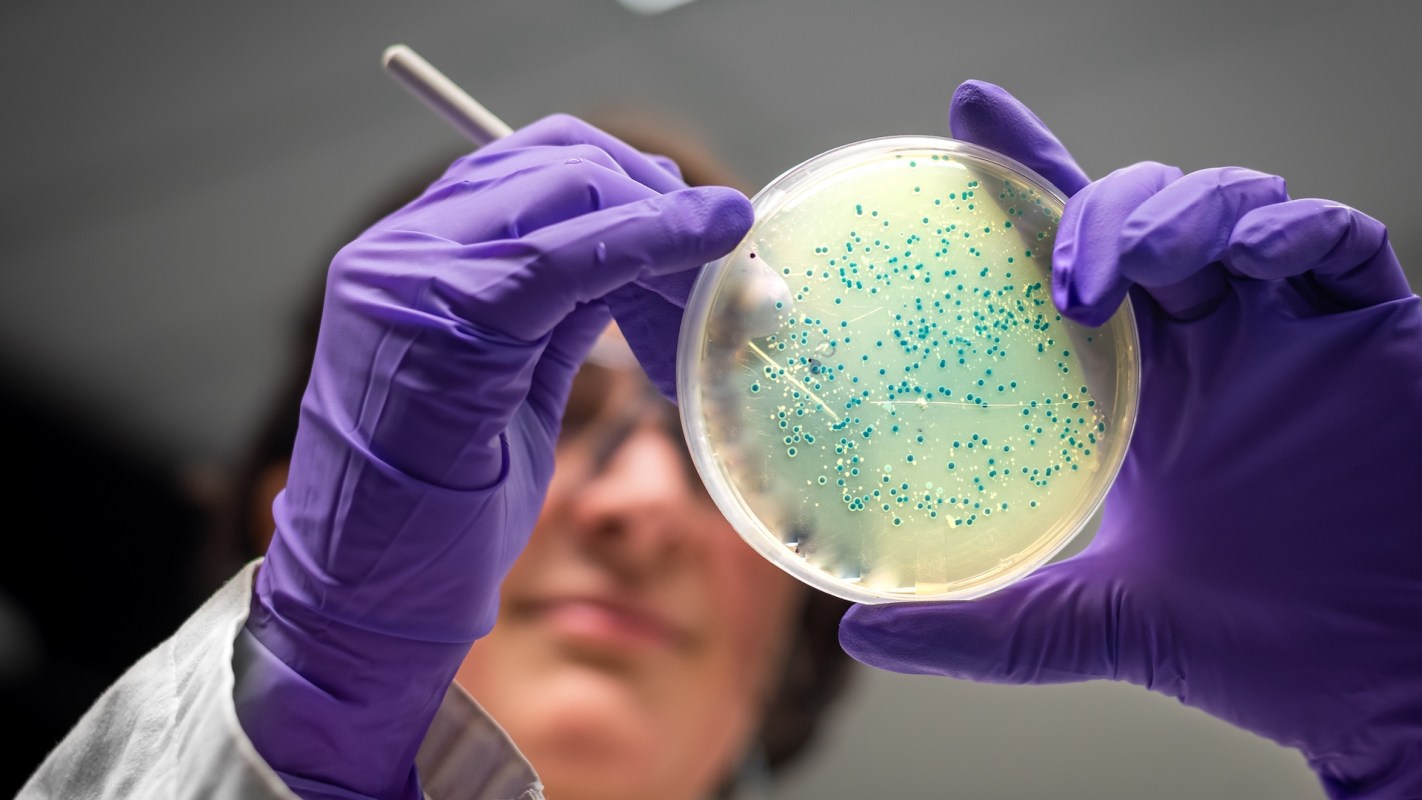
Researchers in South Korea have turned an unlikely microbe into a potential source of greener glue.
By engineering Escherichia coli to convert glucose into biodegradable polymers, the team created hot-melt adhesive materials that could one day replace some petroleum-based versions.
Here's what to know
According to an article from The Korea Advanced Institute of Science and Technology shared on Phys.org, the team that did the work was led by Professor Sang Yup Lee, a distinguished faculty member in Chemical and Biomolecular Engineering. The study appeared in Nature Communications.
Packaging, furniture, electronics, automobiles, and construction all rely heavily on hot-melt adhesives. These glues are heated until they melt, applied for bonding, and then allowed to harden as they cool, which makes them a quick and practical choice for industrial use. Many of the widely used versions, however, are petroleum-derived plastics, including ethylene-vinyl acetate, or EVA.
To create an alternative, the KAIST researchers used glucose as a starting material and engineered E. coli to make two biodegradable PHA polymers: poly(4HB-co-PhLA) and poly(3HB-co-4HB-co-PhLA). In lap-shear tests of strength on stainless steel, one of the materials reached 4.58 megapascals, compared with 4.20 MPa for a commercial EVA adhesive.
More background
Glue can be an underappreciated part of the plastic waste issue. A product or package may be built from biodegradable materials, but if the adhesive does not break down, the finished item can end up less biodegradable or recyclable overall.
TCD Picks » Quince Spotlight
💡These best-sellers from Quince deliver affordable, sustainable luxury for all




PHA materials have attracted attention because microbes can make them from renewable feedstocks, and their properties can be adjusted by changing their chemical composition. In this study, the researchers combined 4-hydroxybutyrate, which contributes softness and adhesion, with phenyllactate, which adds rigidity and heat resistance.
Adhesive performance was especially strong in versions that contained about 24% to 34% 4HB. The material also retained much of its bonding strength after repeated melting and rebonding, an important characteristic for hot-melt adhesives.
The study also found evidence that the new aromatic PHA may be susceptible to enzymatic breakdown. After treatment with lipase, the polymers showed surface damage and drops in both molecular weight and overall mass, suggesting a possible route away from persistent plastic residue and microplastic pollution.
What's being done?
To make the polymers, the researchers used systems metabolic engineering, reworking a microbe's internal chemistry to generate a desired compound. They adjusted gene expression, added a CoA transferase to support key reactions, and used a genome-scale metabolic model to spot production bottlenecks.
Those modifications enabled E. coli to produce the materials in meaningful amounts. In fed-batch fermentation, the team made 1.36 ounces per gallon (10.2 grams per liter) of poly(4HB-co-PhLA). When they added a biosynthetic pathway for 3HB production, output rose to as much as 7.05 ounces per gallon (52.8 g/L) of poly(3HB-co-4HB-co-PhLA).
This research is still in the early stages rather than an immediate shopping option.
"This study demonstrates that by engineering microbial metabolism, it is possible to go beyond simply producing polymers and directly produce functional materials," Lee said, according to KAIST. "In the future, by utilizing various non-natural monomers and microbial cell factories, this approach could be expanded into biomanufacturing technologies for the sustainable production not only of petroleum-based adhesive alternatives but also of a wide range of functional polymers."
Where can I learn more?
The stories below look at that same push to replace fossil-based materials with alternatives that are either biologically produced or designed to break down more easily.
• At home, people can make glue from packing peanuts to replace some disposable adhesives.
• Scientists have engineered plastics made from bacteria, broadening E. coli's role in sustainable materials.
• A PhD student found bacteria that turn food waste into next-generation biodegradable material.
• Chemists discovered how to turn superglue into cheap, recyclable plastic alternatives without dirty oil.

Get TCD's free newsletters for easy tips, smart advice, and a chance to earn $5,000 toward home upgrades. To see more stories like this one, change your Google preferences here.






