


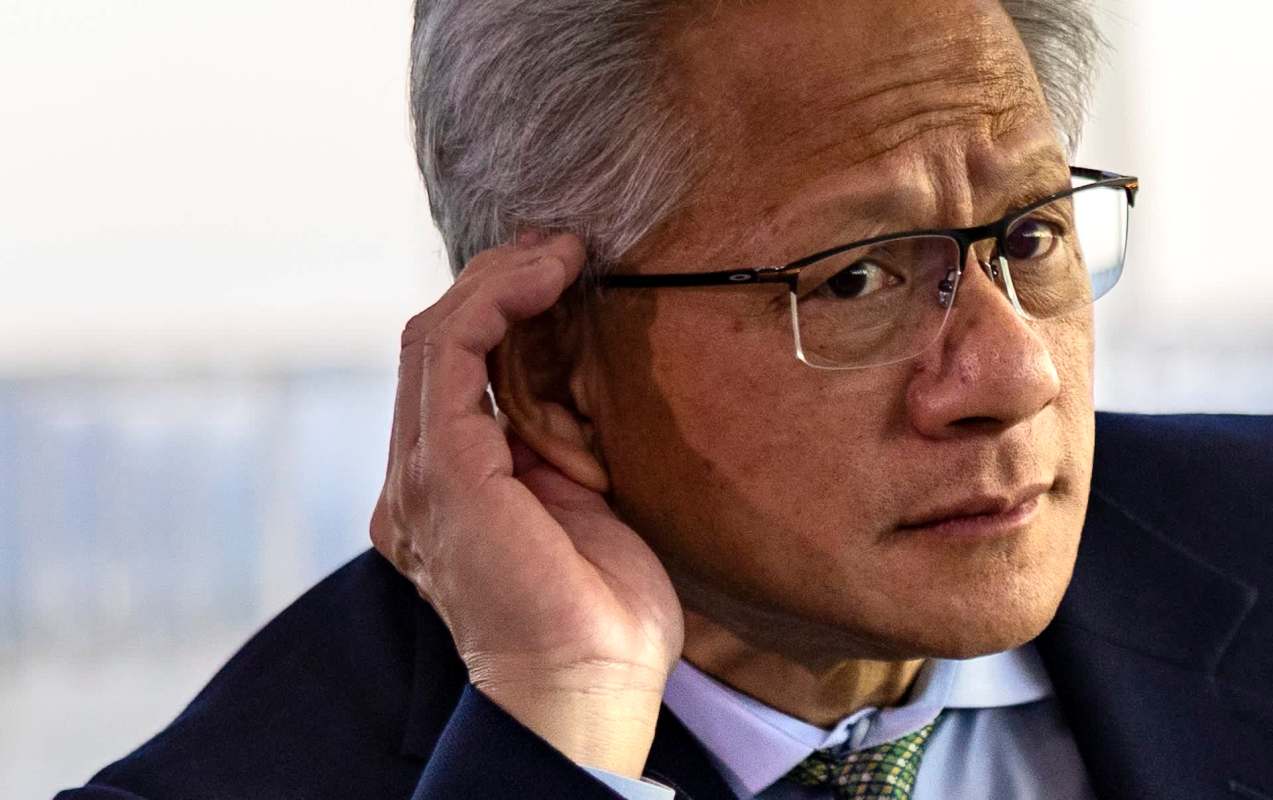
President Donald Trump brushed aside concerns about artificial intelligence during a live phone call with Nvidia CEO Jensen Huang at the All-In Summit in Los Angeles.
The remarks came amid an AI reckoning, as the technology is raising concerns among industry insiders as well as citizens about the rapid spread of data centers, jobs, energy demand, and online trust.
Here's what to know
Channel News Asia (@channelnewsasia), shared a clip on TikTok of Trump phoning Huang, with the president speaking bluntly about AI concerns. In the video's caption, the outlet said Trump "rubbished talk of AI dangers."
@channelnewsasia US President Donald Trump rubbished talk of AI dangers as a "hoax" in a live phone call with Nvidia CEO Jensen Huang, who was on stage at the All-In Summit in Los Angeles. "The robots are not taking over. AI is not taking over. The whole thing is a hoax," said the US president. Mr Trump also called out critics of AI, saying it could be a political ploy or "it could also be China". #usa #usanews #trump ♬ original sound - CNA
"The robots are not taking over. AI is not taking over. The whole thing is a hoax," Trump said.
During the call, Trump also spoke positively about data centers, calling them "great" and saying they "make people and states wealthy." He also said criticism of AI could be politically driven, adding "it could also be China."
One commenter wrote, "Nvidia's whole business would take a nosedive with AI slowing down. Of course it's not a hoax."
TCD Picks » Quince Spotlight
💡These best-sellers from Quince deliver affordable, sustainable luxury for all




More background
The debate around AI features science-fiction-style fears about robot takeovers. But these systems are shaping classrooms, hiring decisions, customer service, search results, and the information people encounter each day.
That means concerns about bias, privacy, misinformation, and accountability are valid; they directly affect workers, families, and communities.
The physical buildout behind AI also carries real-world consequences. Data centers can bring tax revenue and construction jobs, but they also require enormous amounts of electricity and water.
For nearby communities, that can mean strain on power grids, increased competition for resources, and difficult questions about land use and utility demand.
What can be done?
Policymakers, utility regulators, and companies can require greater transparency about how automated tools are used, where new data centers are built, and what those facilities will require from local energy and water systems.
Clear standards around grid upgrades, water use, labor conditions, and consumer protections can keep households from absorbing the downsides while corporations collect the rewards.
Where can I learn more?
Trump's call with Huang landed amid two big arguments over the AI boom: how its risks are brushed aside and who absorbs the costs. The articles below trace those questions through multiple channels.
• In Congress, Republicans advanced AI regulations rejected by lawmakers as researchers warned of climate and health costs.
• At Nvidia, Jensen Huang said AI as a layoff excuse was "scaring people."
• Families say trust is eroding as users turn to chatbots over loved ones.
• Across rural communities, Big Tech used lucrative deals and NDAs to assemble data center land.

Get TCD's free newsletters for easy tips, smart advice, and a chance to earn $5,000 toward home upgrades. To see more stories like this one, change your Google preferences here.






