


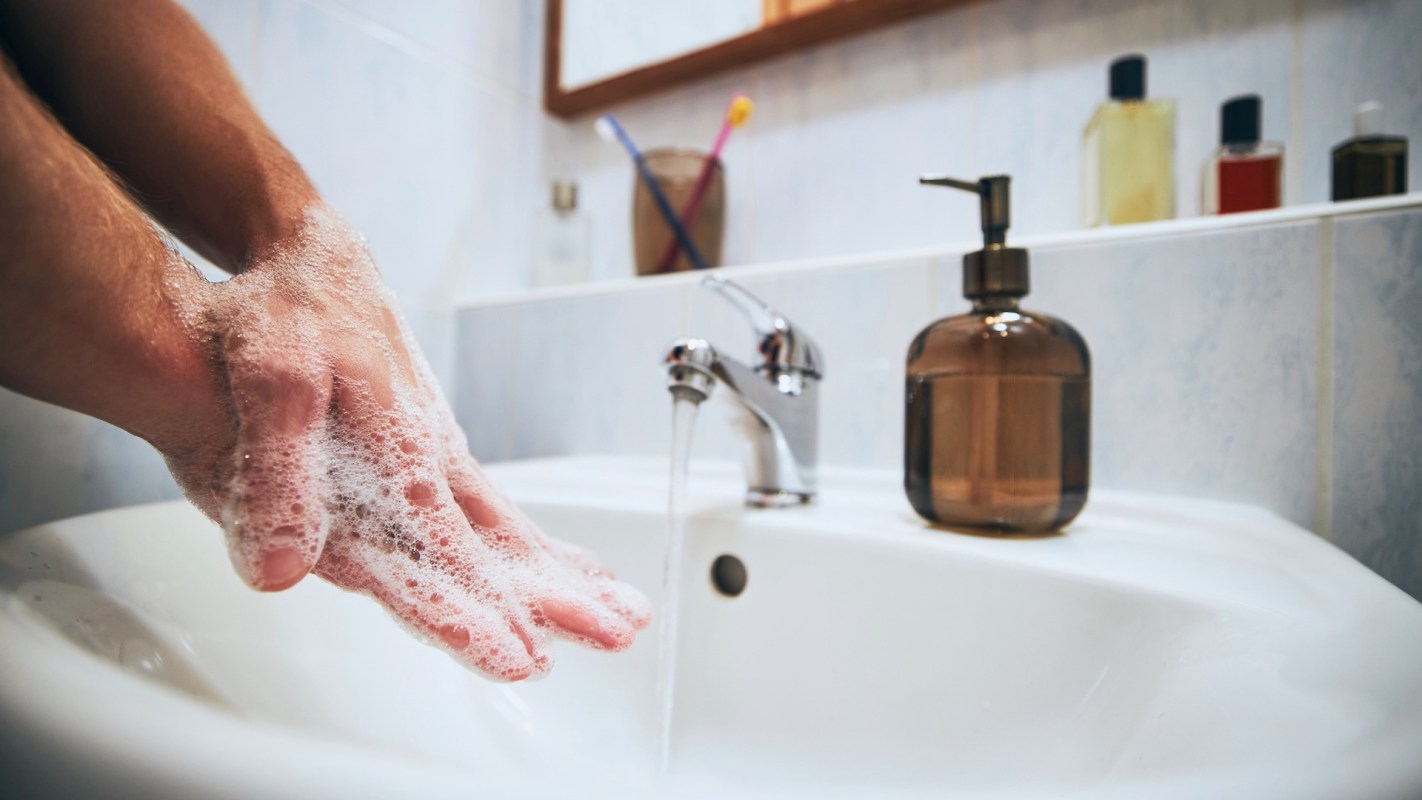
Federal regulators have given a hand soap recall affecting nearly 2,700 cases a Class II designation because of possible bacterial contamination.
The products were distributed across 15 states, making the update especially important for people with certain medical vulnerabilities, including those with open wounds or medical devices.
Here's what to know
Several hand soaps sold under the Intercon, Summit 150, Vestis, and Laura Lynn names are included in the recent Class II FDA recall.
The FDA categorizes a Class II recall as "a situation in which use of, or exposure to, a violative product may cause a temporary or medically reversible adverse health consequence or where the probability of serious adverse health consequences is remote."
In the agency's enforcement report, the possible contaminants were identified as bacteria including Pseudomonas aeruginosa, Pseudomonas putida, Pseudomonas monteilii, Serratia marcescens, and Serratia nematodiphila.
The recall covers six soaps, including the Intercon Foaming Pear Hand Soap With Aloe, the Clearly Better version of Intercon Foaming Pear Hand Soap With Aloe, Summit 150 Foaming Hand Soap, Vestis Foaming Hand Soap in Fresh Pear Scent, Laura Lynn liquid hand soap in honey apple crisp, and Laura Lynn's foaming pear scent Hand Soap with Moisturizers.
TCD Picks » Quince Spotlight
💡These best-sellers from Quince deliver affordable, sustainable luxury for all




Specific UPCs, lot codes, and best-by dates were listed in the FDA enforcement report.
The soap was first recalled in June, and the FDA's risk classification appeared in an enforcement report rather than in a separate public press release.
Altogether, the products were sent to 19 wholesalers and one retail location across 15 states, including California, Georgia, Iowa, Illinois, Maryland, Mississippi, North Carolina, North Dakota, Nebraska, New York, Pennsylvania, South Carolina, Texas, Washington, and Wisconsin, per WSBTV.
More background
A hygiene product can become a health concern if contamination is introduced during manufacturing or packaging, particularly in homes, workplaces, care facilities, or businesses where many people may use the same bottle.
The Centers for Disease Control and Prevention says these bacteria are relatively common in the environment, and in this case, the highest risks fall on people who use ventilators, have open wounds, or rely on devices such as catheters, WSBTV reported.
Anyone who purchased bulk soap for a business, school, rental property, or shared facility may want to double-check their inventory. The recall also includes smaller personal bottles, so households should compare labels carefully.

Get TCD's free newsletters for easy tips, smart advice, and a chance to earn $5,000 toward home upgrades. To see more stories like this one, change your Google preferences here.






