


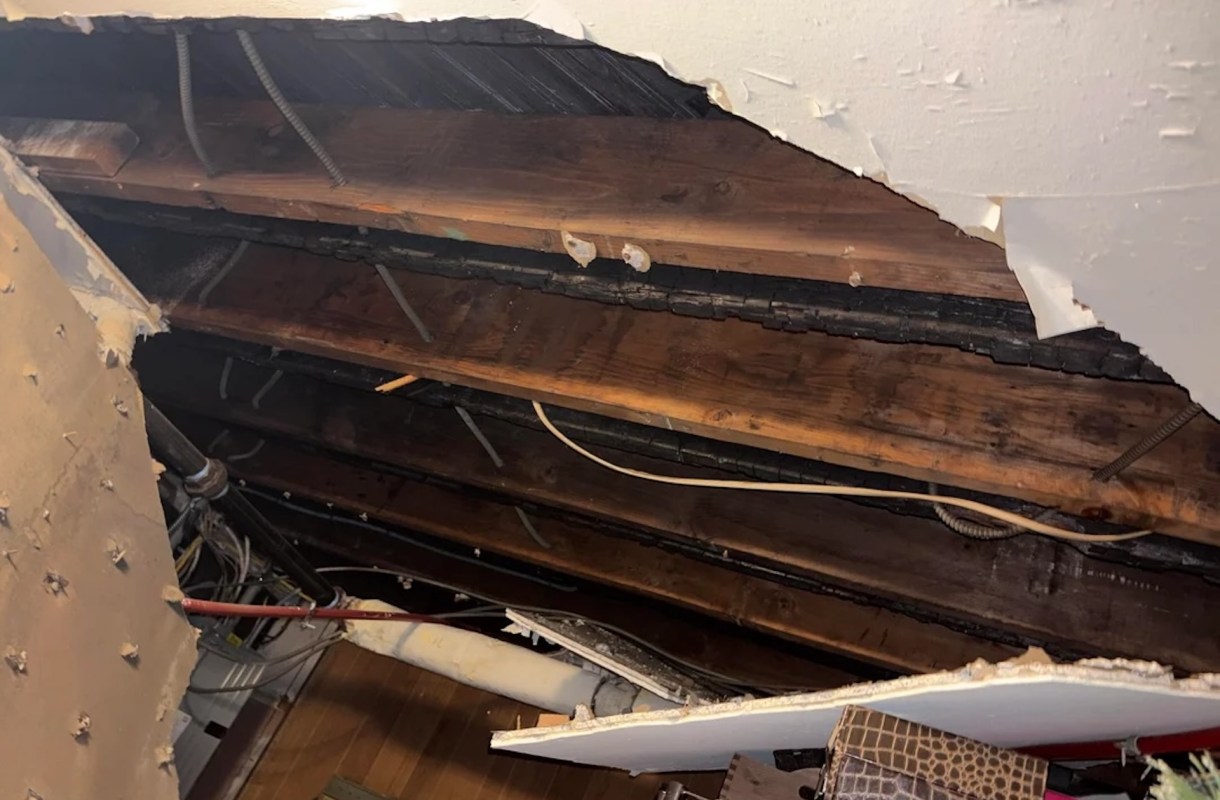
After hearing and feeling a "massive bang," one renter found that a section of their basement ceiling had come down beneath the living room.
Unable to reach the landlord and worried about staying there with a child, the poster turned to Reddit's r/HomeMaintenance community to ask whether the damage looked cosmetic or like a more serious safety issue.
Here's what to know
In a Reddit post that shared images of the damage, the renter said they were anxious the property could even be condemned. This original poster also noted that the damaged area was directly under "the most trafficked area" of the house and that "It's the middle of the night and I don't know what to do."
OP then wrote, "Any advice or info would be appreciated."
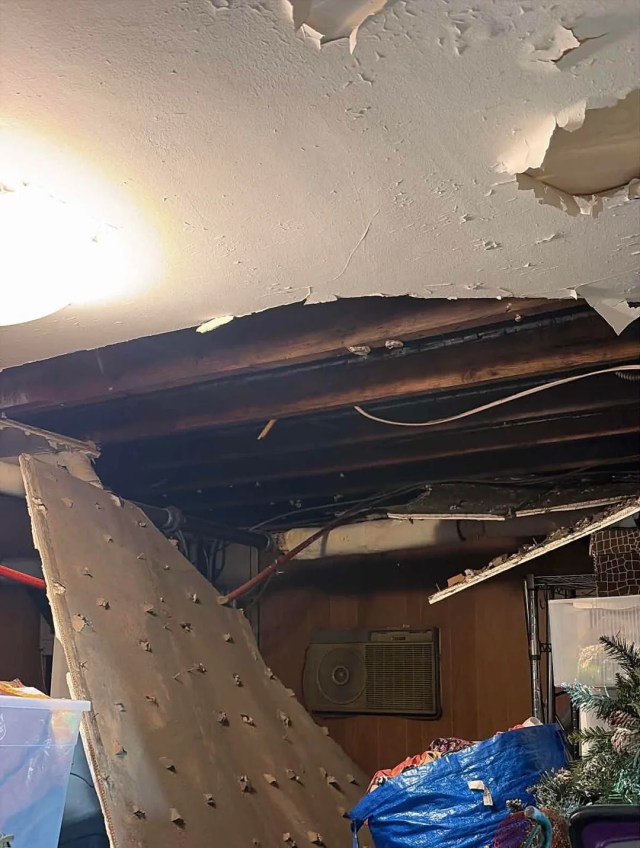
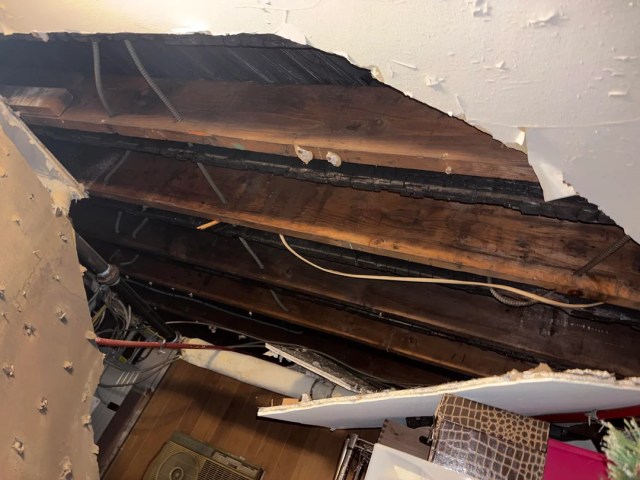
Other Reddit users largely told the OP that the photos appeared to show failed ceiling drywall rather than a structural collapse. The top comment read, "Ceiling drywall fell. Drywall + texture is heavier than you think, and it used to just be nailed in place. Those nails can and do pull out if not installed properly, causing the drywall to fall."
The same commenter also wrote, "Structural joists look fine. Check for active leaks, make sure there's no damaged mechanical lines, etc... but this is just the ceiling drywall, and not a structural component… Check for active leaks, make sure there's no damaged mechanical lines, etc. but this is just the ceiling drywall, and not a structural component."
TCD Picks » Quince Spotlight
💡These best-sellers from Quince deliver affordable, sustainable luxury for all




Another commenter recommended, "First, look at your lease to determine how quickly the landlord has to respond to your complaint. Second, take a look around the basement for standing water, feel of moisture or other areas where drywall is pulling away from joist."
Other commenters noted that pictures alone are not enough to rule out every possible problem, including signs of earlier fire damage, and said the renter should contact the landlord and licensed professionals as soon as possible.
More background
When something goes wrong in a home, renters are often the first to face the danger but not the ones with the authority to inspect, repair, or replace whatever failed.
The first step for renters is to report the damage to the landlord in writing right away and document everything with photos, timestamps, and notes about where the collapse occurred and what was affected.
If there are concerns about wiring, plumbing, active leaks, smoke damage, or structural instability, tenants may also need to request an urgent professional inspection rather than rely on internet guesses.
It can also help to ask to be included in the inspection process and to clarify what repairs are planned. One commenter told the renter, "You need to work with your landlord to get licensed professionals to assess structural damage, if any. One step at a time."
Where can I learn more?
When something suddenly goes wrong in a rental, tenants are often left trying to figure out whether it's safe to stay put and how quickly a landlord will respond. Hidden hazards, unusable rooms, and weak renter protections can make those situations urgent.
• A new tenant found a startling health hazard in an apartment, then faced landlord pushback.
• In Arizona, lawmakers proposed protections from dangerous living conditions as renters faced extreme indoor heat.
• A renter asked how much danger am I in after a neighbor's gas-oven behavior.
Each case shows that a routine housing complaint can turn into a real safety issue faster than people expect.

Get TCD's free newsletters for easy tips, smart advice, and a chance to earn $5,000 toward home upgrades. To see more stories like this one, change your Google preferences here.






