


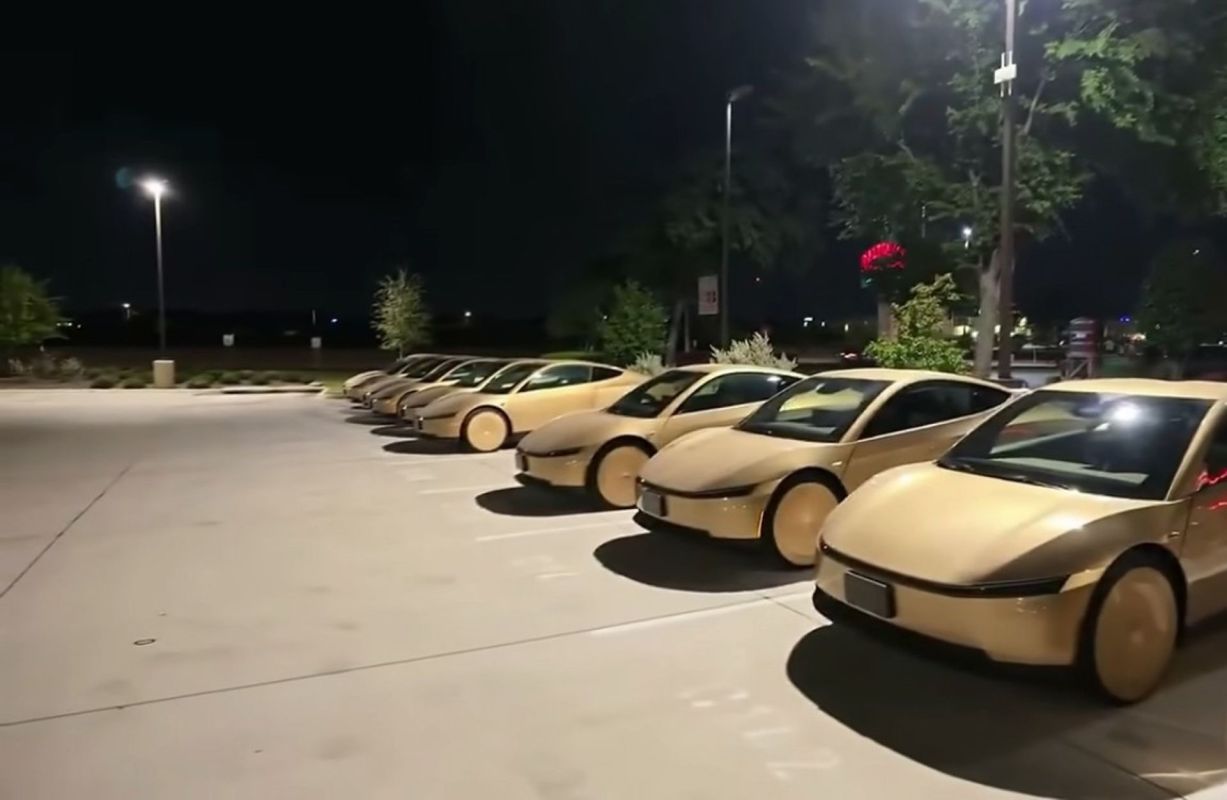
Tesla's Cybercab has attracted attention for its unconventional appearance, but a ride report from Austin, Texas, suggests the more important development may be how quickly Tesla's driverless program is scaling.
Here's what to know
In the YouTube video, Herbert Ong (@BrighterwithHerbert) discussed a milestone cited by Ashok Elluswamy, Tesla's vice president of artificial intelligence.
Tesla has now logged 1 million unsupervised self-driving miles, and Ong and guest Cern Basher said they had taken several rides in Tesla's Cybercab in Austin.
They compared that total with Tesla's earlier disclosure of 380,000 unsupervised miles on an earnings call and calculated that the increase works out to about 17% week-over-week growth.
Ong and Basher also said some Austin Cybercab trips seemed to cost less than a Model Y ride, which they took as a sign Tesla may already be leaning on lower pricing to boost usage.
Basher separately estimated that, based on how many miles each vehicle drives per day, keeping up that pace could imply an active fleet of roughly 2,000 to 3,000 vehicles by the end of 2026.
TCD Picks » Quince Spotlight
💡These best-sellers from Quince deliver affordable, sustainable luxury for all




More background
Basher said he had heard the Cybercab's battery was built to last at least 500,000 miles, and the hosts described the vehicle as being designed around "scaling Robotaxi at the lowest possible lifetime cost."
For riders, that could eventually translate into lower fares if Tesla can spread vehicle and maintenance costs across far more trips. Greater Robotaxi availability could also give more people access to electric transportation without requiring them to buy a car, pay for insurance, or cover maintenance.
One commenter said, "I understand that the journey never ends, and the analysis and such, but standing back it seems this is an absolutely pivotal moment for the planet."
If autonomous electric vehicle fleets ultimately replace some gas-powered rides, they could help reduce tailpipe pollution in busy urban corridors while also lowering transportation costs for riders.
What's being done?
Ong and Basher said Tesla circulated a form asking whether people were interested in buying fleets or helping with related infrastructure. They said it does not mean sales are imminent, but it does indicate Tesla may be starting to figure out how a larger robotaxi network could extend beyond company-owned vehicles.
They also pointed to an X reply from Elluswamy suggesting 24/7 availability could be near.
It said, "Next month or so. The next tech to merge on the V15 plan will enable it."
Where can I learn more?
Tesla's Cybercab could be inching closer to roads across the United States.
EV development and infrastructure are also scaling up, offering hope that gas-guzzling cars will soon be a thing of the past.
• In China, Zeekr is deploying adaptive cruise technology that could pressure Tesla's autonomy lead.
• Across the U.S., Tesla's EV dominance has helped normalize electric driving at scale.
• In San Francisco, Electrify America opened ultra-fast indoor charging designed to make EV use easier.

Get TCD's free newsletters for easy tips, smart advice, and a chance to earn $5,000 toward home upgrades. To see more stories like this one, change your Google preferences here.






