


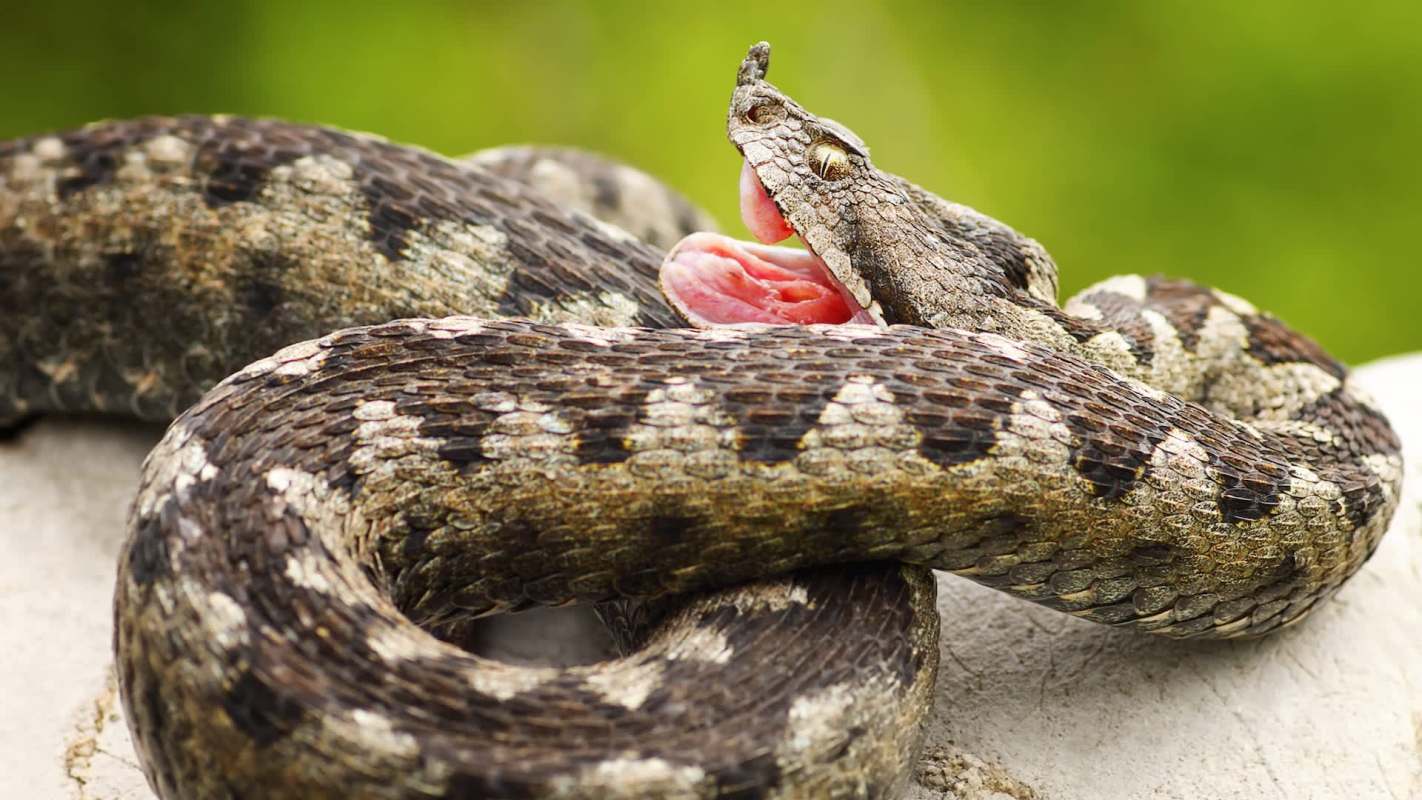
An Australian tourist was bitten by a venomous snake while visiting Albania and unable to get assistance from local emergency dispatchers.
Here's what to know
Amy Lecons said her father, Dr. Robert Lecons, had to help save her via WhatsApp after she was bitten by a nose-horned viper during a trail run.
Lecons said the bite happened June 21 on a trail in Valbonë. According to The Mirror, her attempt to reach emergency services failed because the dispatcher did not understand her English and "hung up."
"I was coming down and around a corner when I was bitten by a snake. I instantly knew that I had been bitten by a snake as I felt a sharp pain in my left Achilles," Lecons told the Truth Times, as the newspaper noted.
She then recorded a video of the snake to identify it and contacted her father using WhatsApp.
He told her to lower her heart rate and share her exact location through the What3Words app. Lecons contacted local emergency services and alerted the owner of Traveler Hostel in Shkodër, The Mirror reported.
TCD Picks » Quince Spotlight
💡These best-sellers from Quince deliver affordable, sustainable luxury for all




An ambulance reached her remote location roughly an hour later, and she arrived at Bajram Curri hospital about an hour after that. She spent two days recovering there.
More background
Venomous snakes such as the European nose-horned viper are native to the Balkans, and hikers or runners moving through rugged terrain may have little warning before a close encounter.
As the BBC explained in a report on why wild animals attack humans, these encounters are often linked to people recreating in spaces inhabited by animals.
Lecons said she was not carrying her usual first-aid kit on this particular run.
She praised the people who treated her, calling their care "the epitome of Albanian hospitality" despite the language barrier, according to the Truth Times.
What can be done?
"Upon reflection, I have realized that I should be better prepared with a satellite communication device," she told the outlet. "In New Zealand, we are taught that this can mean life or death, and I was ignorant to think this wasn't necessary on the trails in Europe as well."
Satellite communicators, offline maps, and location-sharing tools can make a major difference when trails are isolated and response times are long.
It can also help to learn about local wildlife before heading out, wear protective footwear, and avoid stepping blindly around rocks, brush, or trail edges where snakes may be.
If a bite does occur, stay as calm and still as possible, which can be critical while waiting for professional care.
Destinations that depend on outdoor tourism may benefit from multilingual emergency response systems and clear trail safety information for international visitors, especially in regions where dangerous wildlife is known to live.
Where can I learn more?
Lecons' experience shows how wildlife encounters can escalate. These stories all highlight the need for caution, space, and preparation.
• In Thailand, tourists found that engaging with wild monkeys can be dangerous.
• At a U.S. national park, families came dangerously close to an alligator.
• In California's La Jolla Cove, swimmers disturbed resting sea lions.
When travelers are in unfamiliar terrain or around wild animals, a little planning and a healthy amount of distance can go a long way.

Get TCD's free newsletters for easy tips, smart advice, and a chance to earn $5,000 toward home upgrades. To see more stories like this one, change your Google preferences here.







