


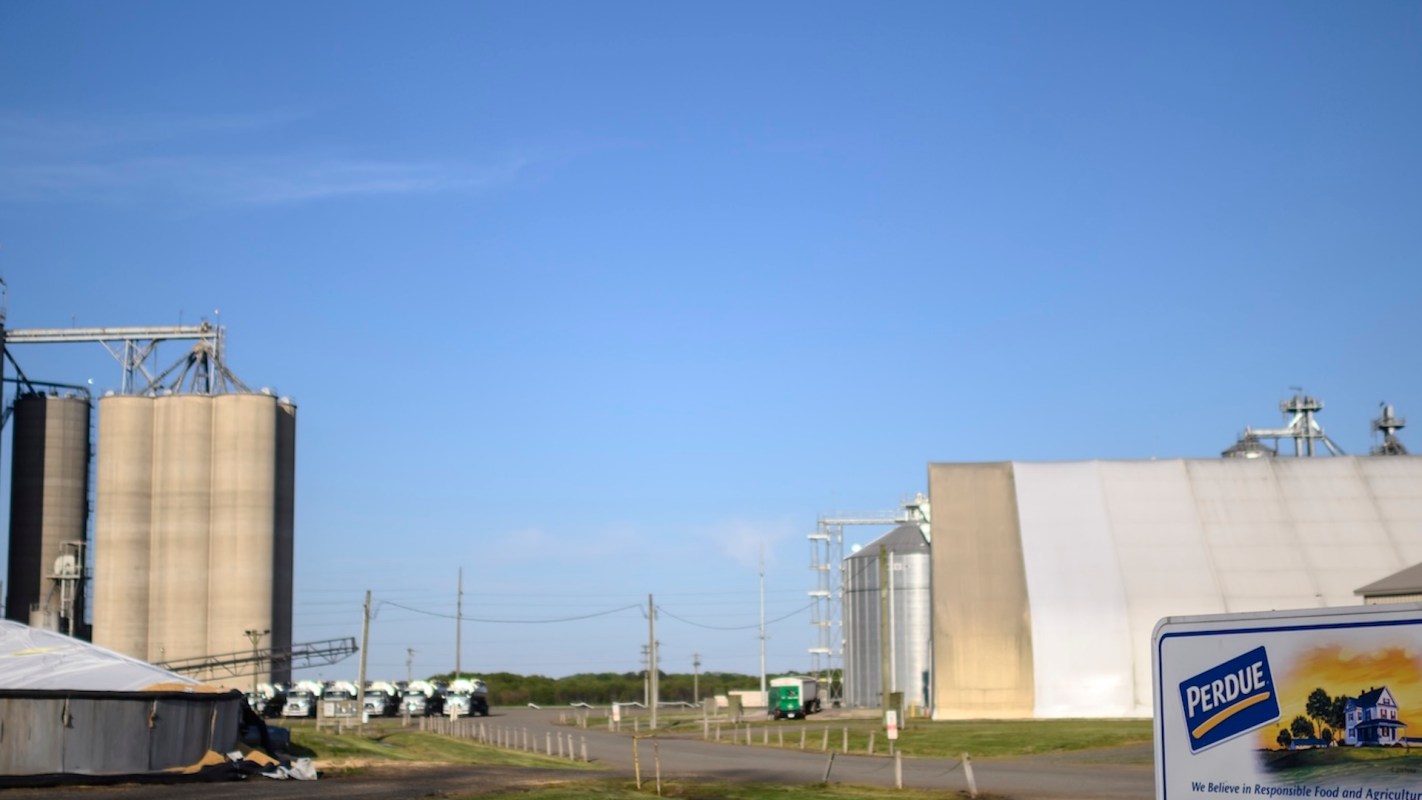
A proposal from Perdue Agribusiness to boost the volume of treated wastewater released into a stream near Salisbury drew opposition from nearby residents, according to Maryland Matters.
The proposal would impact a community where worries about PFAS contamination are already well established, and families fear a larger discharge could add to problems they already face.
Here's what to know
Under a proposed five-year Clean Water Act permit, Perdue is asking the Maryland Department of the Environment for permission to discharge an average of about 1 million gallons a day into Peggy Branch instead of roughly 205,000 gallons.
Public comments on the request are open through Nov. 9.
The permit debate is unfolding while the company remains under scrutiny over alleged PFAS contamination in local groundwater.
More than 550 residents who depend on well water are part of lawsuits linked to pollution near Perdue's 294-acre Salisbury campus, where it operates hatcheries, soybean processing facilities, grain storage, and other industrial operations.
TCD Picks » Quince Spotlight
💡These best-sellers from Quince deliver affordable, sustainable luxury for all




Perdue maintains it is not responsible for the pollution.
The company sued 3M and Johnson Controls, arguing that firefighting foam associated with its soybean processing plant was the only source of the contamination.
That explanation has not reassured many locals. At a public hearing, Salisbury-area resident Matt Godbey voiced concerns.
"If the Perdue facility can't discharge clean water at the levels it's discharging now, I don't see how MDE is going to enforce clean drinking water at a level five times what it is now," he said.
More background
Perdue has claimed it needs a higher discharge limit because it is moving away from older wastewater lagoons and installing newer treatment tanks.
A company spokesperson asserted the project involves "replacing existing lagoon infrastructure with modern treatment tanks and providing capacity to support future operational needs."
PFAS concerns have already forced some nearby households to spend more protecting their water. James Parrigin, who lives near the facility with his wife and children, said he bought a home water treatment system and pays for a new filter each year.
"It will make me wonder if the filtration system I've installed — that is, the one I could afford — will be robust enough to continue to protect us. Will I need to change my expensive filter every six months? Will I need to purchase these expensive water tests several times a year?" Parrigin began.
"I'm worried to see elevated PFAS levels in my kids' blood tests that we get. I'm worried that folks will turn a blind eye to this in the interest of profit and expansion."
Any increase in discharge would affect more than a single stream.
Peggy Branch runs into Johnson Pond — a Salisbury fishing pond — and later flows to the Wicomico River, meaning the decision could matter across a broader watershed.
MDE testing first found the groundwater contamination in 2023, and the agency designated Perdue a "responsible person" for the pollution.
What's being done?
The draft permit includes PFAS-focused requirements.
For the first two years, if monthly testing detects two common PFAS compounds, Perdue would be required to alert regulators and take corrective action. After that, measurements above 4 nanograms per liter would be treated as a permit violation.
MDE says the requested flow increase would not come with weaker pollution limits.
"Despite the fact that the facility has asked us to increase their flow by up to five times, we are not increasing the loading limits," said Jonathan Rice, a permits official in MDE's Wastewater Pollution Prevention and Reclamation Program.
"If they increase their flow, they have to offset that by decreasing the concentration of the pollutants," he added.
Perdue indicated that it installed a PFAS treatment system at its wastewater facility in 2025 and reduced concentrations to "trace" amounts.
The company also says it tested 679 wells and provided free point-of-entry water treatment systems to homeowners who requested them, covering 91% of the impacted properties.
Written comments must be postmarked by Nov. 9, and comments emailed to jonathan.rice@maryland.gov must arrive by 5 p.m. that day.
For resident Margarita Rosado, the uncertainty has already changed how she views staying in her home.
"I had planned to live in my home until my dying days. Now, for the first time, I don't think I want to stay, and that's something I never thought I would ever say about my home," she lamented.
Where can I learn more?
Questions around Perdue's wastewater permit fit into a broader pattern: Communities often struggle with how much trust to place in corporate environmental claims and the agencies charged with oversight.
The articles below examine similar friction, from emissions disputes and greenwashing crackdowns to local waste policies that impact what ends up in neighborhoods.
• Local recycling rules still leave residents sending more glass to landfills instead of reusing valuable material.
• U.S. and European regulators are weighing new rules against greenwashing as corporate claims face scrutiny.
• In Alberta, critics blasted the government's fossil fuel ad campaign as a taxpayer-funded misuse.
• Confusing produce labels keep shoppers questioning which packaging claims actually reflect environmental progress.
Concerns like these are why residents near Salisbury are working so hard for accountability. When pollution claims, permits, and public trust all converge, even a technically compliant proposal can meet deep skepticism.

Get TCD's free newsletters for easy tips, smart advice, and a chance to earn $5,000 toward home upgrades. To see more stories like this one, change your Google preferences here.






