


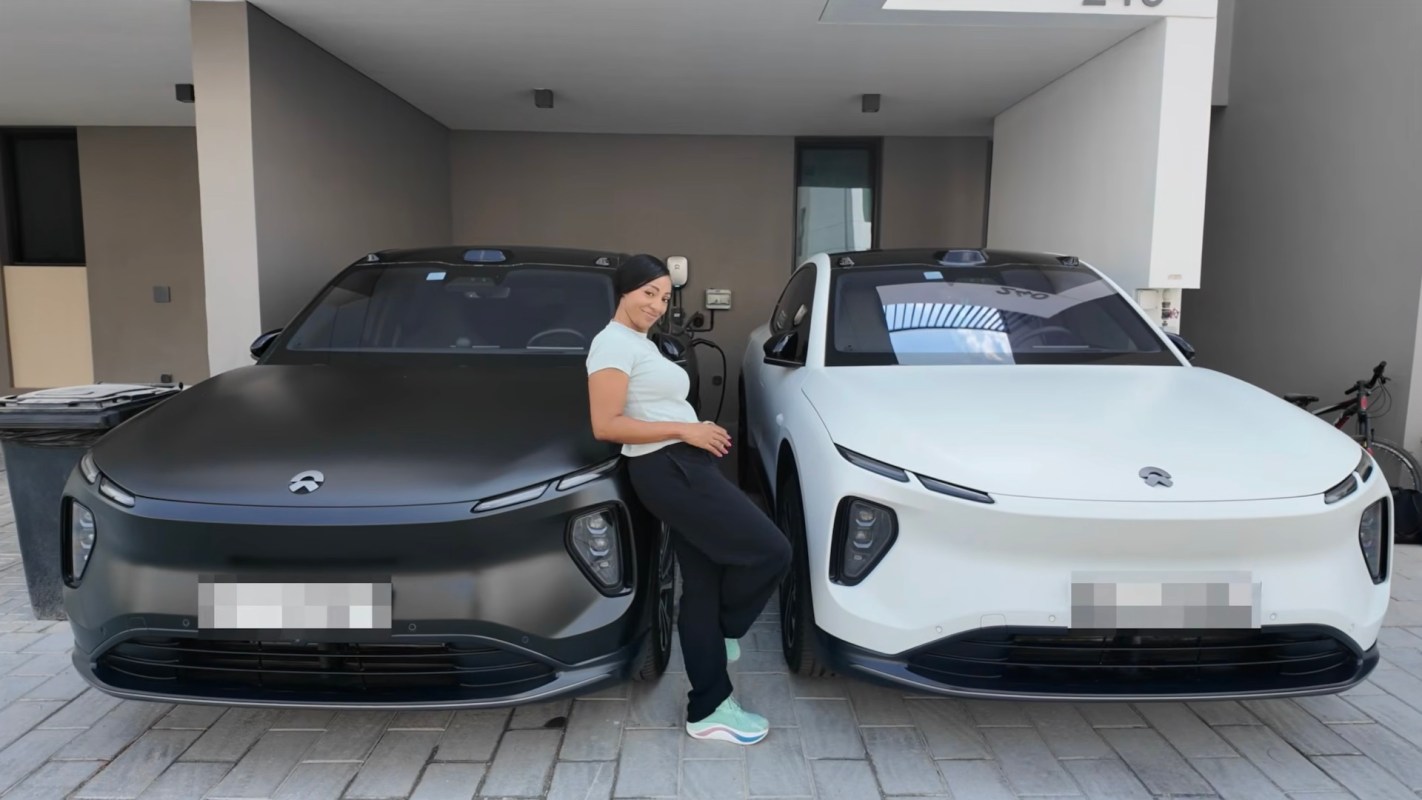
A United States privacy lawyer who drives a Chinese electric vehicle says public alarm over Chinese EV data collection may overlook a key difference.
After comparing her NIO EC6 with a Tesla Model Y, she said one car may gather more overall data from its surroundings without necessarily collecting more identifying information about its driver.
Here's what to know
In a YouTube video, American privacy lawyer Jamilia Grier (@jamiliagrier) examined the manuals, privacy policies, and legal rules tied to her NIO and the Tesla Model Y. She said Chinese EVs like NIO's may generate more data in total because they carry more sensing hardware, but that alone does not mean they are collecting more personally identifiable data.
Grier said the Tesla Model Y relies on nine cameras and uses no LiDAR, radar, or ultrasonic sensors. Her NIO, she said, has 33 sensing units: 11 exterior cameras, one interior camera, five radars, 12 ultrasonic sensors, and one LiDAR unit.
She said that despite those hardware differences, both vehicles collect similar kinds of driver-related information, including location data, voice inputs, images, driving behavior, and parked-car recordings.
"Same categories of personal data, same mechanisms, same places," she said.
TCD Picks » Quince Spotlight
💡These best-sellers from Quince deliver affordable, sustainable luxury for all




More background
Grier said U.S. arguments about Chinese EVs often combine privacy worries with national security concerns, even though those are separate questions under the law.
She cited the Commerce Department's Connected Vehicle Rule and the proposed Connected Vehicle Security Act as examples of policies focused on who collects connected-car data, rather than how much a vehicle records. In her view, privacy law is about the conditions for collecting data, while security law focuses on who obtains it and where it could end up.
She also said some vehicle data collection happens because regulators require it. According to Grier, Europe began requiring crash data recorders in new cars in July 2024, and China began doing so in January 2022. She added that the U.S. has a technical standard for those devices but no broad mandate requiring them.
If EVs face restrictions, consumers could have fewer choices.
What can be done?
Grier urged consumers to review the manuals and privacy policies before concluding that one automaker is dramatically more invasive than another.
She also highlighted settings involving cabin cameras, voice assistants, location sharing, and recording features used while the car is parked.
Grier said the U.S. still lacks a comprehensive federal privacy law, leaving American drivers with fewer protections than people covered by Europe's GDPR and similar legal frameworks.
"The Chinese EV collects more data about the world," she said. "It does not collect more data about you."
Where can I learn more?
Questions about Chinese EVs rarely stay limited to privacy policy. Looking at how NIO, Tesla, and other Chinese brands are developing helps explain why these vehicles draw so much scrutiny in the first place.
• NIO's flagship ET9 sedan includes battery-swapping features aimed at faster charging in China.
• In Norway, cold-weather range testing showed Chinese EVs challenging Tesla in winter conditions.
• Across Europe, Chinese automakers outmaneuvered rivals as brands like Chery expanded rapidly.
These stories show why Chinese EVs keep surfacing in bigger policy and consumer debates. They also put the privacy question in context by showing how much of the conversation is really about industry competition.

Get TCD's free newsletters for easy tips, smart advice, and a chance to earn $5,000 toward home upgrades. To see more stories like this one, change your Google preferences here.






