


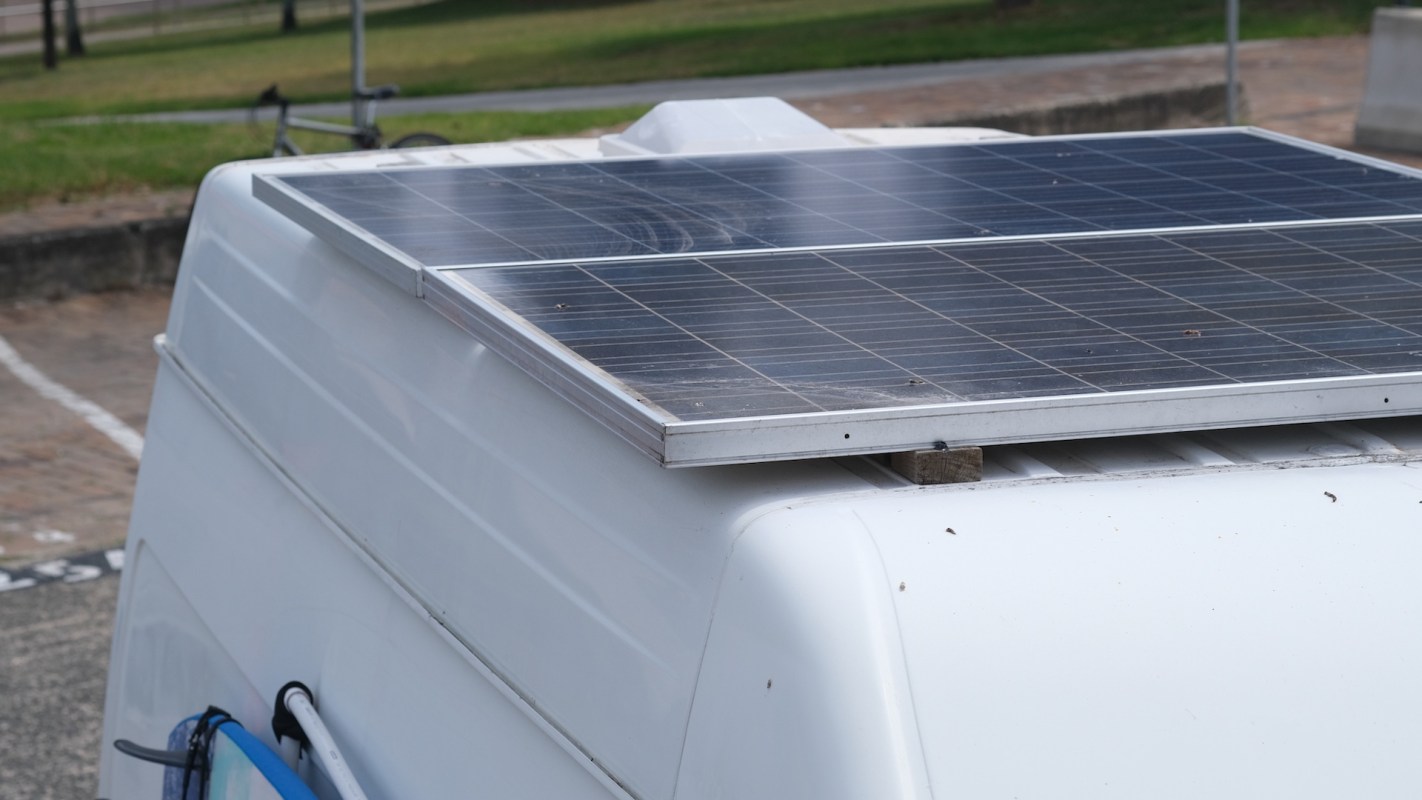
For anyone trying to get the most out of a small solar setup, the tradeoff can become surprisingly tricky: Is it better to have more panel capacity, or can better positioning make up the difference?
Here's what to know
Rather than assuming a tilting system would automatically be better, the builder turned to Reddit to ask whether giving up panel area would be worth it in Ireland's climate.
"A lot of the available sunlight can be diffuse rather than direct, so I'm wondering how much benefit I'd actually get from being able to point the panels directly at the sun," they wrote.
The comparison came down to two layouts. A flat installation would let the van carry 1,200 watts on the roof, while an adjustable tilting setup would reduce capacity to 800 watts because some roof space would have to be sacrificed for the mechanism.
In exchange, the panels could be aimed east in the morning, south around midday, and west in the evening. The builder wanted to know whether that flexibility could make up for losing 400 watts, especially when the sun sits lower in the sky.
Most commenters leaned toward the larger fixed array, though one person suggested a different approach entirely.
"I'd just go with the 1200w non-tilting system as it requires less effort / maintenance," one commenter wrote.
Another recommended, "Consider a side solar panel. … In the winter we face it South and it outperforms the top panels all day."
Save $10,000 on solar panels without even sharing your phone number Want to go solar but not sure who to trust? EnergySage has your back with free and transparent quotes from fully vetted providers that can help you save as much as $10k on installation. To get started, just answer a few questions about your home — no phone number required. Within a day or two, EnergySage will email you the best local options for your needs, and their expert advisers can help you compare quotes and pick a winner. |

For homeowners, going solar is one of the best ways to save money on home energy. If you're considering panels for a house, EnergySage lets you get free solar installation estimates and compare quotes.
More background
Solar performance can vary significantly with local conditions. Tilting panels can increase production when sunlight is direct and the sun is low, but overcast weather scatters that light, reducing the benefit of chasing the ideal angle.
For one commenter, the numbers on cloudy days did not justify sacrificing panel capacity. Referring to "you are probably comparing 4% vs 6% efficiency," that person argued that the gain from adjusting the panel angle would likely be too small to outweigh the added mechanical effort if the system also had to lose so much wattage.
What can be done?
Several commenters said the smartest move was to model or test the system before buying equipment. They pointed to the European Commission's PVGIS solar calculator and also suggested using a solar meter to see how angle and weather might affect output in a specific place.
More From EnergySage
💡Go deep on the latest news and trends shaping the residential solar landscape

Homeowners can also use EnergySage's solar map, which shows the average cost of a home solar panel system on a state-by-state level, along with solar incentives available in each state. Together, those tools can help readers get the best price for rooftop solar panels and access available incentives.
EnergySage's free services can also take much of the guesswork out of a major purchase. With EnergySage's help, the average person can save up to $10,000 on solar purchases and installations. Comparing multiple quotes in one place can make it easier to spot overpriced offers and better understand your options.
Adding battery storage to a solar setup is also one of the best ways to protect your home during outages, save money on energy, and go off-grid. If you want to explore home battery storage options, including competitive installation estimates, check out EnergySage.
Where can I learn more?
Questions about panel angle, usable roof space, and maintenance come up in plenty of solar projects beyond one camper van build. Installation design, upkeep, and even vehicle-integrated solar can affect what people get from the same sunlight.
• In Norway, a startup installed the world's largest rooftop solar system using vertical panels in days.
• Engineers created a wind-powered cleaning solution that could cut solar maintenance costs.
• In China, crews broke ground on the world's largest solar tower with vast power potential.
• Across sunny regions, solar-powered cars halving charging needs could reshape everyday driving.
• Automakers are pushing game-changing solar cars that could reduce plug-in charging demand.

Get TCD's free newsletters for easy tips, smart advice, and a chance to earn $5,000 toward home upgrades. To see more stories like this one, change your Google preferences here.






