


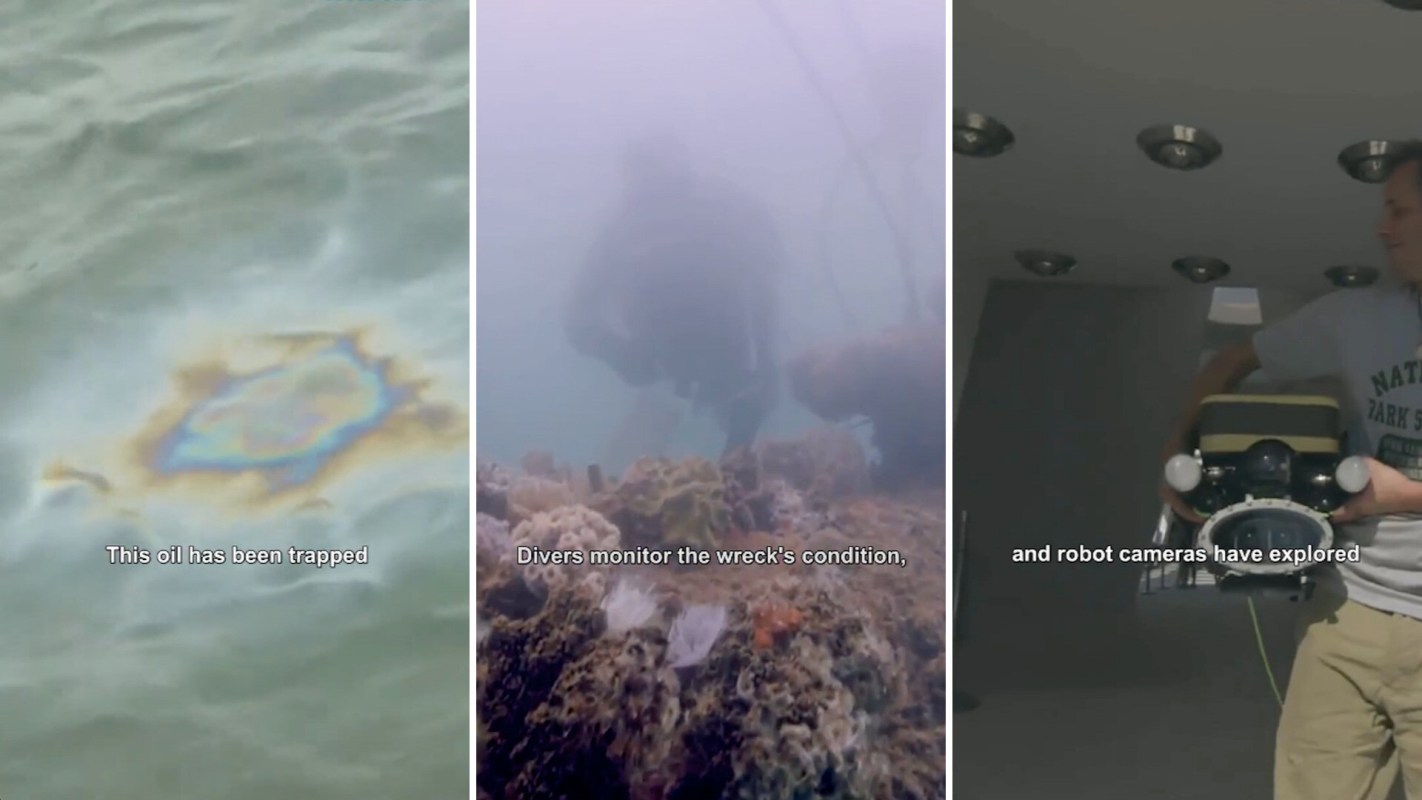
Oil from the USS Arizona, the battleship sunk in 1941, still reaches the surface at Pearl Harbor, Hawaiʻi, creating a rainbow sheen on the water that visitors can spot from the memorial above the wreck.
The slow seep remains a reminder that environmental harm and human loss can stay intertwined for generations.
Here's what to know
Instagram account Blues Below (@bluesbelow) referred to the seep as the Arizona's black tears, a name for old fuel still escaping from inside the hull and surfacing in droplets.
"The rainbow on the water comes from a battleship that sank in 1941," the outlet said in the video's caption. "Oil still rises from USS Arizona at Pearl Harbor."
Any work on the site carries added weight because the USS Arizona is a war grave. The National Park Service said the wreck may still hold roughly half a million gallons of oil, though that total is an estimate rather than an exact tank reading.
More background
What may look like a fleeting shimmer on the surface is also evidence of a long-running pollution risk at one of the country's most solemn historic sites.
TCD Picks » Quince Spotlight
💡These best-sellers from Quince deliver affordable, sustainable luxury for all




Researchers have been examining how the ship's steel is corroding while also pinpointing where oil remains trapped in the hull. Limited oxygen in the dark interior may slow that corrosion, but it cannot stop it.
What's being done?
Officials have emphasized careful monitoring over disturbance. Divers continue checking the wreck, and robot cameras have gone into rooms deep inside the ship so scientists can better understand how conditions are changing.
This kind of observation gives scientists and stewards better information while avoiding unnecessary intrusion into a place of mourning.
"Protecting the harbor means caring for the wreck and the people still inside her," Blues Below wrote.
Where can I learn more?
Pearl Harbor's oil sheen shows that marine ecosystems can continue to be damaged for decades after a disastrous event at sea.
• The Navy has attempted to restore Pearl Harbor's waters after invasive coral spread.
• In Hawaiʻi, The Nature Conservancy backed a major upgrade to protect reefs before disaster strikes.
• Off California, the horrors of our past still linger in underwater toxic waste dumps.

Get TCD's free newsletters for easy tips, smart advice, and a chance to earn $5,000 toward home upgrades. To see more stories like this one, change your Google preferences here.






