


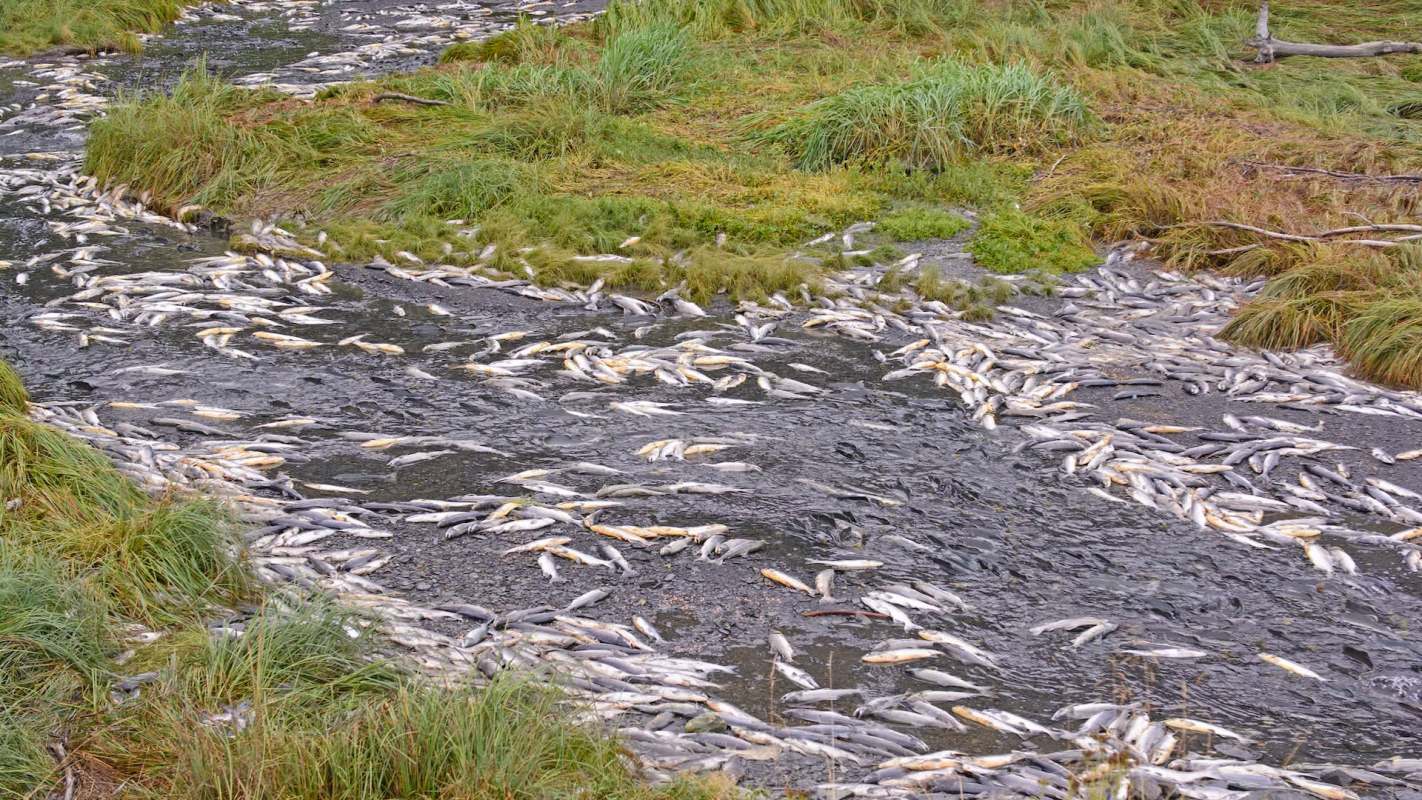
A Canadian biologist believes a little-known chemical from tire wear killed thousands of juvenile coho salmon in British Columbia.
Here's what to know
In June 2007 at Fish Gut Alley in Duncan, British Columbia, thousands of juvenile coho salmon were found in distress near a storm drain, circling and gasping at the surface with open mouths, according to The Narwhal. Elder Siilh'na'mut Ken Elliott made the discovery that morning, and local fishery officer Willi Aquino later said the fish were dying near the drain.
Qutxulenuhw Tim Kulchyski, a Canadian biologist and member of Cowichan Tribes, traced the mysterious salmon killer back to car tires after years of questioning. He told The Narwhal he believes 6PPD-quinone, or 6PPD-Q, caused the devastating fish kill he witnessed.
6PPD-Q is created when 6PPD — a preservative added to tires to keep rubber from cracking — breaks down after tire particles wash off roads and into waterways. A 2020 Science paper found that tiny amounts of 6PPD-Q can kill coho salmon.
Researchers in Washington state helped establish the link between urban stormwater runoff and coho deaths, publishing their findings in Science in 2020. Aquatic toxicologist Jenifer McIntyre said 6PPD-Q "is among the most toxic chemicals that we know of for aquatic life."
More background
As vehicles are driven, tires constantly shed tiny pieces of rubber onto roadways. Rain then carries those particles into creeks and wetlands that serve as nursery habitats for young fish.
TCD Picks » Quince Spotlight
💡These best-sellers from Quince deliver affordable, sustainable luxury for all




For decades, salmon deaths in urban waterways left scientists searching for an explanation. McIntyre said that across seven years of field studies in the Puget Sound, roughly 40% of the region was affected and 40% to 90% of coho salmon there were dying before spawning, often within hours of exposure.
Beyond sustaining entire ecosystems, salmon are also central to the cultural traditions and food systems of Indigenous communities. Kulchyski said coho counts across the broader Cowichan River system are down by more than 90% from the 1970s.
What's being done?
At Vancouver Island University's Centre for Health & Environmental Mass Spectrometry, researchers have been increasing their search for pollution hotspots by processing up to 100 water samples a day. They have also installed an automated collector at Fish Gut Alley to monitor contamination during rain events.
Since 6PPD-Q often binds to soil, green stormwater features such as rain gardens can help trap runoff before it reaches salmon habitat. Tests from the University of British Columbia showed about 90% removal in some cases, while a Washington State University bioretention system prevented salmon deaths over 13 years of study.
Beginning in the winter of 2025, the Canadian government placed 6PPD and 6PPD-Q on a priority list for assessment, The Narwhal reported. Meanwhile, the U.S. Tire Manufacturers Association continues to look for safer alternatives.
For Kulchyski, the issue remains deeply personal. "I certainly don't know all of the solutions, but I know if we actually start incorporating these concerns and these issues in building new bridges and building new treatment systems, it will immediately make a huge difference."
Where can I learn more?
The articles below look at how pollution, habitat loss, and other contaminants are colliding with salmon recovery efforts across North America.
• In waterways across North America, mass fish killings linked to a toxic tire component are raising alarm.
• In Washington state, officials say the hazardous salmon habitat problem needs a more comprehensive recovery strategy.
• Scientists tracking Atlantic salmon found a disturbing impact of a common medication on migration, underscoring chemical risks to fish.

Get TCD's free newsletters for easy tips, smart advice, and a chance to earn $5,000 toward home upgrades. To see more stories like this one, change your Google preferences here.






