


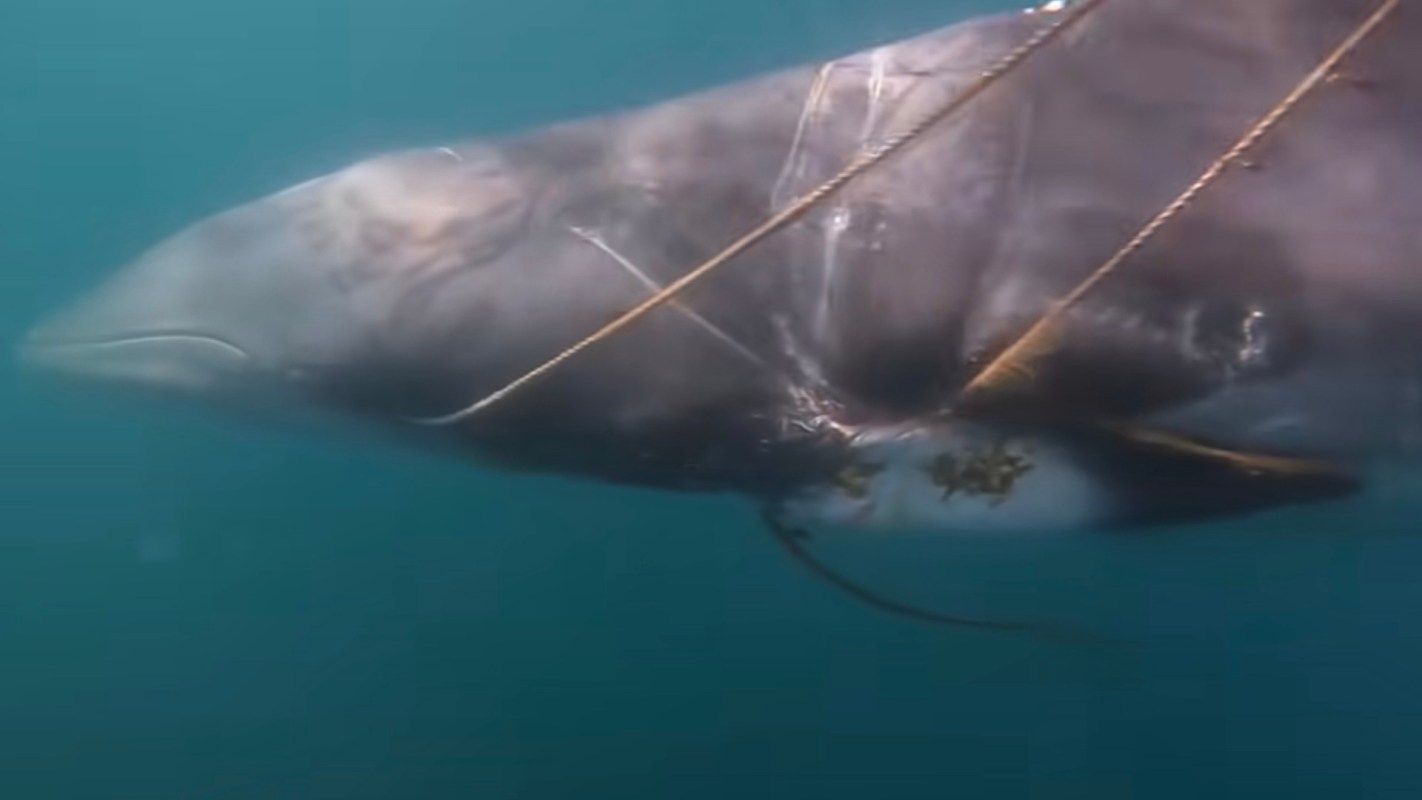
A badly entangled minke whale that rescuers feared they had lost was spotted again on Sept. 8 off Nauset Inlet after traveling more than 40 miles from Cape Cod Bay, finally giving responders a chance to cut it free.
Here's what to know
Recreational fishermen first reported the roughly 18-foot whale on Sept. 6 after seeing it caught up in rope and buoys. Crews searched again on Sept. 7 without finding it, but the Center for Coastal Studies' Marine Animal Entanglement Response team located the animal off Eastham on Sept. 8, according to the Cape Cod Times.
Scott Landry, who leads the Provincetown-based Marine Animal Entanglement Response program, said a second opportunity seemed unlikely.
"It is pretty rare for a free-swimming entangled minke whale to be seen again after its initial report," Landry said. "It was very lucky and fortunate that the aerial team resighted it."
By the time responders saw the whale again, they said it was in severe condition. Rope was stuck in its mouth and wrapped around its body, apparently keeping it from feeding, and rescuers believed it had been dragging the gear for a long time.
Responders used a grappling hook along with a hook knife on a long pole to remove most of the entangling gear. One section of line remained because it was deeply embedded near the whale's left flipper, and taking it out could have caused heavy bleeding.
TCD Picks » Quince Spotlight
💡These best-sellers from Quince deliver affordable, sustainable luxury for all




More background
For large whales, entanglement is as much of a risk as vessel strikes, as it is a leading cause of serious injury and death. Minke whales, the smallest baleen whales in New England during the summer, can be especially vulnerable because fishing gear can pin them in place or cause them to drown.
Even whales that survive the initial event may spend weeks or months dragging gear that makes feeding and travel harder. When lines cut into flesh, they can also lead to infection and a decline in health over time.
The minke rescue comes during a busy stretch for responders, who since June 14 have also freed three humpbacks, including two within 48 hours.
What's being done?
This disentanglement was possible because the whale was spotted twice: first by fishermen on Sept. 6, then by an aerial survey team from the Northeast Fisheries Science Center on Sept. 8.
Since 1984, the Marine Animal Entanglement Response team has freed more than 200 whales and other marine animals and helped develop techniques now used worldwide.
The Center for Coastal Studies advises anyone who spots an entangled whale, sea turtle, or other marine animal to call 800-900-3622 or contact the U.S. Coast Guard on VHF 16, then remain with the animal from a safe distance until trained responders arrive.
"While the prognosis for this whale is poor, it did resume normal swimming behavior, which gave the team some optimism," the scientists reported.
Where can I learn more?
The Eastham rescue fits into a broader pattern of entanglements that leave whales dragging nets, ropes, and other debris for long periods. These stories from California, Poland, and elsewhere show how quickly things can turn dire—and how much depends on trained crews reaching the animal in time.
• Off the California coast, rescuers found a gray whale caught in a gillnet with slim odds of survival.
• In Poland, crews faced an extremely rare occurrence as a humpback tangled in nets.
• Elsewhere, responders discovered a line embedded in the flesh of a massive southern right whale.
• Across North Atlantic waters, scientists used visual survey data to map migration threats at scale.
• Off Texas, marine biologists said we arrived in time to save a tangled dolphin calf.
These stories show how often marine mammals run into life-threatening gear and how small the rescue window can be. They also help explain why repeat sightings, fast reporting, and specialized disentanglement teams mattered so much in the minke whale rescue off Eastham.

Get TCD's free newsletters for easy tips, smart advice, and a chance to earn $5,000 toward home upgrades. To see more stories like this one, change your Google preferences here.







