



A shopper trying to get their money back for expired coconut chunks said the refund process came with an unexpected twist: a slider that appeared to shame them for requesting a full refund.
Rather than offering a simple fix, the interaction struck many readers as yet another example of companies using automation to protect their bottom line when food quality is the real issue.
Here's what to know
On Reddit, they shared several aggravating support chat screenshots on r/mildlyinfuriating.
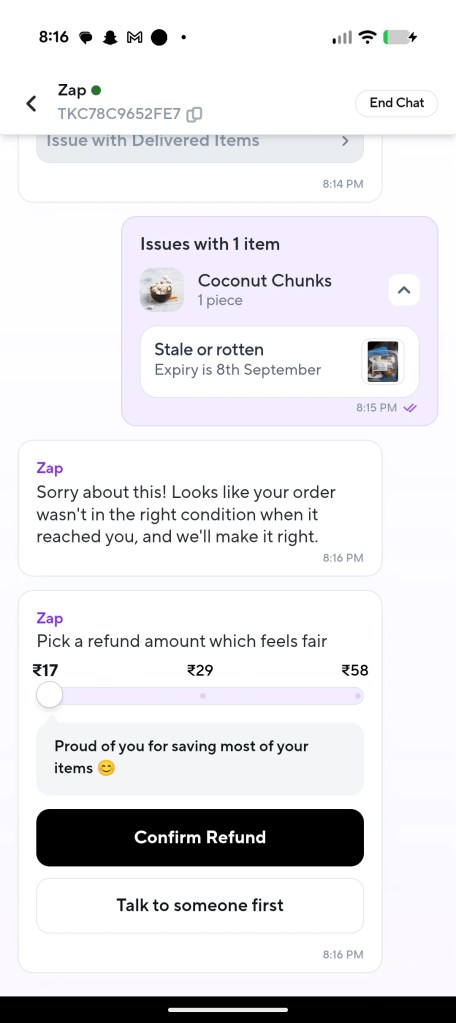
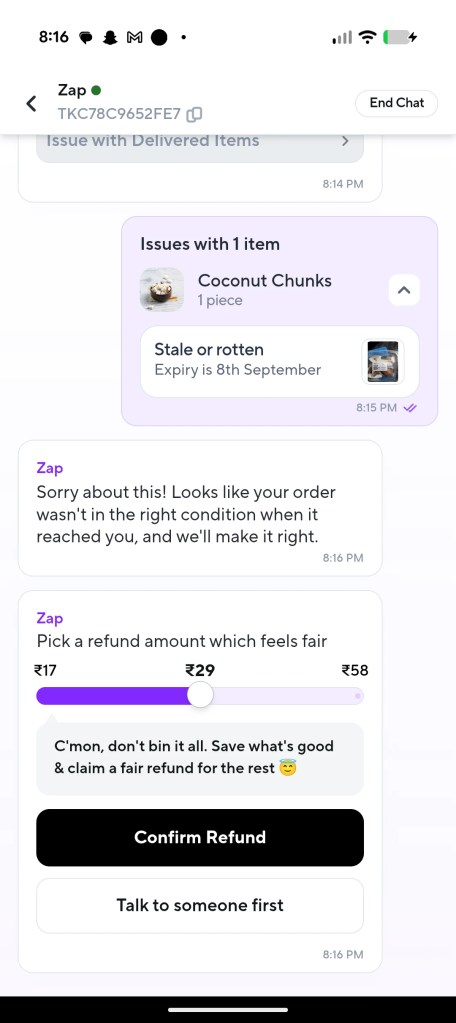
"I just wanted a refund for an expired product," the shopper griped. "Why am I being emotionally manipulated for a f***ing coconut."
According to the original poster, they reported a stale item to the retailer and were provided refund options steeped in emotional pressure to accept less than they were owed.
On one screen, underneath the refund slider, a not-so-subtle automated message appeared depending on the amount selected.
TCD Picks » Quince Spotlight
💡These best-sellers from Quince deliver affordable, sustainable luxury for all




"C'mon, don't bin it all," the midway amount read, with an angel emoji at the end of the message. "Save what's good & claim a fair refund for the rest."
When selecting a full refund, the screen stated, "Claim this refund ONLY if nothing can be used," punctuated by a tearful emoji.
The discussion also widened into complaints about automated customer-service tools, and one user parodied the company's brazen resistance to refunding the purchase.
"Cmon just let us keep a little bit of your money for some reason unbeknownst to any of us but some of you will feel guilty enough," they wrote.
More background
Frustration in the thread went beyond one spoiled grocery item. It tapped into commenters' concerns about scripted or AI-style customer service tools that can make refunds, replacements, or access to a human representative more difficult.
That theme appeared in several personal anecdotes about systems that seemed to argue with users or block them from speaking to a person.
"I called to make a hotel reservation once and the AI argued it wasn't AI," a user recalled. "We were going in circles as it wouldn't let me get a human."
Another commenter described an unsettling experience with a chatbot while trying to obtain a necessary prescription from their pharmacy.
"I started begging the ai to let me talk to the pharmacist or just any real person, who would obviously and easily see the problem, but alas, AI would simply not give up and kept saying it was real even when we were talking in circles and it was clearly repeating scripted responses."
What can be done?
For one commenter, the blame fell on the people who chose to deploy the technology.
"Don't blame the clunkers, someone made the decision to implement this and other people signed off on it," they said, using a slang term for chatbots.
Where can I learn more?
The coconut refund dispute also tapped into a shopper backlash over retail decisions that feel wasteful, short-sighted, or just plain frustrating.
• At one grocery store, a plastic-wrapped coconut on shelves drew waste complaints.
• At Walmart, carts of garden products were reportedly headed for the garbage instead of clearance.
• In a produce aisle, a single vegetable in plastic left shoppers mocking needless packaging.
• Travel-sized Tic Tacs in plastic sparked questions about pointless extra wrapping.
• In South Korea, a single-use iPhone battery left shoppers calling the product wasteful.
A complaint over one spoiled item can spiral into a bigger argument about how stores handle money, products, and waste.

Get TCD's free newsletters for easy tips, smart advice, and a chance to earn $5,000 toward home upgrades. To see more stories like this one, change your Google preferences here.






