


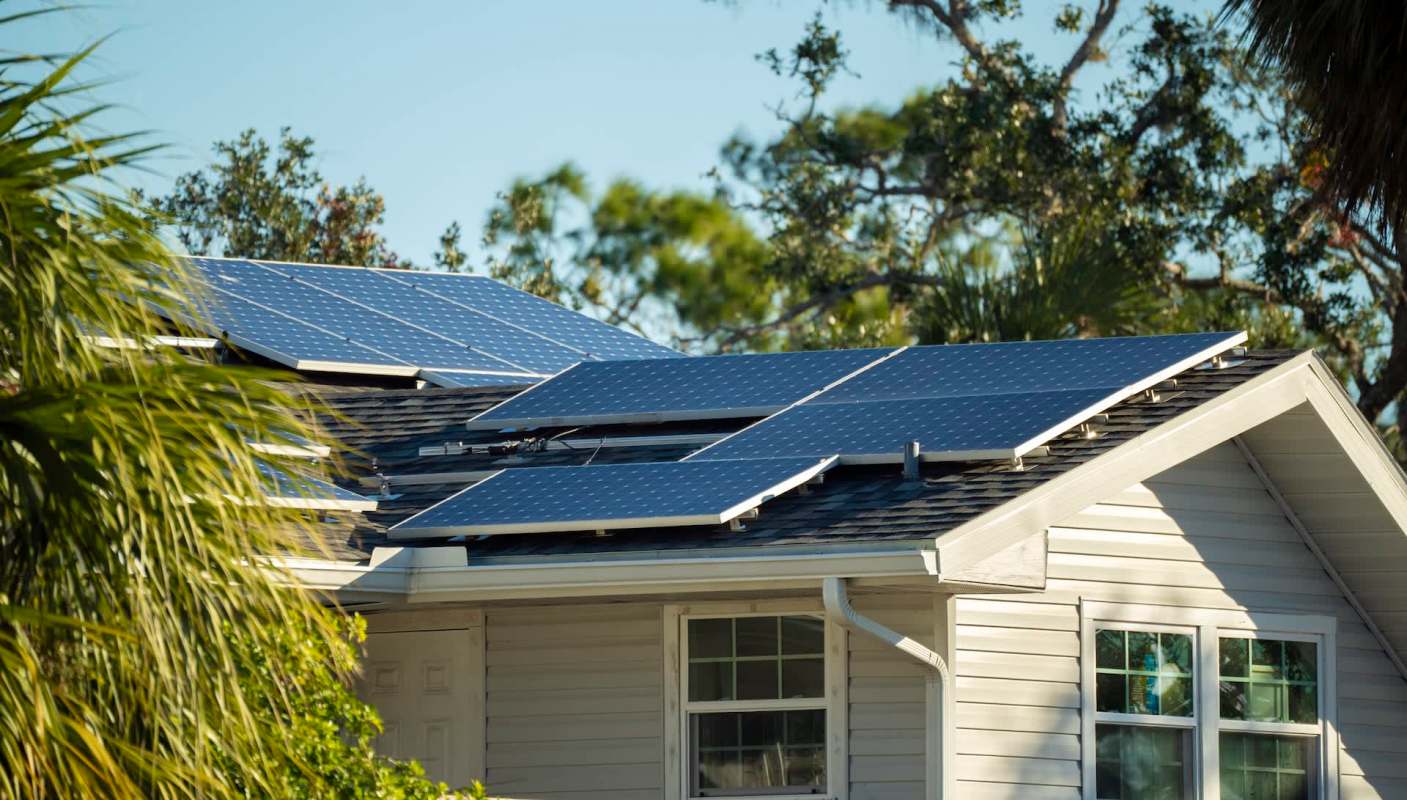
One Louisiana homeowner took a notably spreadsheet-heavy approach to see if rooftop solar is actually the best use of a large upfront investment.
The homeowner then shared their analysis with Reddit's r/SolarEnergy community and asked the forum to "roast my cost-benefit calculations."
Here's what to know
The original poster shared that they were evaluating a 12-kilowatt solar project priced at about $2.30 per watt, or roughly $28,000 total. In the Reddit thread, the user said the system would break even in around 11 years under the state's current net-metering setup.
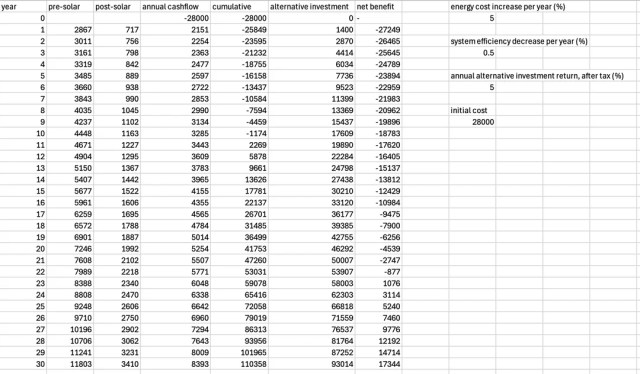
What made the analysis unusual was that the homeowner measured the solar payback against the long-term market potential of investing the roughly $28,000.
For the homeowner, the main issue was less about the sticker price than the alternative use of that money. The OP said they were unsure "if it's worth it with 11 yr break-even and 23 yrs to beat a perhaps conservative estimate of other long-term investment options."
Commenters largely approved of the quoted price, though.
One commenter wrote, "$2.3/watt? Send it. Any way to finance for cheap is a great ROI enhancer too."
Another commenter added, "If you want to complicate this, you would also need [to] consider the appreciation of yearly inflowing capital gains, the cost of O&M, and FMV of equipment at any point in time."
Save $10,000 on solar panels without even sharing your phone number Want to go solar but not sure who to trust? EnergySage has your back with free and transparent quotes from fully vetted providers that can help you save as much as $10k on installation. To get started, just answer a few questions about your home — no phone number required. Within a day or two, EnergySage will email you the best local options for your needs, and their expert advisers can help you compare quotes and pick a winner. |

OP responded to this comment, writing, "I should also account for investing the annual solar savings into the alternate investment. That actually changes things pretty substantially! The break-even point between solar investment and alternate… investment changes from 23 years to 13 years."
A third user simply wrote, "Huge return."
More background
As the spreadsheet and subsequent discussion shows, a detailed payback analysis should include several additional factors, such as growth from alternative investments, the reinvestment of yearly solar savings, operations and maintenance expenses, and the future value of the equipment.
Clearly, solar is rarely just a utility-bill decision. It is also a capital decision shaped by local electricity prices, net-metering policies, financing costs, and how consistently a household would actually invest savings elsewhere.
More From EnergySage
💡Go deep on the latest news and trends shaping the residential solar landscape



Still, going solar is one of the best ways to save money on home energy, especially for households with high electricity use and favorable utility rules. Homeowners who want to test their own numbers can explore EnergySage to get free solar installation estimates and compare quotes.
Free comparison tools can help simplify that process. With EnergySage's help, the average person can save up to $10,000 on solar purchases and installations. Tools like EnergySage's solar map also show the average cost of a home solar panel system on a state-by-state level, along with solar panel incentives for each state.
Where can I learn more?
The Louisiana homeowner's spreadsheet hinged on the same details that often make or break a solar investment: incentives, actual bill savings, and the fine print of utility billing.
• A homeowner snagged $10,000 in solar incentives and now saves $1,500 to $2,000 a year.
• In South Carolina, a solar owner saw exports in the app before a baffling bill.
• Federal clean-energy rules can help households snag over $12,000 in incentives for rooftop solar.

Get TCD's free newsletters for easy tips, smart advice, and a chance to earn $5,000 toward home upgrades. To see more stories like this one, change your Google preferences here.






