


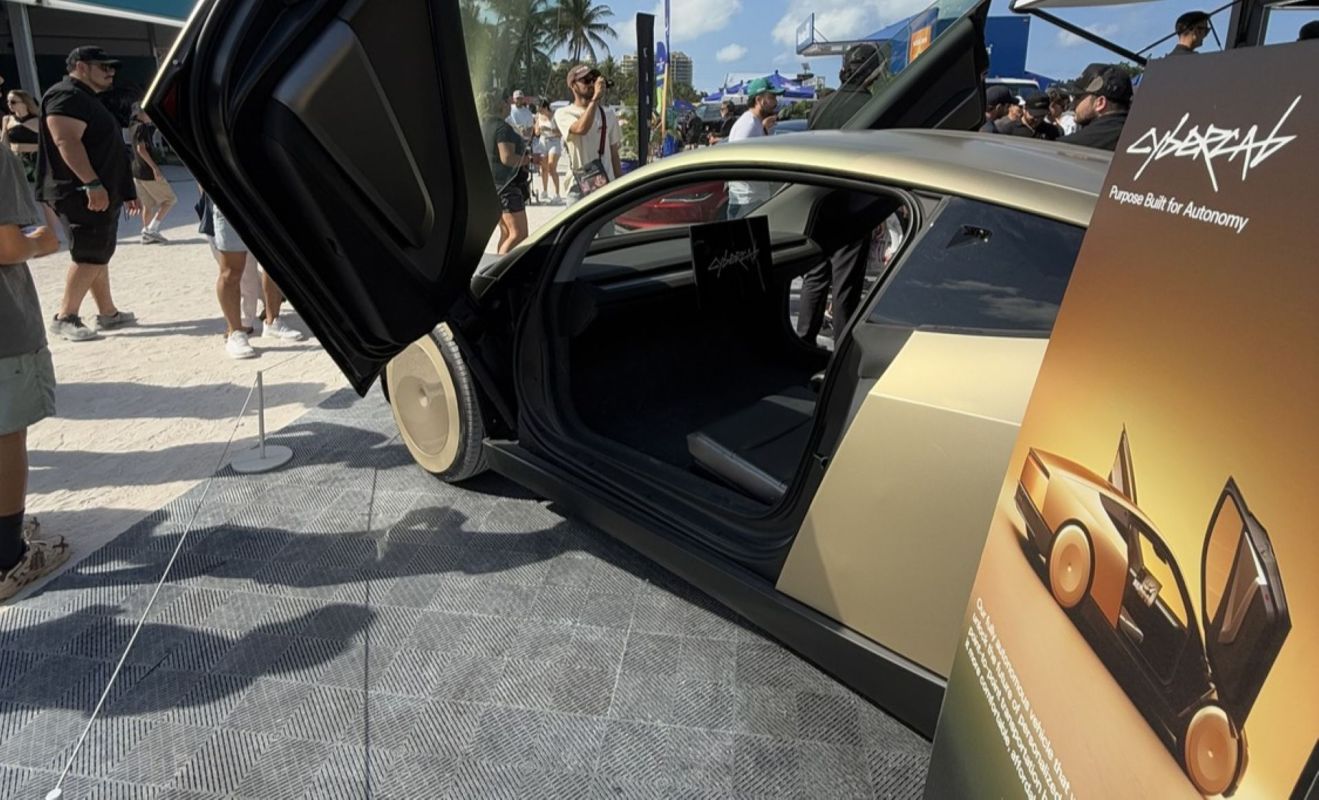
Tesla's new Cybercab briefly exposed something passengers were likely never meant to see during a test ride in Austin: hidden on-screen controls that appeared to allow for manual vehicle operation, a notable glitch because Tesla has marketed the Cybercab as a purpose-built autonomous vehicle with no steering wheel or pedals at all.
Here's what to know
Video posted by early passenger Matthew Skrzypczak showed several camera views, controls for multiple vehicle functions, and a touchscreen gear selector marked "forward" and "reverse."
Skrzypczak said on X that this appeared when he got in the vehicle instead of the standard ride-start screen, describing it as a "virtual joystick for manual driving."
Weird #cybercab situation! When I got in the vehicle, the display was in a different configuration with a virtual joystick for manual driving! I have a feeling I wasn't supposed to see this… but I try to manually drive the vehicle anyway! 😂 @wholemars @DirtyTesLa @DavidMoss… pic.twitter.com/mQsoDFDbEJ
— Matthew Skrzypczak (@MatthewSkrzypc1) September 7, 2026
He said the interface let him close the door and sound the horn, but the Cybercab would not actually move when he tried to use the controls. Futurism noted that pedestrians were nearby.
Cybercab is defined in part by its lack of conventional controls, so the apparent software error indicates there is still some kind of manual backup interface built in. Skrzypczak was not the only rider to encounter the issue.
More background
Even without traditional driver controls, some fallback method would still be needed if an employee or emergency worker had to reposition a malfunctioning vehicle.
TCD Picks » Quince Spotlight
💡These best-sellers from Quince deliver affordable, sustainable luxury for all




The incident has also attracted regulatory attention. The National Highway Traffic Safety Administration opened an audit into Tesla's self-certification that the vehicles are road-safe despite lacking conventional manual controls.
What's being done?
The main response appears to be regulatory review. The National Highway Traffic Safety Administration's audit could help clarify what safeguards Tesla has in place, how backup controls are intended to work, and whether the public-facing vehicles meet federal safety expectations.
Software reliability and access control are also immediate concerns. If the touchscreen mode was meant only for employees, preventing riders from accessing or viewing it would be one fix. Emergency procedures also need to be clear and safe when something goes wrong.
Skrzypczak said on X, "I have a feeling I wasn't supposed to see this."
Where can I learn more?
This Cybercab glitch isn't the only issue Tesla has seen. It also includes shaky faith in software and broader concerns about design and buyer confidence. It's why a backup interface appearing during a ride in Austin quickly raised bigger questions about safety and credibility.
• Tesla owners say the Full Self-Driving feature left them wary enough to stop trusting it.
• Tesla's Cybertruck drew backlash as major pitfalls of vehicle design collided with safety concerns.
• Tesla's Cybertruck faced softer demand when unexpected issues concerning pricing undercut early hype.
They also underscore how fast public confidence can slip when Tesla's tech does something riders or owners did not expect. That makes the Cybercab screen mix-up feel less like an odd glitch and more like part of a larger pattern.

Get TCD's free newsletters for easy tips, smart advice, and a chance to earn $5,000 toward home upgrades. To see more stories like this one, change your Google preferences here.






