


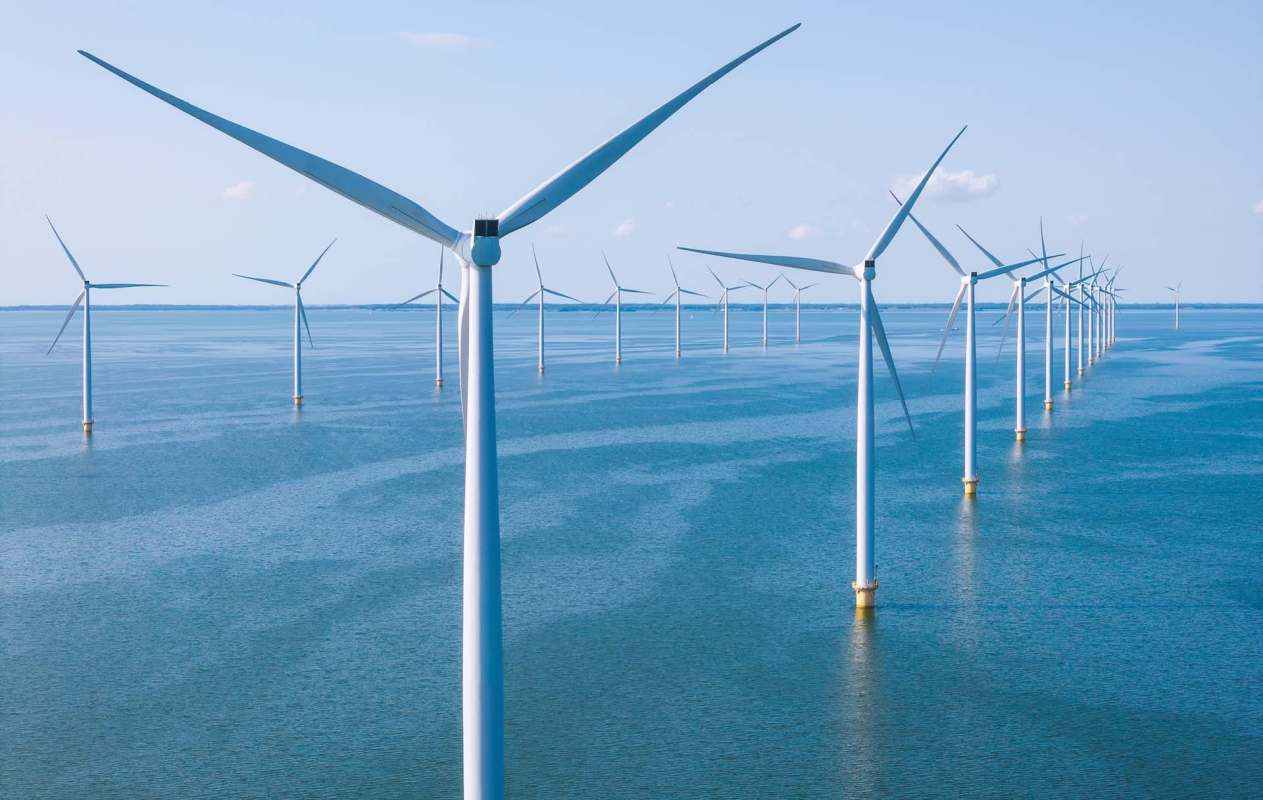
Around the world, offshore wind is emerging as a major clean energy source, delivering huge amounts of electricity without the planet-warming pollution tied to fossil fuels.
But as projects move into deeper and more distant waters, researchers say the consequences for ocean life are still not fully understood.
Here's what to know
According to Mongabay, offshore wind farms may sometimes protect marine life while also supplying renewable electricity to crowded coastal grids by limiting destructive fishing practices such as bottom trawling.
Turbine structures may also serve as artificial reefs, drawing in sharks, rays, fish, and crustaceans.
Still, a 2025 paper said 86% of offshore wind's possible impacts on ecosystem services remain "unknown."
Although many experts consider offshore wind important for meeting climate goals, research into its ecological effects, especially beyond Europe, has lagged behind the industry's fast expansion.
TCD Picks » Quince Spotlight
💡These best-sellers from Quince deliver affordable, sustainable luxury for all




Louise Combret, renewable energy policy associate at The Nature Conservancy, said, "We usually aim for the three C's. That's making sure that offshore wind not only delivers for climate, but also for conservation and communities."
Combret said the first step is careful siting: "It all starts with ecosystem-based marine spatial planning."
More background
The expected buildout is massive. In places such as the North Sea, turbine numbers could grow from about 4,000 to as many as 19,400 by 2050.
Replacing dirtier energy sources at that scale could cut air pollution and climate pollution, but it may also alter marine ecosystems.
Some risks are already clear. Birds and bats can lose habitat or collide with turbines, and construction noise can disturb whales and other marine animals.
Those effects could be especially severe for seabirds in some locations. Aedan Smith, head of policy and advocacy for Scotland at the Royal Society for the Protection of Birds, warned that at some sites predicted impacts on seabirds are "really, really huge."
Other effects remain more uncertain.
Michela De Dominicis, senior scientist at the National Oceanography Centre, said that some studies suggest turbine wakes may affect ocean stratification — the way water layers are organized by density and temperature — while Wenyan Zhang, a researcher at the Helmholtz Center, said turbines can also alter the physical circulation of air and water and shift sediment.
Another study found long-term surface warming of 0.36 degrees Fahrenheit near wind farms.
What's being done?
Many of the environmental risks tied to offshore wind could be reduced with better planning.
To help steer projects away from important seabird habitat, organizations including BirdLife International have developed sensitivity maps, and some governments are starting to consider environmental standards alongside price when approving projects.
Developers also have several mitigation options. They include bubble curtains to reduce construction noise, monitoring plans for floating wind cables and anchors, and alternative materials or designs that may be more wildlife-friendly.
Some work also aims to improve habitat. Marjolein Kelder, senior project lead at The Rich North Sea, said trials are testing whether stones placed around turbine foundations could help restore depleted oyster reefs.
"That's something we think is very promising," Kelder said.
Even so, Clémentine Mitoyen, a post-doctoral researcher at the Institut de Ciències del Mar in Spain, cautioned against treating those ideas as a cure-all.
"There are some things that can be done within the offshore wind farm structure to improve it from a nature-inclusive perspective, but I think we need to be really careful not to see those improvements as a magic solution," she said.
Zhang said the overall picture is still unsettled: "[Wind farms] are increasingly changing or reshaping the ocean dynamics, but we cannot make a simple judgment whether it's good or bad at the moment. It's still under discussion, so there's no consensus yet."
Where can I learn more?
Offshore wind's rapid expansion is raising questions that go beyond clean power alone. The industry is handling crowded ocean space, wildlife concerns, and the costs and benefits of building at scale.
• Swedish developer Hexicon says offshore wind and fishing can coexist in shared ocean space.
• At Norway's Hywind Tampen, bird collision risks were lower than critics had feared.
• Across global energy systems, wind farms offset emissions far beyond those created during construction.
The climate upside is real, but so is the need for careful planning once projects move from paper to open water.

Get TCD's free newsletters for easy tips, smart advice, and a chance to earn $5,000 toward home upgrades. To see more stories like this one, change your Google preferences here.






