


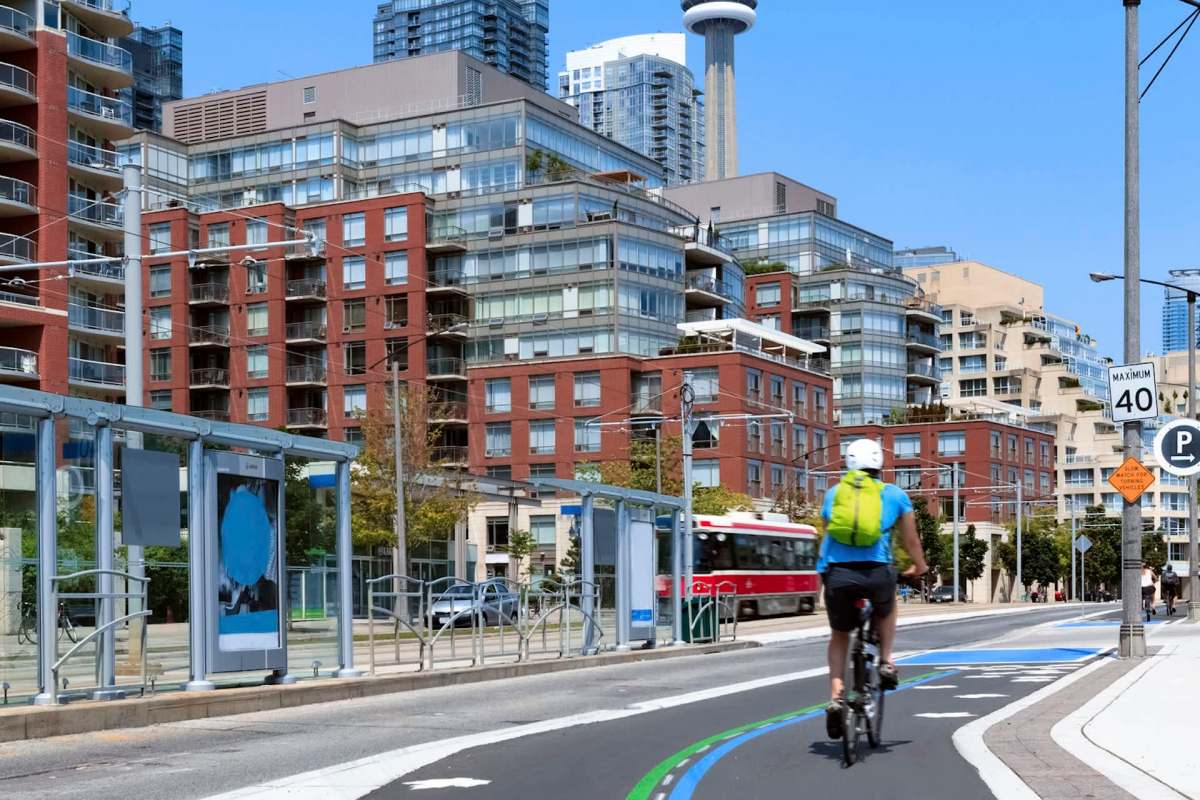
Officials in Ontario, Canada, are moving ahead with a plan that would remove 12 miles (19 kilometers) of protected bike lanes from some of Toronto's busiest streets.
Here's what to know
According to a CBC Toronto TikTok post, Ontario officials have said the state will start shifting road space back to motorized vehicles along several key transportation corridors.
@cbctoronto The Ford government is going ahead with bike lane removal and reconfiguration on some of Toronto's busiest roads, the province announced Tuesday. Tuesday's news release says that the provincial government is going to begin the process of "restoring motor vehicle lanes" that were previously removed to make bike lanes on Bloor Street, Yonge Street, University Avenue, Queen's Park, Queen's Park Crescent and Avenue Road. The announcement comes after Ontario's court of appeal ruled in August that the Ford government can rip out 19 kilometres of protected bike lanes in Toronto, reversing a lower-court decision made in July 2025. #ontario #bikelane #dougford #cycling #traffic ♬ original sound - CBC Toronto
In the video caption, CBC Toronto said bike lane "removal and reconfiguration" was advancing after a ruling from Ontario's Court of Appeal cleared the way for the government to proceed. The appellate court's decision overturned a lower-court ruling from July 2025.
More background
Protected bike lanes are meant to give cyclists a physical buffer from vehicle traffic, helping to make bike riding safer for commuters, families, delivery workers, and people who cannot or do not want to drive.
Removing that protection can make trips more stressful and less accessible for many people who use the road. It can also lead to accidents and serious injuries.
Safer bike infrastructure can help ease traffic pressure by giving people another practical way to move through dense urban corridors. It can help reduce pollution from short car trips and make streets feel more welcoming for pedestrians and nearby businesses.
TCD Picks » Quince Spotlight
💡These best-sellers from Quince deliver affordable, sustainable luxury for all




Reversing built infrastructure not only impacts individuals' sense of safety. It also makes a statement about which modes of transportation are prioritized on public roads.
When cyclists are forced to ride in close proximity to motorized vehicles, it can make them feel less safe, potentially reducing their enthusiasm for a pollution-free form of transportation and exercise.
Where can I learn more?
Transportation policies can affect traffic, pollution, public health, and the availability of travel options. Across the world, there are many positive and negative examples of governments influencing their residents' travel options.
• Across urban corridors, drivers blocking bike space show why lanes should be used everywhere.
• In Charlotte, cyclists described the worst bike lane as an exposed, stressful route.
• In Wales, officials banned new roads in many cases to curb driving emissions.
• In the U.S., officials seek to roll back major climate rule limits on vehicle pollution.
• Federal transportation leaders said they were getting back to basics while rescinding vehicle-emissions targets.

Get TCD's free newsletters for easy tips, smart advice, and a chance to earn $5,000 toward home upgrades. To see more stories like this one, change your Google preferences here.







