


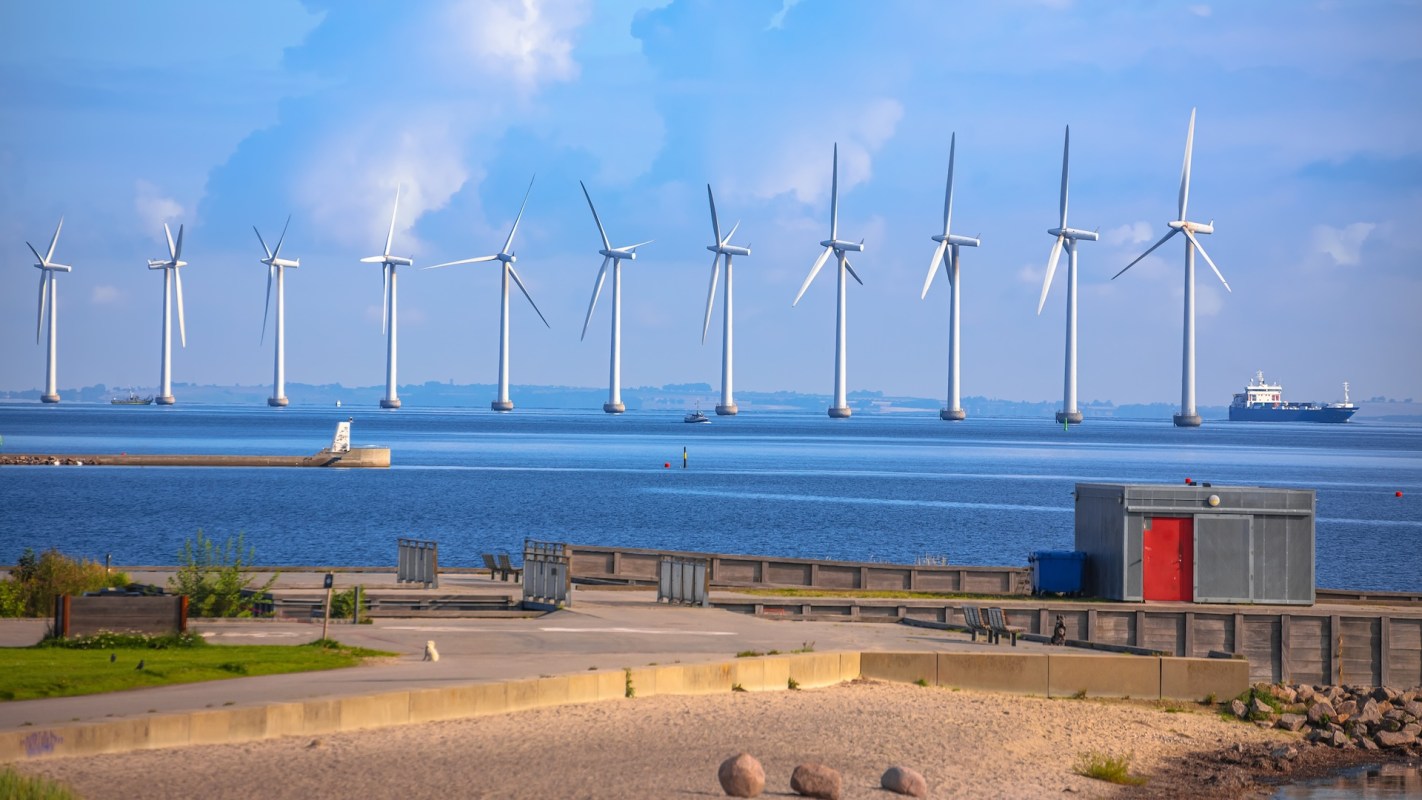
Denmark just offered a striking glimpse of what a wind-powered future can look like when conditions line up just right, as the country's wind fleet briefly produced more electricity than Denmark needed at home.
According to CleanTechnica, demand was low when strong winds pushed output to 140% of domestic electricity use (it was 3 a.m. and most residents were sleeping), leaving surplus power to be exported.
Here's what to know
Because the spike happened during unusually windy weather and a period of especially light overnight consumption, CleanTechnica reported it was a momentary snapshot rather than a full-day reflection of Denmark's grid.
Looking ahead, Denmark plans two offshore "energy islands" in the North and Baltic seas to manage wind generation. Some of the electricity would be transmitted to coastal grids, and some would be reserved for offshore uses such as green hydrogen production.
More background
The Danish Energy Agency estimates that the two energy islands could oversee enough wind power to supply about 5 million households. The North Sea hub is projected to start at 3 to 4 gigawatts with the potential to expand to 10 gigawatts, and the Baltic Sea site would contribute another 3 gigawatts.
That means large amounts of electricity can be generated without burning coal, oil, or gas, resulting in less harmful air pollution and fewer planet-warming emissions.
TCD Picks » Quince Spotlight
💡These best-sellers from Quince deliver affordable, sustainable luxury for all




What's being done?
The European country is using its wind resources to build infrastructure while also creating export revenue.
"Operating as green power plants at sea, the islands are expected to play a major role in the phasing-out of fossil fuel energy sources in Denmark and Europe," the Danish Energy Agency explains.
Meanwhile, offshore wind resources in the U.S. extend along the Atlantic, Pacific, and Gulf coasts, but even so, President Donald Trump has directed the Interior Department to halt new offshore wind leasing.
The U.S. Department of Energy says that "the power coursing through oceans and rivers could meet nearly 60% of the United States' total electricity needs."
Where can I learn more?
Denmark's wind surge highlights a practical clean-energy challenge: what to do with extra electricity when the wind is strong, and demand is low. Here are a few other TCD articles on how offshore wind projects, EV batteries, and smaller-scale wind systems can help put that power to use.
• In Denmark, EVs to power homes could help absorb wind surpluses and prevent blackouts.
• Freen says its small wind turbine gives homes and businesses another clean option.
• In Hudiksvall, neighbors use the cars to power homes and slash bills.
More clean generation helps, but it doesn't solve everything. To make spikes like Denmark's a regular advantage, grids also need storage, transmission, and flexible demand to use that extra power well.

Get TCD's free newsletters for easy tips, smart advice, and a chance to earn $5,000 toward home upgrades. To see more stories like this one, change your Google preferences here.






