


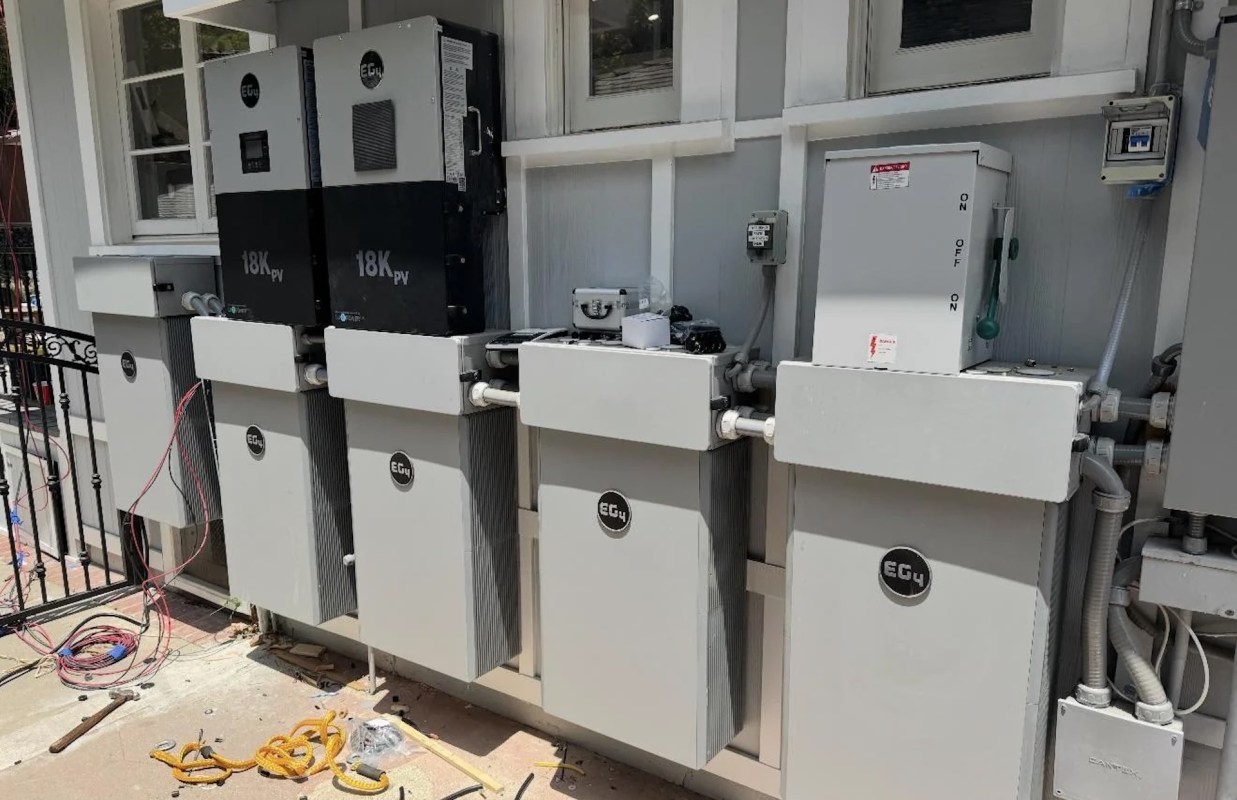
A homeowner with $50,000 to spend on an off-grid power system turned to Reddit's r/SolarDIY community to ask whether they could design a setup around a 100+ kilowatt-hour battery bank without blowing through their budget.
The replies offered a reality check, but they also suggested that skilled DIYers may still be able to save meaningfully.
Here's what to know
The original poster started the Reddit thread by writing, "I'm looking to get the best bang for my buck, with the most important priority being 100 kWh+ battery bank. The technology changed so much since I last dipped my toe in and I'm not in the know about what is out there."
Several commenters wrote that OP's budget might be too small for what they imagined. One added, "100kwh battery is a lot. I think it will eat up half your budget…. I think your $50k number is low. I have a system half that size that was $50k and I did the install myself."
Another asked, "Can you do ground mount? That will save a lot of money / hassle/ permitting."
One of the main suggestions in the Reddit thread was to avoid paying for a full installation if possible.
To back up that point, one commenter described a system built with 57 panels, two EG4 18KPV inverters, and five PowerPro batteries. They wrote, "Do the system yourself. I was able to do my system for $39K two years ago. I could easily do it today for 30k." They added, "I'm pulling in roughly 100 kWh a day and using about 85 since we have a Tesla as well."
Multiple commenters offered a rough cost breakdown for lithium iron phosphate storage, putting a 100-kWh bank near $20,000 and leaving about $30,000 for inverters, panels, cabling, and other equipment. One user explained that certification requirements, along with whether the batteries would be placed inside or outside, would affect what the setup looks like.
Save $10,000 on solar panels without even sharing your phone number Want to go solar but not sure who to trust? EnergySage has your back with free and transparent quotes from fully vetted providers in your area. To get started, just answer a few questions about your home — no phone number required. Within a day or two, EnergySage will email you the best options for your needs, and their expert advisers can help you compare quotes and pick a winner. Solar panels can save you more than $50k over their 25-year lifespan, and EnergySage can help you save as much as $10k on installation. Which begs the question — isn't that worth an email or two? |

Even homeowners who aren't trying to fully leave the grid behind can use battery storage to protect a home during outages, lower energy bills, and gain more control over electricity costs. But for many households, a smaller backup battery may prove to be the more practical option.
Where can I learn more?
The articles below dig into the same trade-offs that came up in the Reddit thread: how much solar and battery storage a household really needs, and what it can cost to get reliable backup power.
• In Australia, a homeowner's 20kW array made blackouts invisible and delivered a $545 credit.
• For many households, turning a growing expense into solar can save over $50,000.
• Homeowners with rooftop systems are seeing over $100 off monthly power bills in some communities.
What stands out across these stories is how quickly the math can shift once you factor in real energy use, equipment prices, and incentives. For someone working with a $50,000 budget, that can make a right-sized system look very different from the biggest battery bank possible.

Get TCD's free newsletters for easy tips, smart advice, and a chance to earn $5,000 toward home upgrades. To see more stories like this one, change your Google preferences here.






